
Blog · Stucco
How Long Does Stucco Last? Lifespan, Factors and Maintenance
Traditional cement stucco runs 50 to 80 years and EIFS 25 to 35, but bad installation or neglect can cut either in half. Here is what decides where a wall lands.
Contents
Short answer: traditional cement stucco lasts 50 to 80 years, and some walls are still sound past the century mark. Synthetic stucco, or EIFS, typically runs 25 to 35 years. Poorly installed stucco of either kind can need major repairs inside 10 to 20 years.
That's a wide spread, and the spread is the real story. Two stucco homes built the same year on the same street can end up decades apart, and the difference almost always comes down to installation, moisture management and maintenance rather than the material itself.
This guide covers how long stucco lasts by type, what pushes a wall toward the high or low end of that range, how our New Mexico climate factors in, the warning signs that stucco is failing, and the maintenance routine that adds years.
How Long Does Stucco Last on Average?
Stucco outlives most other exterior finishes by a wide margin.
| Finish | Typical lifespan |
|---|---|
| Traditional cement stucco | 50 to 80 years, sometimes 100+ |
| Synthetic stucco (EIFS) | 25 to 35 years with proper drainage |
| Poorly installed stucco | 10 to 20 years before major repairs |
| Vinyl siding | 20 to 30 years |
| Wood siding | 20 to 40 years with high maintenance |
Traditional stucco earns its number from composition. It's Portland cement, sand and lime, essentially a thin concrete shell over lath, and it's rigid, breathable and chemically stable. Synthetic systems trade some of that longevity for insulation value and crack resistance, which is a fair trade depending on the building.
One thing worth separating out: appearance and protection decline before the wall actually fails. Stucco can look tired, faded and hairline-cracked at 20 years while still doing its job. That's a maintenance conversation, not a replacement conversation.
What Determines Stucco Lifespan?
Five factors decide where a given wall lands in the range.
Installation Quality and Curing
This is the single biggest variable. Traditional stucco is applied in three coats and each one has to cure properly, which can take 48 hours to a week per layer. Rushing the cure, mixing the material wrong, skipping expansion joints, or installing over an incomplete drainage plane all shorten lifespan dramatically. A wall that fails at 15 years usually failed on day one.
Climate and UV Exposure
Sun, heat and temperature swings work the wall constantly. UV degrades surface finishes and paint. Daily expansion and contraction opens hairline cracks. Neither is fatal on its own, but both accelerate everything else.
Moisture and Drainage
Water is what actually kills stucco. Not the rain hitting the face of the wall, which dries out quickly, but water that gets behind the system and can't escape. That happens through bad flashing at windows, missing weep screeds at the base, failed parapet caps, and sprinklers aimed at the wall. Once water is trapped behind stucco, it damages the lath and the sheathing while the surface still looks fine.
Maintenance Habits
Washing, crack sealing and repainting are the cheap interventions that keep a wall in the 50-plus-year category. Skipping them for a decade is how an easy patch becomes a section replacement.
Paint and Coatings
Painted stucco generally needs repainting every 7 to 10 years. The paint isn't just cosmetic. It's a sacrificial layer taking UV and weather that would otherwise hit the stucco directly.
Does Stucco Last Longer in New Mexico?
In some ways, yes. Our climate is kinder to stucco than most.
What helps. Dry air means very little mold, mildew or algae, the organic growth that plagues stucco in humid regions. We also get minimal freeze-thaw cycling compared with northern states, which spares the wall the repeated expansion of water freezing inside hairline cracks. Traditional stucco is genuinely well suited to hot, dry climates.
What hurts. UV intensity at our elevation is high, and it works on surface finishes relentlessly. Daily temperature swings of 30 to 40 degrees drive thermal expansion and contraction that opens cracks over time. Monsoon rain arrives hard and sideways, testing every window flashing and parapet cap at once. And blowing dust builds up on the surface and holds moisture against it.
Net result: a well-installed, maintained stucco wall in Las Cruces can comfortably reach the upper end of the 50 to 80 year range. A neglected one cracks, takes on water during monsoon season, and starts failing much sooner.
Signs Your Stucco Is Failing
Knowing how long stucco lasts matters less than knowing what the end of its life looks like. Watch for these.
- Hairline cracks. Normal and expected. Worth sealing, not worth panicking over.
- Wide or diagonal cracks. Cracks wider than about 1/8 inch, or running diagonally from window and door corners, point to structural movement.
- Bulging or soft spots. Press the wall. Any give or sponginess means the stucco has separated from the lath, usually because water got behind it.
- Hollow sound when tapped. Same problem, detected by ear.
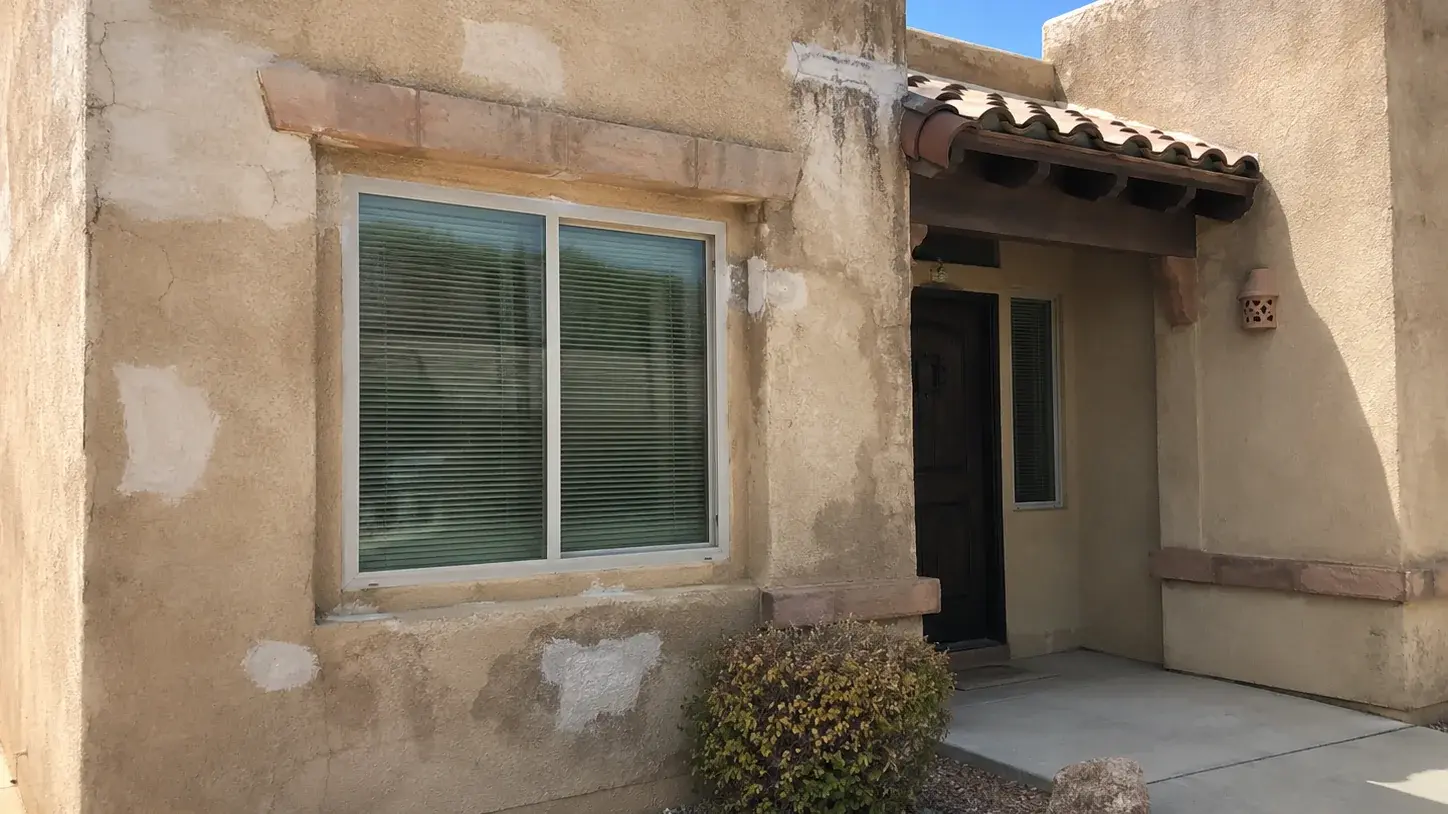
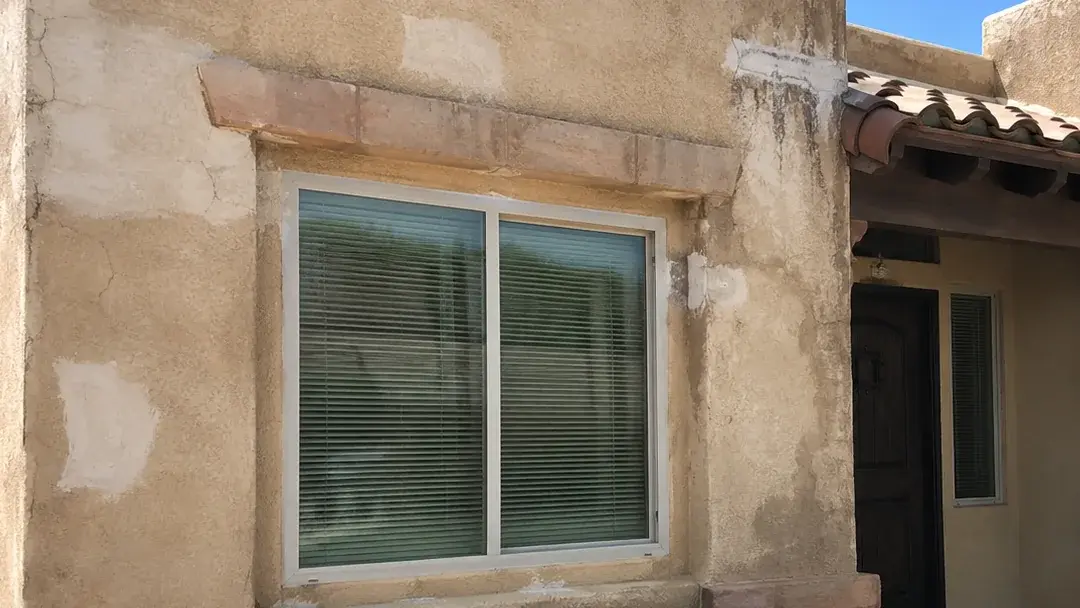
- Staining and dark streaks. Especially below windows, at parapets and near roof lines. Water is running where it shouldn't.
- Efflorescence. White mineral deposits on the surface mean moisture is moving through the wall and leaving salts behind.
- Peeling or blistering paint. Often the first visible sign of trapped moisture.
Catching these early is the difference between a patch and a rebuild. Cracks that have been ignored for years cost far more to fix than fresh ones, because moisture migrates sideways behind the wall and damages a much larger area than what shows on the surface.
How to Make Stucco Last Longer
The maintenance routine is not demanding.
- Wash the walls two to three times a year. A garden hose and a soft brush handle most of it. Skip high-pressure washing, which erodes the finish.
- Inspect annually. Walk the perimeter and look for the warning signs above. Pay extra attention to the base of walls, around windows, and where the wall meets the roof.
- Seal cracks early. A hairline crack sealed this year is a few dollars. The same crack after three monsoon seasons is a patch and possibly lath repair.
- Repaint or reseal every 7 to 10 years. This is the highest-value maintenance item for UV protection.
- Keep sprinklers off the wall. Repeated soaking at the base is one of the most common causes of premature stucco failure on residential properties.
- Check the roof transitions. Parapet caps, canales and roof-to-wall flashing are where most stucco water damage originates. A roof maintenance plan that includes these transitions protects the walls as much as the roof.
Repair or Replace?
Stucco rarely needs full replacement. In most cases the problem is localized and a targeted repair solves it without touching the rest of the wall.
Full replacement makes sense when moisture has damaged the lath and sheathing across large sections, when the original installation was fundamentally wrong (no drainage plane, no expansion joints, wrong mix), or when repairs have become continuous across the whole exterior.
The honest test is what's behind the surface. A crack is a surface symptom. Whether the wall behind it is sound decides the scope of work, and that takes an in-person look. A professional inspection will tell you which category you're in before you spend anything.
The Bottom Line on Stucco Lifespan
So, how long does stucco last? Traditional stucco runs 50 to 80 years, EIFS runs 25 to 35, and both can fall well short if they were installed badly or left unmaintained. Three takeaways:
- Installation quality and moisture management determine lifespan more than the material itself.
- New Mexico's dry climate is good for stucco, but UV, thermal cycling and monsoon rain still demand annual attention.
- Small maintenance items, washing, crack sealing and repainting every 7 to 10 years, are what separate a 30-year wall from an 80-year wall.
Contact Gilbert & Sons Roofing and Stucco
Gilbert & Sons Roofing and Stucco is a licensed, insured and bonded contractor serving Las Cruces and Doña Ana County since 2010. We handle everything from a single stucco patch to full exterior finish work, including parapet repair and the roof-to-wall details where most stucco water damage starts. If your stucco is cracking, staining or sounding hollow, call 575-649-2316, email gilbertandsons2010@gmail.com, or request an estimate through our contact page and we'll come out, assess the actual condition, and give you an honest recommendation.