
Blog · Stucco
Stucco vs EIFS: Which Exterior Is Right for Your Property?
Traditional stucco and EIFS can look identical from the street, but they differ on cost, insulation, lifespan, cracking and repair. Here is the side-by-side comparison.
Contents
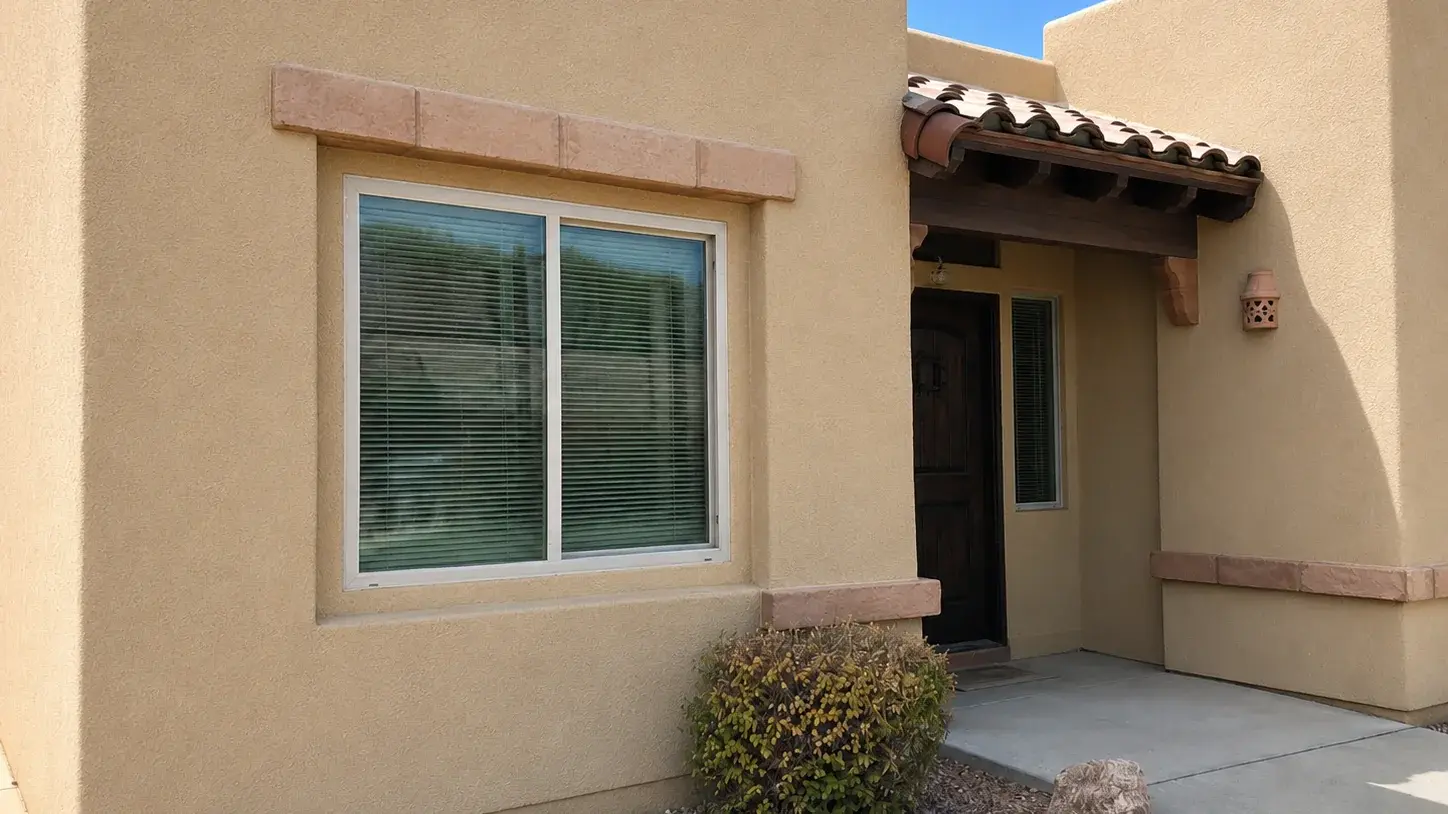
Stand across the street from two buildings, one finished in traditional stucco and one in EIFS, and you may not be able to tell them apart. Same texture. Same color options. Same Southwest look. But the stucco vs EIFS decision affects your budget, your utility bills, how the wall ages, and what happens the day someone backs a trailer into it.
This is the comparison guide. If you want the full breakdown of what EIFS is and how its layers work, that's covered separately. Here the goal is narrower: put the two systems side by side on the things that actually decide which one goes on your property.
Stucco vs EIFS at a Glance
| Traditional Stucco | EIFS | |
|---|---|---|
| Composition | Portland cement, sand, lime and water over lath | Foam insulation board, base coat, mesh, acrylic finish |
| Installed cost | Roughly $7 to $9 per sq ft | Roughly $8 to $14 per sq ft |
| Insulation value | About R-0.20 | R-4 to R-6 per inch of foam |
| Typical lifespan | 50 to 80 years | 25 to 35 years with proper drainage |
| Weight | Heavy, adds structural load | Lightweight, around 80% lighter |
| Crack resistance | Lower, rigid cement cracks with movement | Higher, flexible acrylic finish |
| Impact resistance | Higher, hard cement shell | Lower, foam can dent or puncture |
| Shapes and trim | Limited to flat surfaces and simple details | Foam can be carved into bands, arches and trim |
| Repair | Patch and match texture | Must rebuild foam, mesh and base coat in sequence |
What Each System Is Made Of
Traditional stucco is a cement-based plaster. It goes on wet over metal lath in three coats, scratch, brown and finish, and cures into what amounts to a thin layer of concrete wrapped around the building. Crews have used it on desert homes for more than a century.
EIFS, short for Exterior Insulation and Finish System, is a layered assembly rather than a single coat. A water-resistive barrier and drainage plane go over the sheathing, then rigid foam insulation, then a base coat with fiberglass mesh embedded in it, then a flexible acrylic finish. The finish coat is what makes it look like stucco. Everything underneath is why it performs differently.
That structural difference drives everything else in the stucco vs EIFS comparison.
Cost: Which Costs More?
Traditional stucco wins on upfront price. Current 2026 pricing puts traditional stucco in the range of $7 to $9 per square foot installed, with EIFS landing between $8 and $14 per square foot. That's roughly 15% to 35% more for EIFS, and the gap comes from the extra layers and the specialized labor they require.
Labor is the bigger variable in both systems, accounting for well over half the total cost. That matters more for EIFS than for stucco, because an inexperienced EIFS crew can create moisture problems that cost five figures to correct. The cheapest EIFS bid is rarely the cheapest EIFS job.
Worth noting on the other side of the ledger: EIFS reduces heating and cooling loads, so part of the premium comes back over time. How fast depends on the building, the climate and your energy rates.
Energy Efficiency
This is where the stucco vs EIFS comparison stops being close.
Traditional stucco has an insulation value of roughly R-0.20. It's essentially zero. Stucco protects the wall and looks good, but it does nothing to slow heat moving through the assembly. Whatever insulation the wall has is in the cavity between the studs, and heat still bridges straight through the framing.
EIFS delivers R-4 to R-6 per inch of foam, and because that foam wraps the entire exterior it creates continuous insulation with no thermal bridging at the studs. On a Las Cruces building running air conditioning from May through October, that difference shows up on the utility bill every month.
If energy performance is high on your list, EIFS is the stronger system and it isn't close.
Durability, Cracking and Impact
Each system wins one of these.
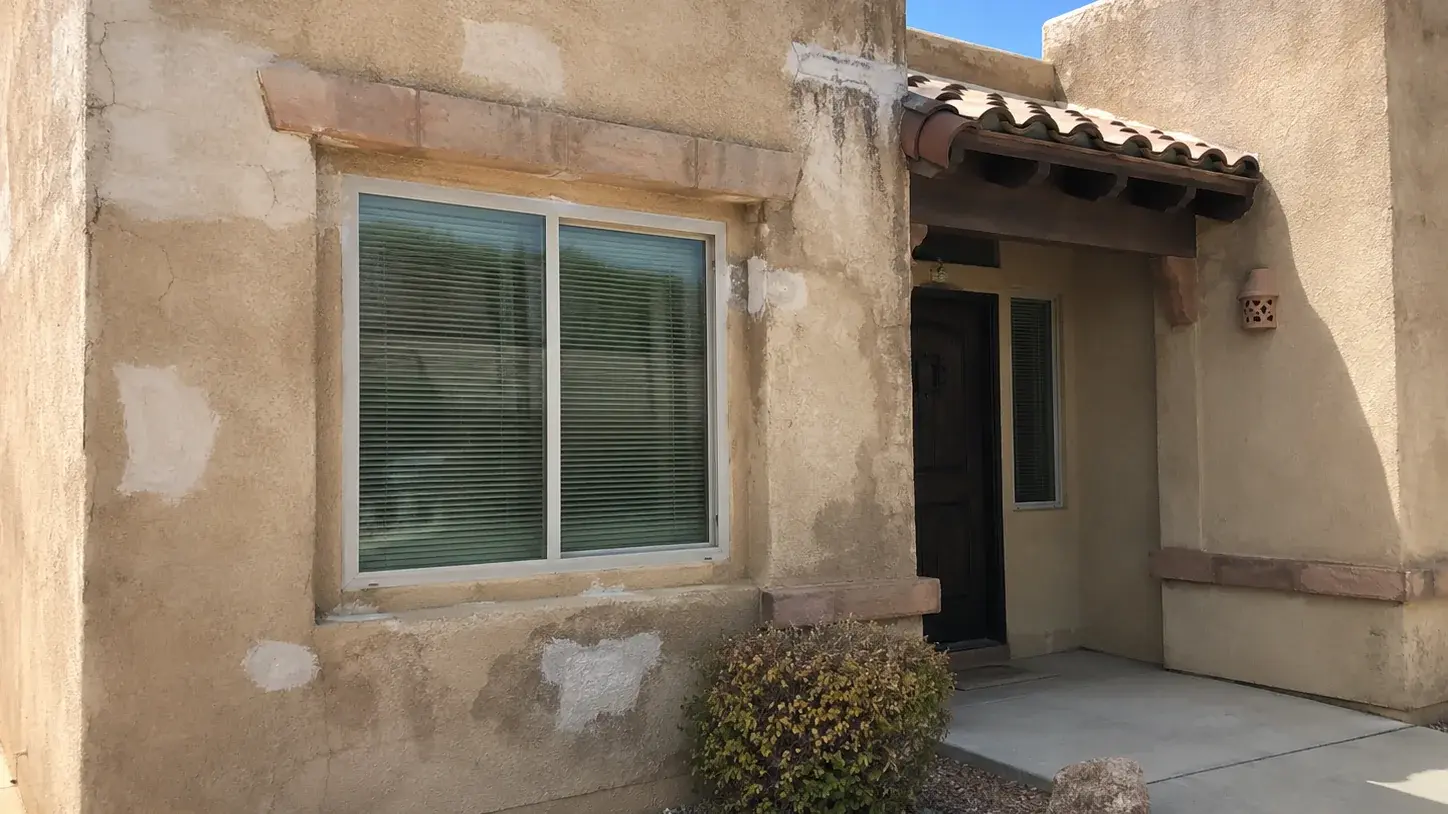
Cracking favors EIFS. Cement stucco is rigid. As a building settles and as walls expand and contract through big temperature swings, that rigid coat cracks. Hairline cracks are normal and expected in traditional stucco. The flexible acrylic finish on EIFS moves with the building and resists cracking far better.
Impact favors stucco. A hard cement wall shrugs off a knock that would dent or puncture foam. On the ground floor of a commercial building, near a parking area, or anywhere carts, mowers and vehicles come close to the wall, traditional stucco takes abuse better. EIFS can be specified with heavier reinforcing mesh in high-traffic zones, but the base material is still foam.
There's no single winner here. The right answer depends on where the wall is and what's going to hit it.
Lifespan and Maintenance
Traditional stucco lasts a long time. Well-installed and reasonably maintained, 50 to 80 years is normal, and some stucco walls are still sound past the century mark. It's rigid, breathable and proven.
EIFS typically runs 25 to 35 years when it's installed with proper drainage details. That's a shorter service life, but it's still decades, and it comes with the energy performance stucco can't match.
Maintenance differs too. Traditional stucco needs crack repair and periodic repainting or sealing. EIFS needs sealant joints around windows, doors and expansion joints kept in good condition, plus attention to any impact damage before water gets behind the foam. Both benefit from an annual look, and a professional roof and exterior inspection catches the small issues on either system while they're still small.
Which Is Better for New Mexico?
Climate changes the stucco vs EIFS math, and our climate has some specific characteristics.
Dry air helps both. Southern New Mexico doesn't have the sustained humidity that caused most of the historic EIFS moisture failures in the Southeast. It also doesn't have heavy freeze-thaw cycling that stresses rigid cement coats in northern states.
UV and heat push toward insulation. At our elevation, sun exposure is intense and summer heat is relentless. The continuous insulation in EIFS translates directly into lower cooling costs, which is why it's common on newer commercial buildings across Las Cruces and Doña Ana County.
Wall type matters. Traditional stucco performs especially well over masonry substrates, which is why it remains the default on block homes. EIFS is designed for wood or steel-framed walls.
Monsoon still demands detailing. Rain driven sideways by wind finds every gap around a window frame. Neither system forgives bad flashing. This is why the installer matters as much as the material.
Practical summary for this region: traditional stucco for masonry walls, budget-driven projects, and high-abuse ground-level areas. EIFS for framed commercial buildings, energy-focused projects, and exteriors that call for carved trim, bands or arches.
How to Choose: 5 Questions to Ask
- What is the wall made of? Masonry substrates point toward traditional stucco. Framed walls open the door to EIFS.
- How much does energy performance matter? If cooling costs are a real line item, EIFS pays part of its premium back.
- What's going to hit this wall? High-traffic ground level favors the hard cement shell of stucco.
- What's the budget horizon? Lowest upfront cost favors stucco. Lowest lifetime operating cost favors EIFS.
- Who's installing it? This is the question people skip and the one that decides whether either system performs. Both live or die on flashing, drainage and detailing at windows, parapets and roof-to-wall transitions.
Whichever way the stucco vs EIFS decision goes, the stucco and EIFS work itself has to be done right. A beautifully finished wall with bad flashing behind it is a failure waiting on a monsoon.
The Bottom Line on Stucco vs EIFS
Three things to carry out of this comparison:
- Traditional stucco costs less upfront, lasts longer, and resists impact better. EIFS insulates dramatically better, resists cracking better, and allows shapes stucco can't.
- For New Mexico, EIFS makes the strongest case on framed commercial buildings where cooling costs matter, while traditional stucco remains the go-to on masonry walls and high-abuse areas.
- Installation quality outweighs the material choice. Both systems fail the same way, through water getting past bad flashing and sealant.
Contact Gilbert & Sons Roofing and Stucco
Gilbert & Sons Roofing and Stucco is a licensed, insured and bonded contractor serving Las Cruces and Doña Ana County since 2010. We install and repair both traditional stucco and EIFS on homes and commercial buildings, including parapet repair and full exterior finish work, so we can walk the property and quote either system honestly. To talk through the stucco vs EIFS decision for your building, call 575-649-2316, email gilbertandsons2010@gmail.com, or request an estimate through our contact page and we'll come out, look at the property in person, and give you a clear recommendation.