
Blog · Stucco
What Is Stucco Roofing? How Stucco and Your Roof Work Together
Stucco is not a roofing material. What people mean by “stucco roofing” is the junction where stucco walls and parapets meet the actual roof, and that junction is where most leaks begin.
Contents
Let's clear something up in the first paragraph, because it saves everyone time. Stucco is not a roofing material. Nobody troweled plaster across the top of a house and called it a roof. So when people search "what is stucco roofing," they're almost always asking about something real, just with the wrong name attached.
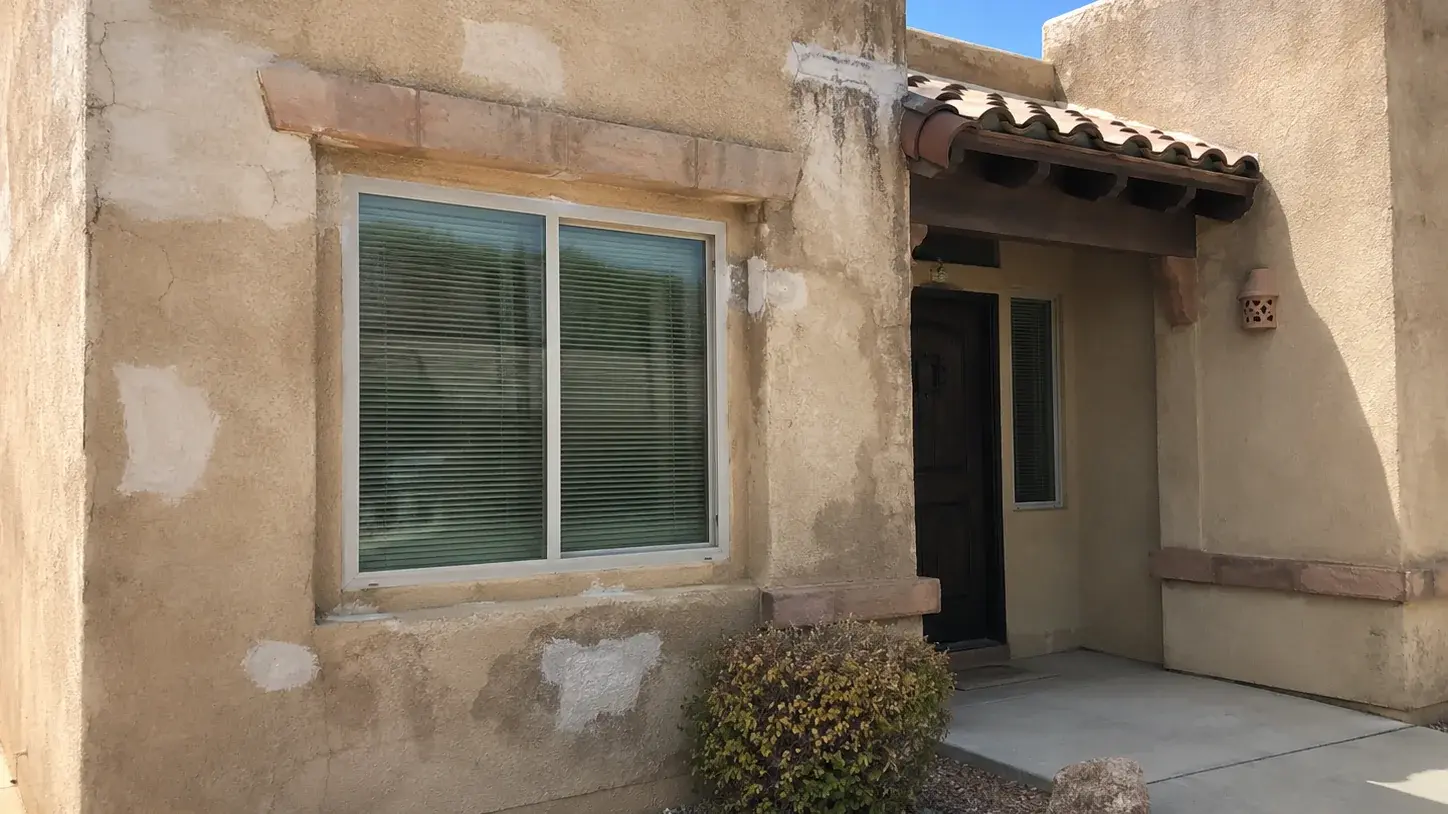
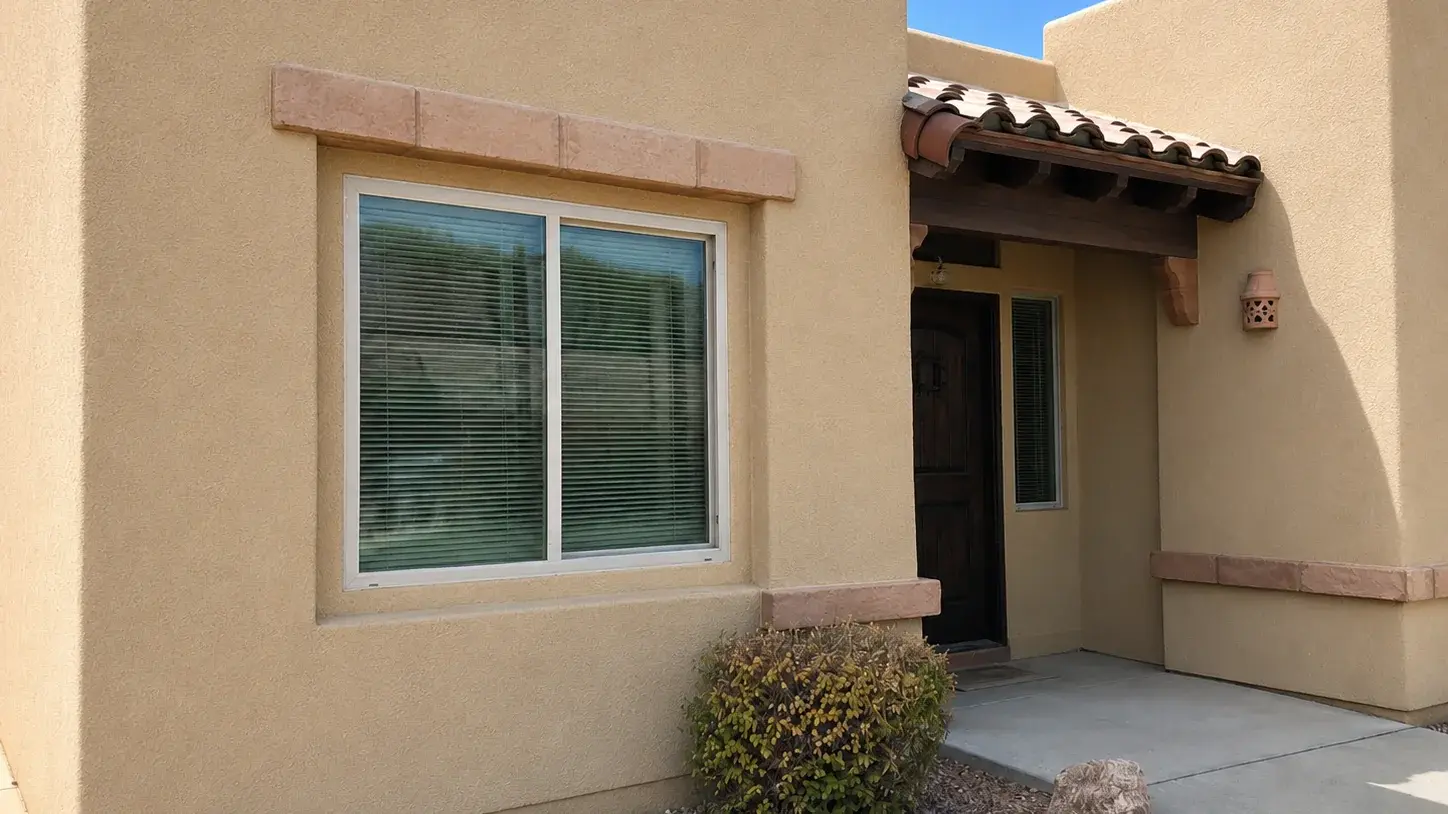
What they're usually looking at is a Southwest home or commercial building with a flat roof, stucco walls, and a stucco parapet running around the roofline. From the street, the stucco appears to go right up and over the edge of the roof. In a sense, it does. And that junction, where stucco and roofing meet, is one of the most important and most leak-prone spots on the entire building.
This article answers what stucco roofing really means, explains how stucco and the roof connect on a typical New Mexico property, why that connection fails so often, which roof types pair with stucco exteriors, and how to keep the whole system watertight through monsoon season and winter freezes.
What Does "Stucco Roofing" Actually Mean?
When someone asks what stucco roofing is, they're describing one of three things.
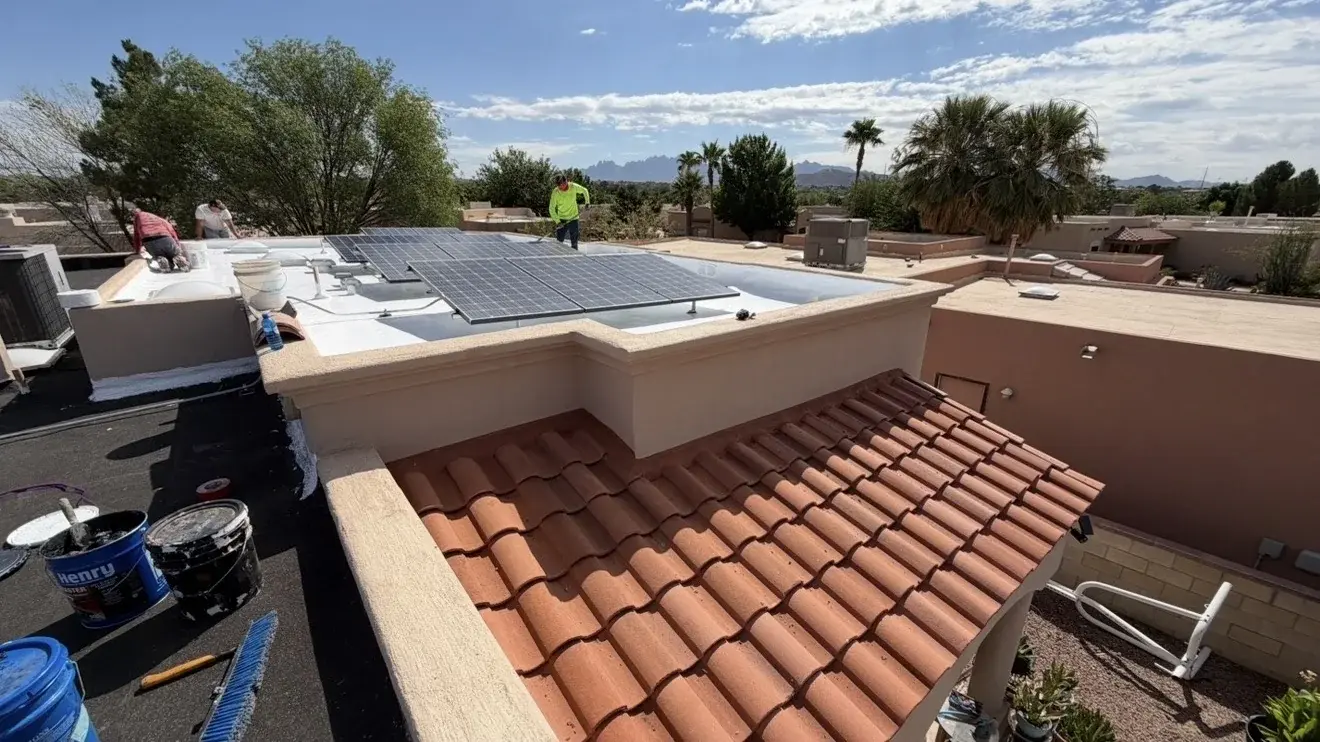
A stucco home with a flat or low-slope roof. This is the classic Pueblo or Territorial style you see all over Las Cruces, Mesilla and Doña Ana. The walls are stucco, the roof is flat, and a stucco parapet wall rises above the roof surface on every side. The roof itself is usually a membrane, a built-up system, or a coated surface hidden behind that parapet.
Stucco-finished roof edges, fascia and eaves. On pitched roofs, some homes carry the stucco finish up onto the fascia board or the underside of the eaves so the exterior reads as one continuous surface. The roofing above is still shingle, tile or metal.
Stucco and EIFS on commercial buildings. Retail centers and office buildings often use stucco or EIFS on the walls and parapets, with a TPO or coated flat roof behind them. Property managers searching "stucco roofing" are usually trying to figure out who to call when the parapet leaks.
In every case, the honest answer is the same. Stucco is the wall finish. The roof is a separate system. And the place where they meet is where the real story is.
Where Stucco and the Roof Meet
To understand what stucco roofing involves in practice, you have to look at the transition points. There are four that matter.
Parapet Walls
A parapet is the short wall that extends above the roof surface on a flat-roofed building. On a stucco home, the parapet is stucco on both faces and usually has a cap on top, either stucco, metal coping, or a concrete cap. Behind it, the roofing membrane turns up the inside face of the parapet and terminates under the cap or under a piece of counterflashing.
That's a lot of materials meeting in a small space. Stucco, roofing membrane, flashing, a cap, and sealant all have to work together, and they all expand and contract at different rates in the desert heat.
Roof-to-Wall Flashing
Wherever a roof surface meets a vertical stucco wall, there has to be flashing. On a flat roof, that's the base flashing where the membrane turns up the wall. On a pitched roof, it's step flashing or kickout flashing where shingles or tile die into a stucco wall. The stucco should never be applied directly over the top edge of that flashing. When it is, water wicks behind the stucco and runs down inside the wall.
Scuppers and Canales
Flat roofs behind parapets need a way to drain. In New Mexico that usually means canales, the wood or metal spouts that poke through the parapet, or scuppers cut through the wall. Each one is a hole punched through the stucco, and each one needs proper flashing and a sealed connection to the roof membrane.
Fascia and Eaves
On pitched-roof homes with stucco-wrapped fascia, the drip edge of the roof has to direct water past the stucco, not onto it. Stucco that stays wet at the eave line cracks, stains and eventually separates from the lath behind it.

Why Is the Stucco-to-Roof Transition the Most Common Leak Point?
Ask any roofer in Las Cruces where flat roof leaks show up and they'll point at the parapet. It's the number one answer for a reason.
Stucco is porous. It absorbs water. That's normal, and on a wall it dries out quickly in our climate. But at the top of a parapet, where the cap has cracked or the stucco was never properly capped, water soaks straight down into the wall and finds its way behind the roof membrane. The homeowner sees a stain on the ceiling and assumes the roof failed. Often the roof is fine. The parapet failed.
Thermal movement makes it worse. Flat roofs in New Mexico face intense UV, dramatic day-to-night temperature swings, and monsoon rains, all of which stress the joints between materials. Stucco moves one way, metal flashing moves another, and the sealant between them gives up after a few seasons.
The cost of ignoring it climbs fast. Breasy's 2026 stucco repair data found that the biggest cost variable in a stucco repair isn't crack size but how long the repair was delayed, because moisture migrates sideways and damages far more of the wall than what's visible. The same logic applies to the roof deck underneath.
What Types of Roofs Pair With Stucco Homes?
Part of answering what stucco roofing means is knowing what's actually up there behind the parapet or above the eaves. Four roof types dominate stucco properties in southern New Mexico.
- Flat roofs with TPO or modified bitumen. The most common pairing on Pueblo-style homes and commercial buildings. The membrane runs up the parapet and terminates under flashing.
- Coated flat roofs. Older built-up or foam roofs are often restored with silicone or elastomeric coatings. A silicone roof restoration is usually a fraction of the cost of replacement, and the coating can be carried up the inside of the parapet for a seamless seal.
- Tile roofs. Spanish and Mediterranean-style stucco homes almost always carry clay or concrete tile. The tricky spots are where tile roofing meets a stucco chimney or a second-story wall.
- Asphalt shingle roofs. Common on newer subdivision homes with stucco exteriors. Step flashing at every stucco wall intersection is what keeps these dry.
Each of these needs a slightly different flashing detail where it meets stucco, which is why a contractor who only does one trade can miss the problem entirely.
Stucco and Roof Maintenance in New Mexico Weather
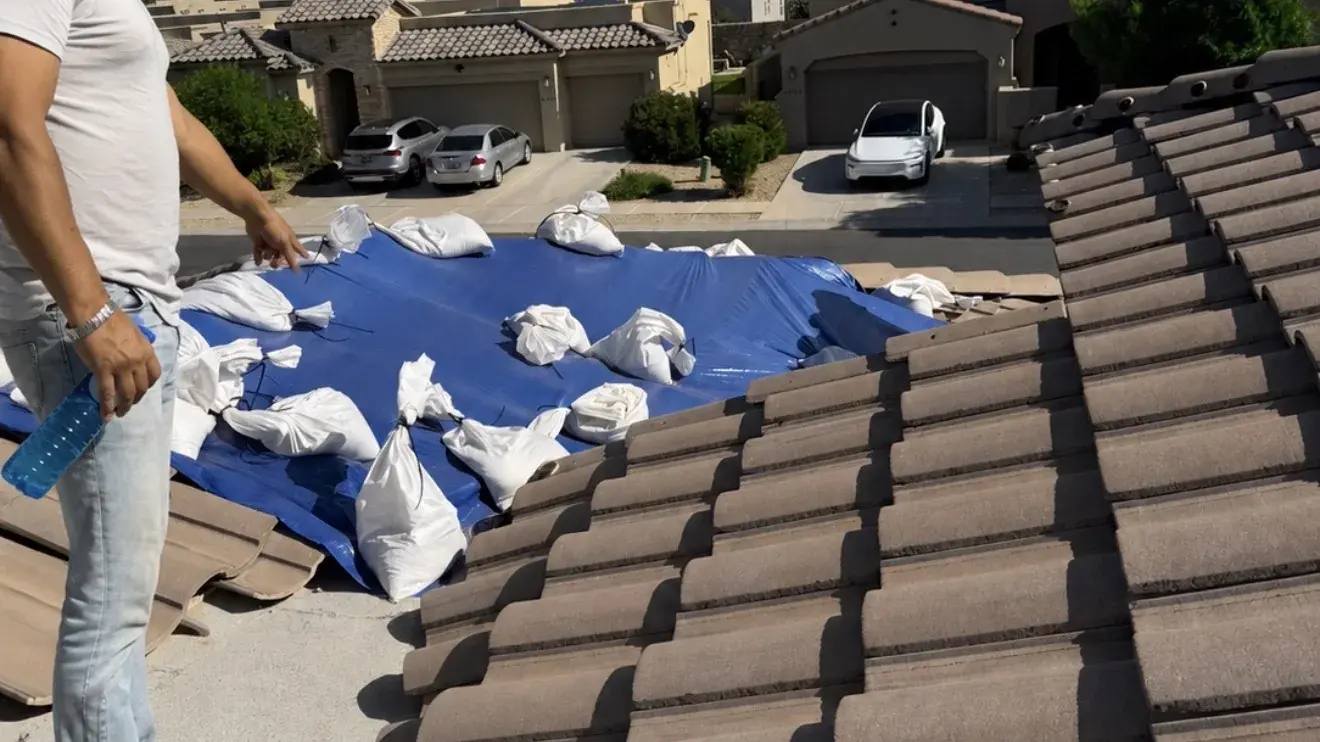
Keeping a stucco home dry is mostly about keeping the transitions healthy. A short seasonal routine goes a long way.
Before monsoon season (June): Walk the roof or have it inspected. Check parapet caps for cracks, look at the sealant where the membrane meets the stucco, and make sure canales and scuppers are clear. Annual inspections and periodic sealing are what push stucco past the 50-year mark.
After monsoon season (October): Look for new staining on the parapet's inside face, efflorescence (white mineral streaks) on the stucco below the roofline, and any soft or hollow spots when you tap the wall.
Winter: Freeze-thaw cycles at night widen any hairline crack that took on water. Patch cracks before they get cold.
A regular roof maintenance plan that includes the parapets and roof-to-wall transitions catches these issues while they're a few hundred dollars instead of a few thousand.
When Do You Need a Contractor Who Does Both?
This is the practical takeaway from the whole "what is stucco roofing" question. The leak at your parapet is a roofing problem and a stucco problem at the same time. Fix the roof membrane without repairing the cracked stucco cap above it and the water comes right back. Patch the stucco without addressing the failed flashing behind it and you've hidden the problem, not solved it.
A roofer who doesn't do stucco will tell you to call a stucco guy. A stucco guy who doesn't do roofing will tell you the leak isn't his. Meanwhile the drywall inside keeps staining.
That's exactly why Gilbert & Sons built the business around both trades. Parapet repair, roof-to-wall flashing, membrane termination and stucco finish work all get handled by the same crew, so the roof repair and the stucco repair are done as one job.
The Bottom Line on Stucco Roofing
What is stucco roofing? It's not a roof type. It's the way stucco walls and parapets wrap around and meet the actual roof on a Southwest home or commercial building. Three things to remember:
- Stucco is the wall finish. The roof behind the parapet is a separate system, usually a membrane, coating, tile or shingle.
- The transition between the two, especially the parapet cap and roof-to-wall flashing, is where most "roof leaks" on stucco buildings actually start.
- Seasonal inspections before and after monsoon season keep both systems watertight for decades.
Contact Gilbert & Sons Roofing and Stucco
Gilbert & Sons Roofing and Stucco is a licensed, insured and bonded contractor serving Las Cruces and Doña Ana County since 2010. We handle both sides of the stucco-and-roof problem with one crew, from parapet repair and roof-to-wall flashing to membrane work and stucco finishing. If your stucco home or building has a stained ceiling, a cracked parapet, or a leak nobody can find, call 575-649-2316, email gilbertandsons2010@gmail.com, or request an estimate through our contact page and we'll come out, look at the property in person, and give you an honest recommendation and a clear quote.