
Blog · Roofing Materials
What Is Asphalt Shingle Roofing? Types, Lifespan and What to Expect
Asphalt shingles cover roughly seven in ten American homes. Here is what they are made of, how 3-tab, architectural and premium tiers differ, and what the New Mexico sun does to all of them.
Contents
Nearly seven out of ten American homeowners are living under asphalt shingles right now. That's according to Roofing Contractor magazine's 2026 homeowner survey, which found about 69% of respondents had shingles on their roof. It's the most common roofing material in the country by a wide margin, and it's all over the newer neighborhoods in Las Cruces.
But ask most of those homeowners what is asphalt shingle roofing, actually, and you'll get a shrug. They know it's the overlapping rectangles on the roof. They don't know what's inside them, why one neighbor's roof looks flat and another's looks textured, or why a "30-year shingle" rarely lasts 30 years in the desert.
This guide fixes that. It covers what asphalt shingles are made of, the three main types, how long each one realistically lasts, what New Mexico sun and wind do to them, what a proper installation includes, and the signs that yours needs attention.
What Is Asphalt Shingle Roofing Made Of?
An asphalt shingle is a three-layer sandwich. Turtle Roofing describes the construction well: a fiberglass mat in the middle, asphalt coating on both sides, and ceramic-coated mineral granules pressed into the top surface.
Each layer has a job. The fiberglass mat gives the shingle its strength and tear resistance. The asphalt makes it waterproof and flexible. The granules are the part you see, and they do more than provide color. They shield the asphalt from UV rays, which would otherwise dry it out and crack it within a few years. When granules wash off, the shingle starts aging fast.
That's the core of what asphalt shingle roofing is: a waterproof, UV-shielded mat that overlaps to shed water downhill. Every type of asphalt shingle is a variation on that same recipe.
The Types of Asphalt Shingles
There are three tiers, and the difference between them is mostly thickness and layering.
3-Tab Shingles
The original. A 3-tab shingle is a single flat layer cut with two slots so each strip looks like three separate shingles once installed. Today's Homeowner puts them at $1 to $2 per square foot for materials and notes they're the lightest and least expensive asphalt option.
They're also being phased out. Hulsey Roofing reports that architectural shingles now account for more than 90% of new asphalt installations in North America. 3-tab still makes sense on rental properties, sheds and detached garages, or when matching an existing roof, but it's no longer the default.
Architectural (Dimensional) Shingles
Architectural shingles, also called dimensional or laminated shingles, bond two or more layers of material together. The result is thicker, heavier and textured, with shadow lines that mimic wood shake or slate. This is what most people picture when they think of a modern shingle roof, and it's what goes on most new roof installations in Doña Ana County.
The extra weight isn't cosmetic. It's why architectural shingles carry wind ratings of 110 to 130 mph versus 60 to 70 mph for 3-tab, and why they last longer.
Premium (Designer) Shingles
The top tier. These are even thicker laminated shingles designed to replicate slate or cedar shake from the street. Home Genius Exteriors notes that premium lines often carry Class 4 impact ratings, the highest hail-resistance classification, and some insurers discount policies for them.
How Long Does Asphalt Shingle Roofing Last?
Here's where the marketing and the reality split. Manufacturers sell shingles as "25-year," "30-year" and "50-year" products. Those numbers describe the warranty, not what happens on your roof.
Bill Ragan Roofing lays out the realistic numbers. A 3-tab roof carries a 25-year label but should be expected to last 15 to 20 years. An architectural roof carries a 30-year label and realistically delivers 20 to 25 years, with the full 30 only possible in ideal conditions. Premium shingles push into the 25 to 40 year range depending on the product.
Three things move a roof toward the high or low end of those ranges: installation quality, attic ventilation, and climate. In Las Cruces, climate does most of the pushing.
How Does New Mexico Sun and Wind Affect Asphalt Shingles?
Understanding what asphalt shingle roofing is includes understanding what kills it, and in southern New Mexico that's mostly the sun.
UV and heat. At our elevation, UV intensity runs noticeably higher than at sea level, and roof surface temperatures on a dark shingle can climb past 150 degrees on a July afternoon. That heat cooks the asphalt, driving off the oils that keep it flexible. The shingle gets brittle, then it cracks or curls at the edges.
Granule loss. UV also breaks down the bond holding granules in place. Once they wash into the gutters, the asphalt underneath is fully exposed and the decline accelerates. Granules in your gutters after a storm are one of the clearest early warnings.
Thermal cycling. A 40-degree swing between a summer afternoon and that night is normal here. Every cycle expands and contracts the shingles, stressing the seal strips that hold each course down and loosening nails over time.
Wind. Spring dust storms and monsoon downbursts regularly hit 50 to 70 mph in the Mesilla Valley. That's right at the failure point for 3-tab shingles and well within the rating for architectural shingles, which is one more reason 3-tab has fallen out of favor locally.
What's missing. We get almost no ice dams, moss or algae, the problems that plague shingle roofs in wetter climates. A properly installed and ventilated architectural shingle roof in Las Cruces can reach the upper end of its realistic lifespan. A poorly ventilated one will bake from underneath and fail early.
What Goes Into an Asphalt Shingle Roof Installation?
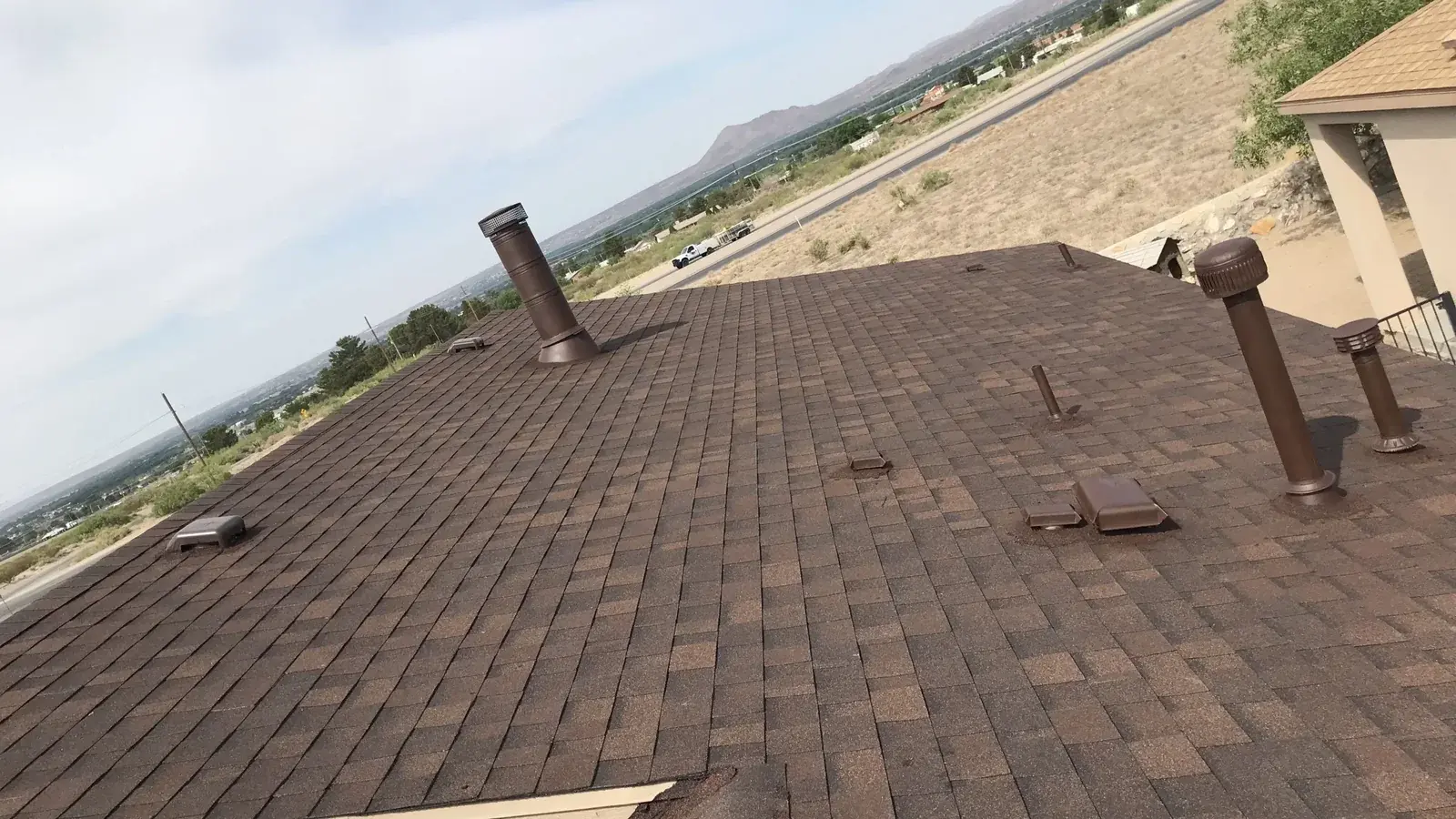
The shingle is the visible part of the system, but it's only one layer. A proper asphalt shingle roof installation includes several others, and Peterson Roofing recommends asking about every one of them before you sign a contract.
- Roof decking. The plywood or OSB sheathing the shingles are nailed to. It can't be evaluated until the old roof is torn off, and rotted sections have to be replaced.
- Underlayment. A synthetic or felt water barrier over the decking. It's the second line of defense when wind drives rain under a shingle.
- Ice and water shield. A self-adhering membrane in valleys and around penetrations. Less critical here than in snow country, but valleys still deserve it.
- Drip edge and flashing. Metal at the eaves, rakes, chimneys, vents and every stucco wall intersection. Flashing at stucco walls is where a lot of Southwest shingle roofs leak.
- Starter strip and ridge cap. Purpose-made shingles at the eave line and ridge that seal the edges where wind uplift starts.
- Ventilation. Balanced intake at the eaves and exhaust at the ridge. Skip this and the attic overheats, which shortens shingle life and can void the manufacturer's warranty.
Tear-off versus overlay is the other big question. Laying new shingles over old saves money upfront but hides decking problems and traps heat. Most manufacturers and most reputable contractors recommend a full tear-off on a roof replacement.
Signs Your Asphalt Shingle Roof Needs Attention
Asphalt shingle roofing gives plenty of warning before it fails. Amica and other sources point to the same handful of signals:
- Curling, cupping or cracked shingles visible from the ground
- Bald patches where granules have worn away, or piles of granules in the gutters
- Missing shingles or exposed nail heads after a wind event
- Daylight or water stains visible in the attic
- A sagging or wavy roofline, which points to decking problems
- Rising cooling bills with no other explanation
- Repeated repairs in different spots, which usually means the roof has reached the end of its life
One curled shingle after a storm is a roof repair. Curling across a whole slope on a 20-year-old roof is a replacement conversation. A professional roof inspection is how you tell the difference without guessing, and it's worth scheduling once a year on any shingle roof past its tenth birthday.
The Bottom Line on Asphalt Shingle Roofing
What is asphalt shingle roofing? A fiberglass mat coated in asphalt and armored with granules, installed as one layer of a complete system that includes underlayment, flashing and ventilation. Three things to remember:
- Architectural shingles have replaced 3-tab as the standard for good reason: longer life, higher wind ratings and better looks for a modest upcharge.
- Warranty years and real years are different. Expect 20 to 25 from an architectural roof in Las Cruces, more with good ventilation and less without it.
- The sun is the enemy here. Granule loss, curling and brittleness are the signs to watch for, and an annual inspection catches them early.
Contact Gilbert & Sons Roofing and Stucco
Gilbert & Sons Roofing and Stucco is a licensed, insured and bonded contractor serving Las Cruces and Doña Ana County since 2010. We install, repair and replace asphalt shingle roofs across the region, along with tile, metal and flat roof systems. Whether you need a new roof, a storm repair, or an honest opinion on how much life your current shingles have left, call 575-649-2316, email gilbertandsons2010@gmail.com, or request an estimate through our contact page and we'll come out, look at the property in person, and give you an honest recommendation and a clear quote.