
Blog · Roofing
How Does Roof Replacement Work? What Happens From Estimate to Cleanup
Six stages, one to three days of crew time, and one to three weeks start to finish. Here is what actually happens on a roof replacement, including the moment the crew finds rotten decking.
Contents
Roof replacement works in six stages: an inspection and estimate, materials and scheduling, property protection and tear-off, a deck inspection, installation of the new roof system, and cleanup with a final walkthrough. For most homes the crew is on site for one to three days. From the first phone call to the last nail pickup, the whole process usually runs one to three weeks.
That's the outline. What makes it feel overwhelming is that most homeowners only replace a roof once or twice in their lives, so nothing about it is familiar. The noise, the debris, the moment the crew finds rotten decking, the pile of paperwork at the end. None of it is a surprise to a roofer. All of it is a surprise to the owner.
This guide answers how does roof replacement work stage by stage, with what actually happens, how long each part takes, what can change the plan, and how to get your home ready.
How Does Roof Replacement Work? The Six Stages at a Glance
| Stage | What happens | Typical time |
|---|---|---|
| 1. Inspection and estimate | Roofer assesses the roof, measures, writes a scope | 1 to 2 hours on site |
| 2. Materials and scheduling | Material selection, permit, order lead time, crew date | 1 to 2 weeks |
| 3. Protection and tear-off | Tarps down, old roof removed to the deck | 4 to 8 hours |
| 4. Deck inspection and repair | Rotten or unnailable boards replaced | 0 to 6 hours |
| 5. Installation | Underlayment, flashing, new roofing, ventilation | 1 to 2 days |
| 6. Cleanup and walkthrough | Debris hauled, magnet sweep, punch list, warranty | 1 to 2 hours |
Each of these gets a closer look below.
Stage 1: Inspection and Estimate
Every roof replacement starts with someone walking the roof. A proper roof inspection covers the roofing material, the flashing at every wall and penetration, the condition of the deck where it's visible, ventilation, drainage, and the attic if there's access.
The estimate that follows should be specific. A complete quote lists the roofing material by type and grade (architectural shingle, 60 mil TPO, concrete tile), the underlayment, all flashing to be replaced, drip edge, ventilation, the permit, disposal, and a per-sheet price for decking replacement. That last item matters because rot can only be confirmed after tear-off, so it's priced as a contingency rather than guessed at.
Stage 2: Materials, Permits and Scheduling
Once you've approved the scope, the material choice gets locked in. On a pitched roof in Las Cruces that usually means architectural asphalt shingles, clay or concrete tile, or metal. On a flat or low-slope roof it means TPO or another membrane. Each has its own lead time, with shingles typically available within days and specialty tile or metal sometimes taking weeks.
The contractor pulls the building permit. Most jurisdictions in Doña Ana County require one for a full replacement, and it triggers a final inspection that protects you.
Scheduling here revolves around weather. Roofers avoid tear-off with rain in the forecast, which in summer means working around monsoon patterns and often starting early in the day. The crew date gets set, and you'll get a heads-up on how to prepare (covered at the end of this post).
Stage 3: Property Protection and Tear-Off
Tear-off day is the loudest and messiest part of how roof replacement works. Before anything comes off, the crew protects the property: tarps over landscaping, plywood or tarps against exterior walls and windows, a dump trailer positioned close to the house, and cars moved out of the driveway.
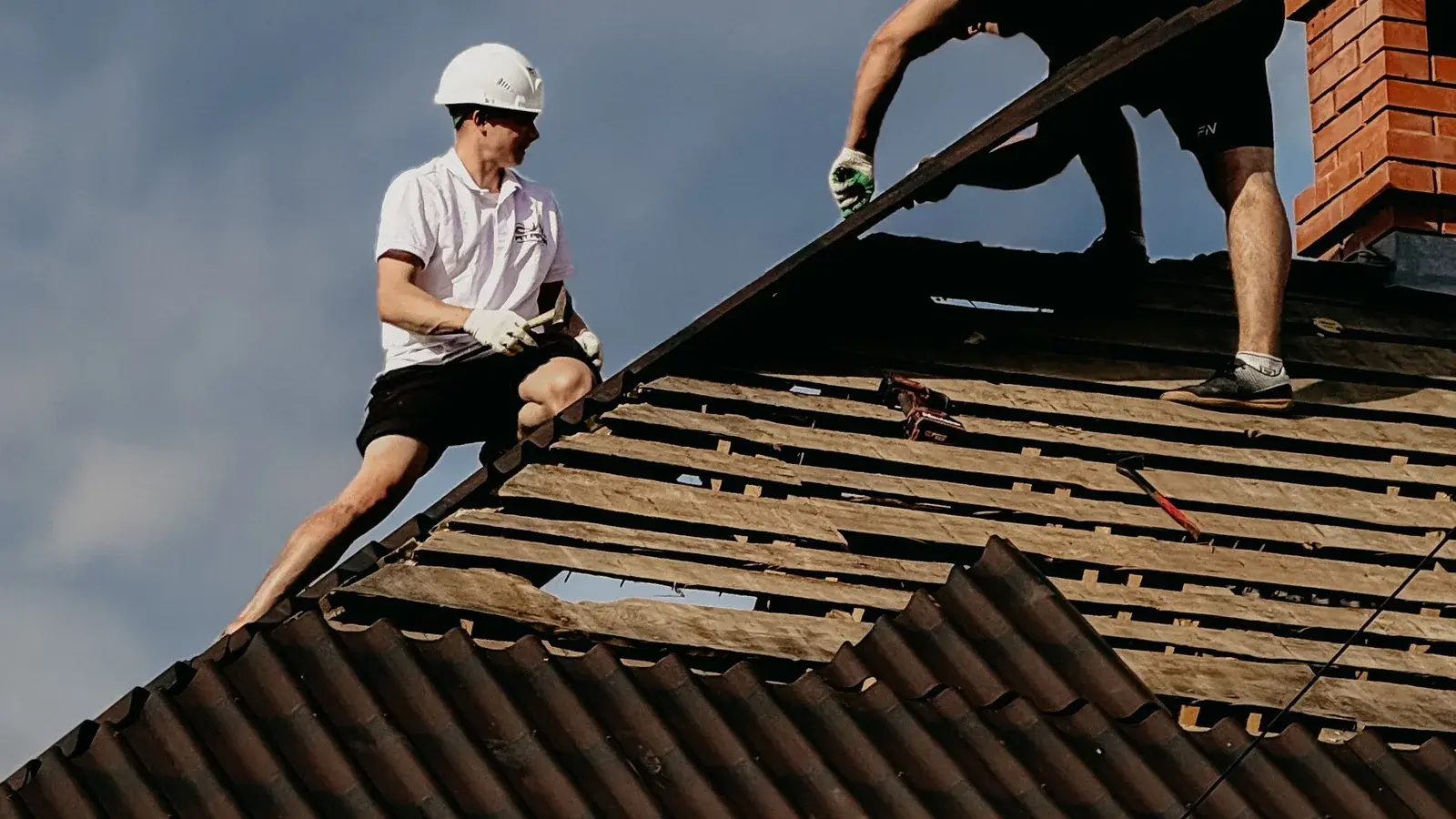
Then the old roof comes off in sections, starting at the corner farthest from the trailer and working toward it. Shingles, nails, old flashing and underlayment all go, right down to bare wood. On a tile roof, tiles are removed by hand and either stacked for reuse or hauled away. On a flat roof, the membrane and often the old insulation are cut and pulled.
Full tear-off matters. Laying new shingles over old saves a few hundred dollars up front, but it hides deck damage, adds weight, traps heat and voids most manufacturer warranties. Every reputable roof replacement in this region is a full tear-off.
Expect vibration through the whole house, dust falling in the attic, and a lot of noise for four to eight hours.
Stage 4: Deck Inspection and Repair
With the roof stripped, the crew and foreman walk the bare deck. They're looking for soft or rotted plywood, boards that won't hold a nail, gaps, and areas where old leaks have done damage nobody could see from above.
Damaged sheets get cut out and replaced with new plywood or OSB, nailed to the rafters on the proper spacing. On a roof with a few bad spots this adds an hour or two. On a roof with widespread rot from years of leaking, it can add most of a day and a meaningful line on the invoice.
This is the stage where the pre-priced contingency from your estimate comes into play, and it's the reason a good contractor photographs the deck and shows you before replacing anything.
Stage 5: Installing the New Roof System
The new roof goes on as a system, in layers, and the order matters.
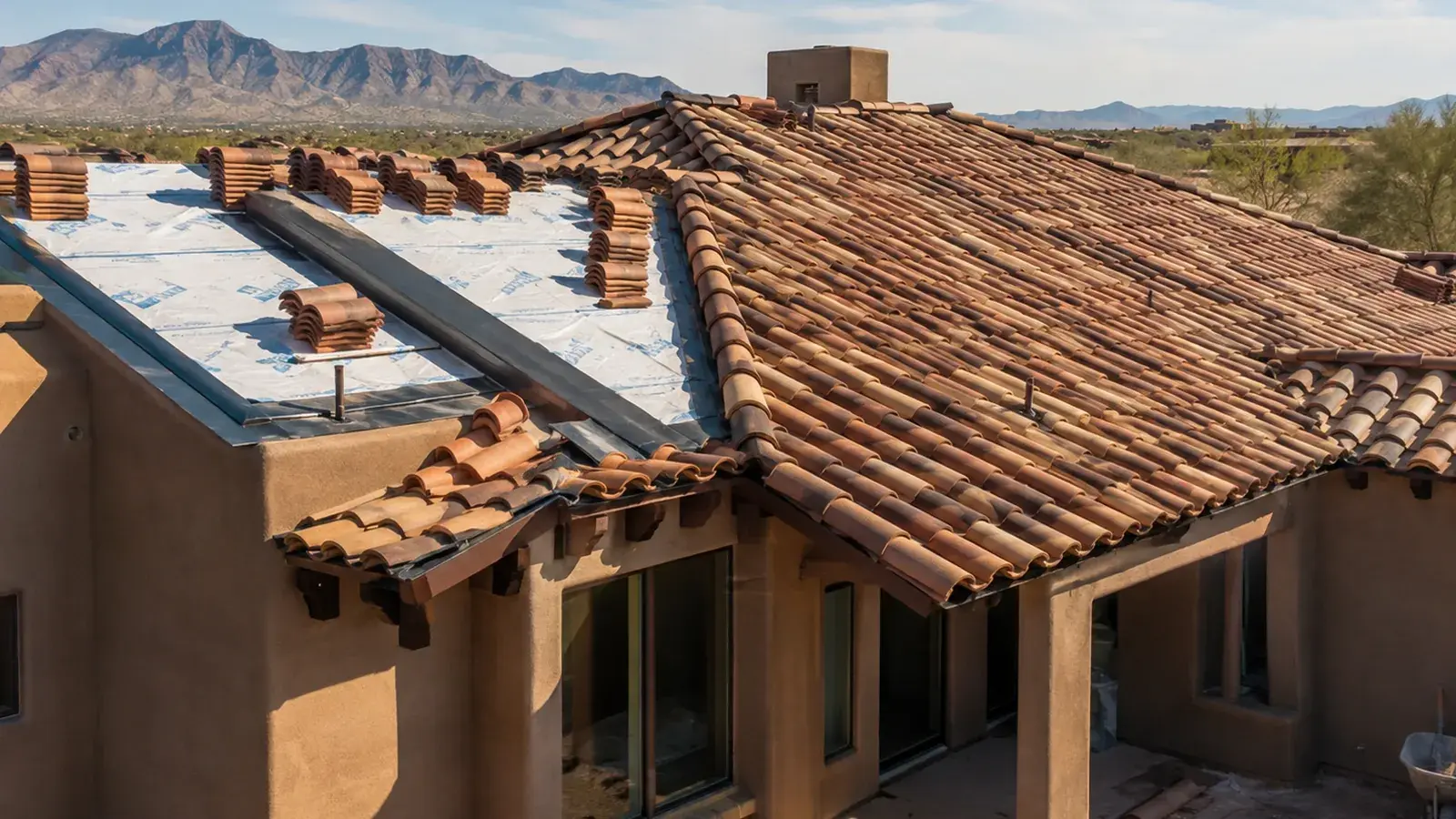
Dry-in. Underlayment gets rolled across the entire deck and fastened. Synthetic underlayment is standard now because it doesn't tear in wind and handles our UV far better than felt. Ice and water shield goes in the valleys and around penetrations. Once the roof is dried in, it's weather-tight even before the finished roofing is on, which is why crews push to reach this point the same day as tear-off.
Drip edge and flashing. Metal drip edge goes on at eaves and rakes. New step flashing, counterflashing and pipe boots are installed at every wall, chimney and penetration. On stucco homes, this is the detail that decides whether the roof leaks at the parapet or the wall line in five years. Flashing that meets a stucco wall has to be integrated with the stucco, not just tucked behind it.
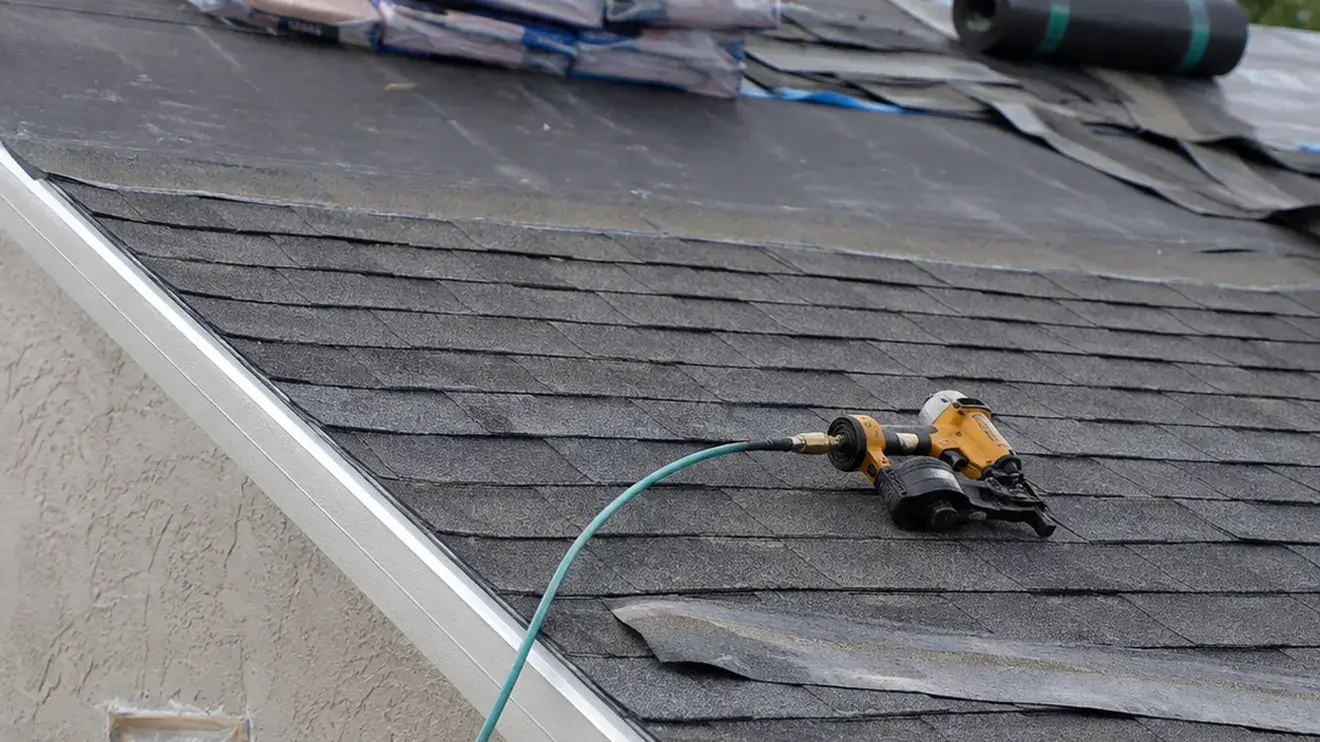
Starter and field material. Starter strip goes along the eaves, then the shingles, tiles or membrane are installed course by course. Shingles are nailed to the manufacturer's pattern. Tile is fastened to spec and laid with proper headlap. TPO membrane is rolled out, fastened or adhered, and every seam is heat-welded and probed.
Ventilation and ridge. Ridge vent or other exhaust ventilation gets installed, balanced against intake at the eaves. Ridge caps or ridge tiles finish the peak. Proper attic ventilation adds years to any roof in our heat and is required by most shingle warranties.
For a typical home this stage runs one to two days depending on material, size and pitch. Tile and flat membrane roof installations generally take longer than shingles.
Stage 6: Cleanup and Final Walkthrough
When the last course is on, the crew blows off the roof, clears gutters and downspouts, and pulls the tarps. Every square foot of yard and driveway gets swept with a rolling magnet for nails. The dump trailer leaves.
The foreman then walks the finished roof, checking flashing, ridge, penetrations and any punch-list items. You do a walkthrough at ground level. The permit inspection gets scheduled if required. You receive the manufacturer warranty registration and the contractor's workmanship warranty in writing, and the final payment is made.
That paperwork is worth keeping somewhere safe. It's what you'll need if a problem comes up in year eight.
How Long Does a Roof Replacement Take?
The on-site work is usually shorter than people expect.
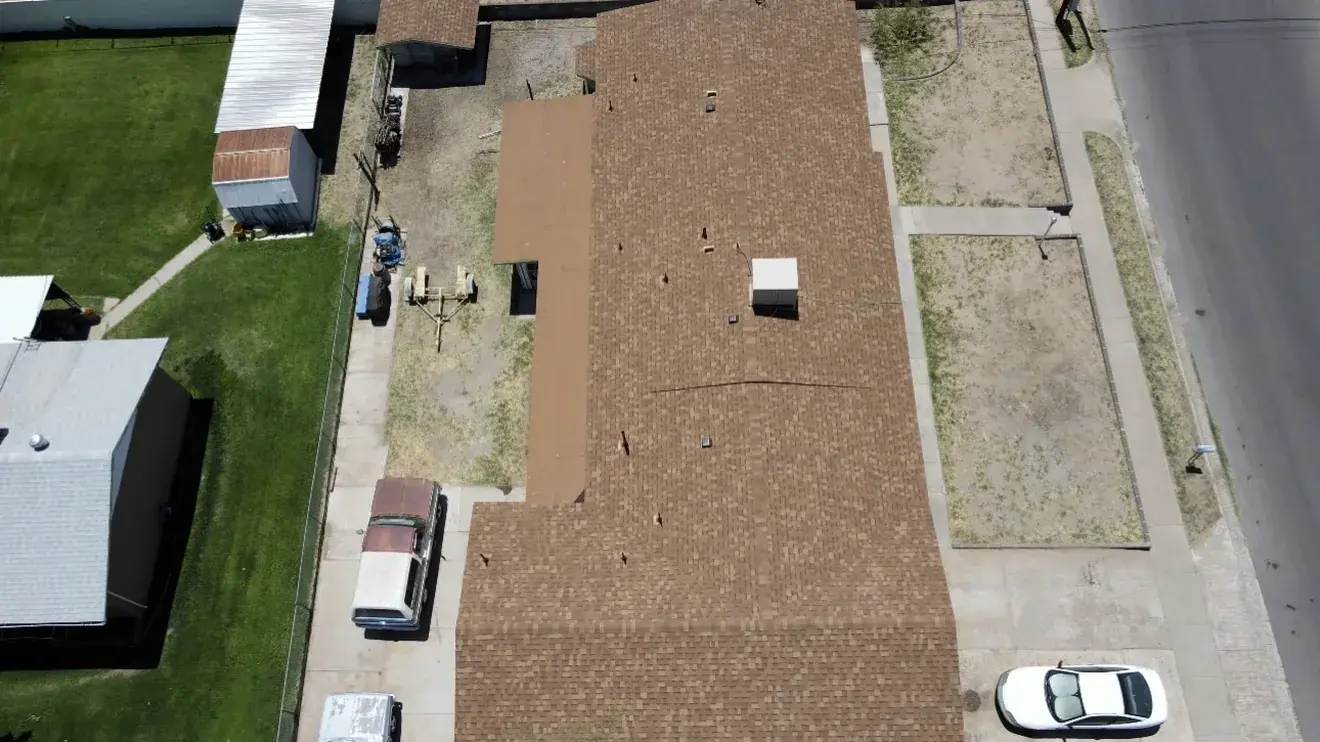
- Asphalt shingle, average home: 1 to 2 days
- Asphalt shingle, large or steep roof: 2 to 3 days
- Concrete or clay tile: 3 to 5 days, longer if tiles are being reused over new underlayment
- TPO or other flat membrane: 1 to 3 days depending on square footage and insulation
- Metal: 2 to 4 days
Add the lead time from estimate to crew date, and the full process is typically one to three weeks. Weather delays, material backorders and unexpected deck repair are the three things that stretch it.
How to Prepare Your Home for Roof Replacement
A little preparation on your side makes the job smoother and protects your belongings.
- Move vehicles out of the driveway and away from the house before the crew arrives. Falling debris and stray nails are a real risk to paint and tires.
- Cover or remove items in the attic. Tear-off vibration sends dust and debris down through every gap in the decking.
- Take down wall hangings on upper floors. Mirrors and framed pictures can shift or fall from the hammering.
- Clear the perimeter. Move patio furniture, grills, planters and anything under the eaves.
- Turn off sprinklers for the duration so the crew isn't working on wet ground and tarps.
- Plan for pets and small children. Tear-off day is loud and stressful for both. Many families arrange to be elsewhere during the noisiest hours.
- Mark anything fragile in the yard and point it out to the foreman during the pre-job walkthrough.
The Bottom Line on How Roof Replacement Works
So, how does roof replacement work? Inspect and estimate, choose materials and schedule, protect the property and tear off, check and repair the deck, install the new system in layers, then clean up and hand over the warranty. Three takeaways:
- A detailed estimate with a per-sheet decking price is the sign of a contractor who's planning for what tear-off will reveal instead of surprising you with it.
- Full tear-off and proper flashing at stucco walls and parapets are the two steps that separate a 25-year roof from a 10-year one in New Mexico.
- The crew is on your roof for one to three days. Preparing the house the day before is what keeps that time from being stressful.
Not sure whether you're at the replacement stage yet? Our guide to how often a roof should be replaced covers the signals that push a roof from repair into replacement.
Contact Gilbert & Sons Roofing and Stucco
Gilbert & Sons Roofing and Stucco is a licensed, insured and bonded contractor serving Las Cruces and Doña Ana County since 2010. We replace asphalt shingle, tile, metal and flat roofs for homes and commercial buildings, including the specialty roofing systems and stucco transitions most roofers subcontract out, and we walk you through every stage before it happens. To find out whether your roof needs replacing and what the job would involve, call 575-649-2316, email gilbertandsons2010@gmail.com, or request an estimate through our contact page and we'll inspect the roof in person and give you a written scope and quote.