
Blog · Roofing Materials
How Long Do Tile Roofs Last? Clay, Concrete and the Underlayment Catch
The tiles last 50 to 100 years. The underlayment beneath them lasts 20 to 30, and that is the number that decides when your roof leaks. Here is what that means for a tile roof in New Mexico.
Contents
Short answer: the tiles last 50 to 100 years. Clay sits at the top of that range and often beyond it, concrete lands between 40 and 75, and slate can outlive the house. Tile is the longest-lasting roofing material most homeowners will ever buy.
But there's a catch, and it's the part nobody mentions at the sales table. The tiles aren't what keeps water out of your house. The underlayment beneath them does that job, and underlayment lasts 20 to 30 years. So the honest answer to how long do tile roofs last is really two answers: the tiles go the distance, and the waterproof layer under them needs replacing at roughly the halfway mark.
This guide breaks down tile roof lifespan by material, explains why the underlayment is the number that actually matters, covers what shortens a tile roof's life, looks at how tile performs in southern New Mexico, and walks through the repair, relay or replace decision.
How Long Do Tile Roofs Last by Material?
| Roofing material | Typical lifespan |
|---|---|
| Clay tile | 50 to 100 years, often longer |
| Concrete tile | 40 to 75 years |
| Slate | 75 to 200 years |
| Tile roof underlayment (felt) | 20 to 30 years |
| Tile roof underlayment (synthetic) | 25 to 40 years |
| Asphalt shingles (for comparison) | 15 to 30 years |
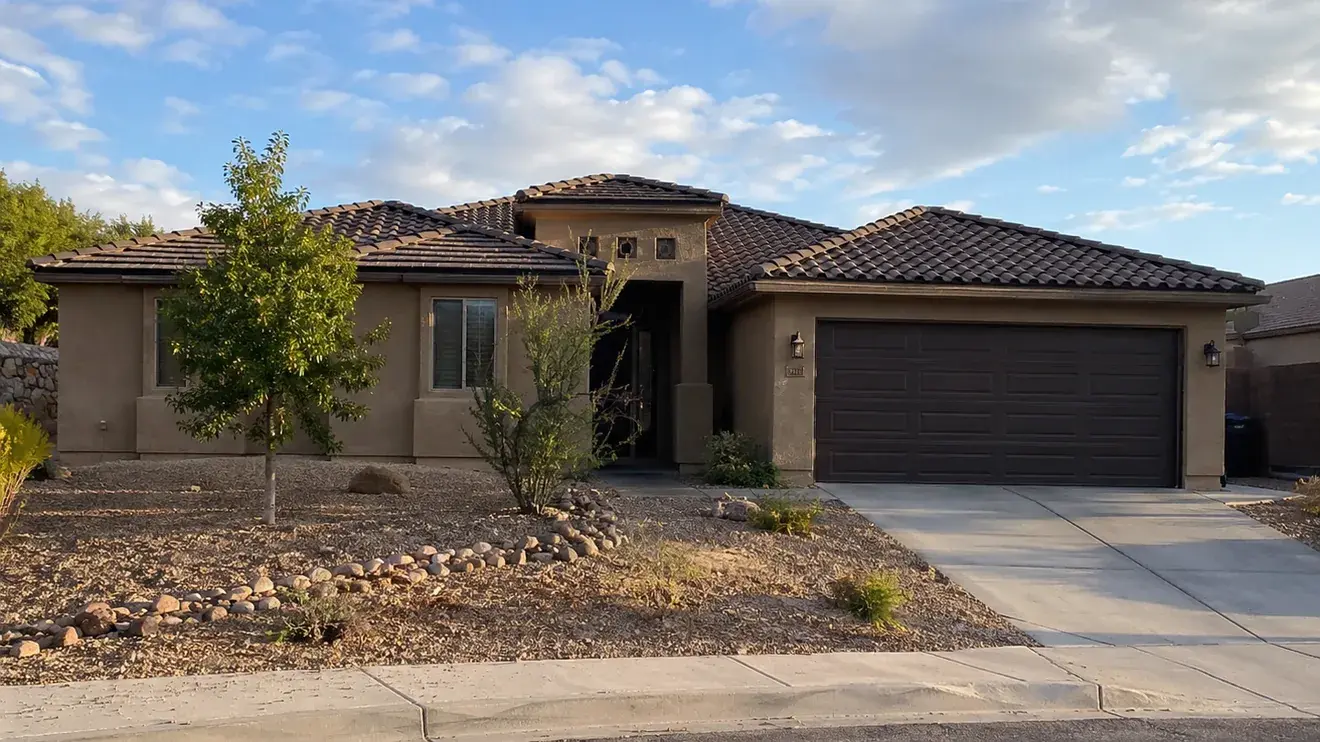
Clay tile is fired at high temperature, which makes it chemically stable, non-combustible and nearly immune to UV. Its color is baked in, so it doesn't fade the way surface-colored materials do. Clay is the classic choice on Spanish and Mediterranean-style homes across Las Cruces and Mesilla, and many of those roofs have been in place for half a century.
Concrete tile is molded from sand, cement and water, then colored on the surface or throughout. It's heavier than clay, less expensive, and still remarkably durable. Its main long-term weakness is that surface color fades over time and the material is slightly more porous, which matters more in wet climates than here.
Slate is quarried stone and lasts essentially forever, but it's expensive, very heavy, and rare in this region.
Compared with asphalt shingles, tile lasts two to four times longer. That's the headline number. The next section is the footnote that changes how you should read it.
Why the Underlayment Matters More Than the Tile
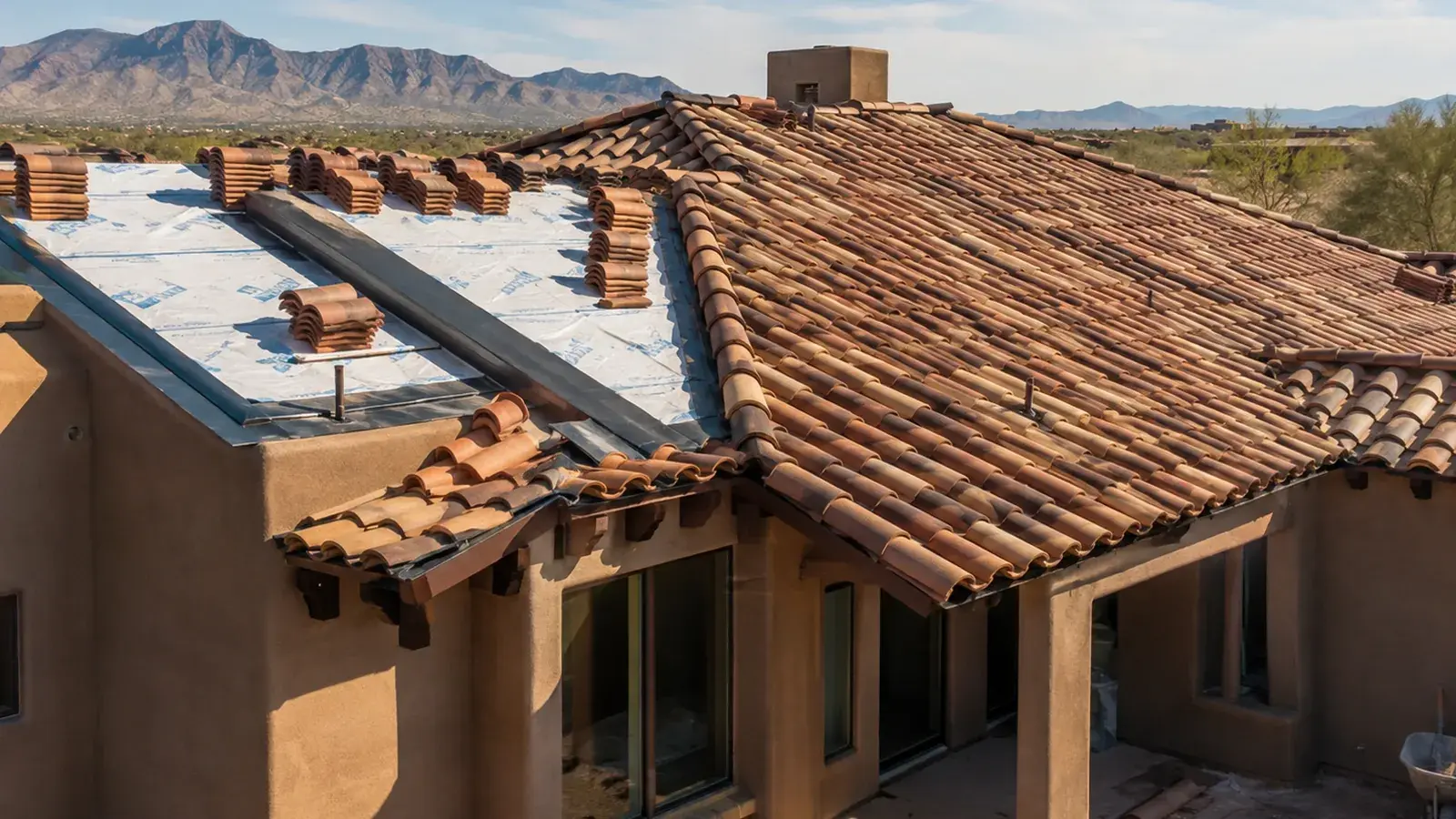
Here's what most homeowners don't realize about how long tile roofs last: tile is not a waterproof system on its own. Tiles shed the bulk of rainfall, but wind-driven rain, condensation and water running under laps all reach the layer beneath. That layer, the underlayment, is the actual waterproof membrane. It sits directly on the roof deck and it's what keeps the house dry.
Traditional asphalt-saturated felt underlayment lasts 20 to 30 years. Modern synthetic underlayments stretch that to 25 or 40 depending on the product. Either way, the underlayment reaches the end of its life decades before the tiles do.
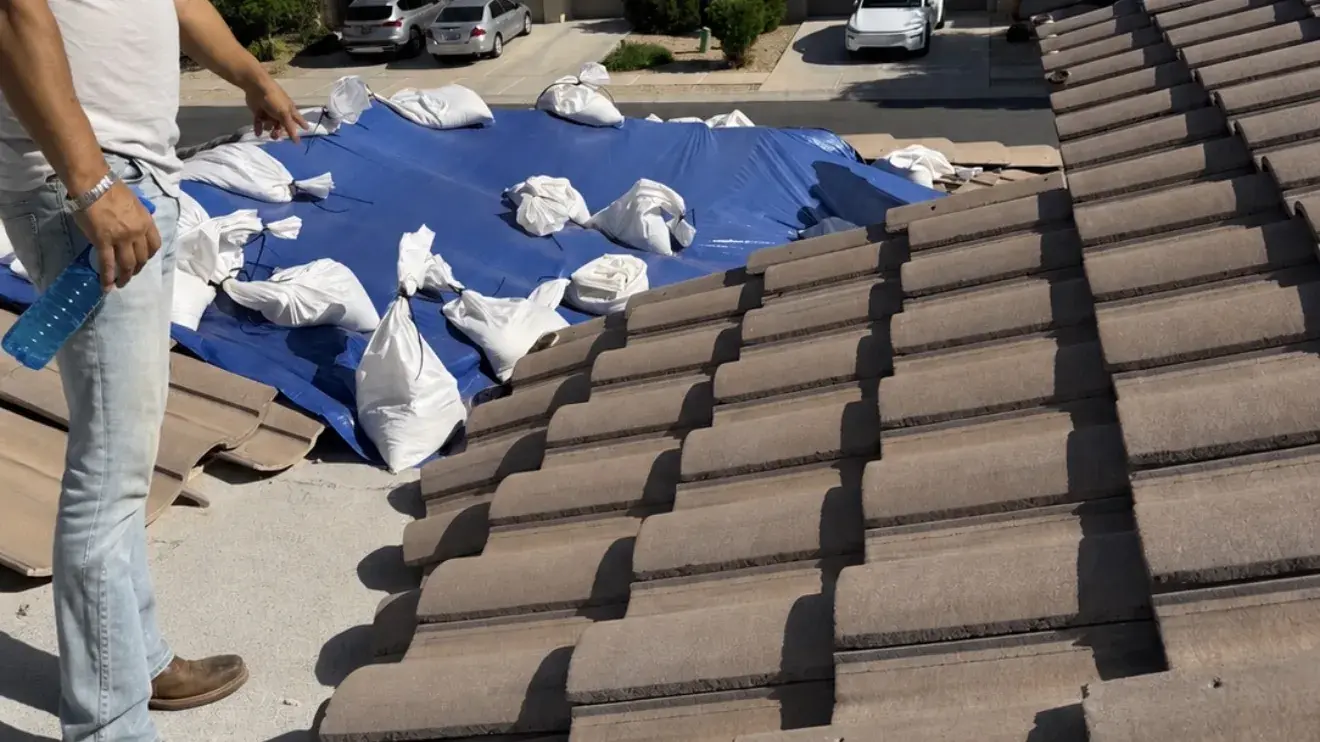
What that looks like in practice is a roof that appears perfect from the street and leaks anyway. The tiles are intact. The underlayment beneath them has dried out, cracked and pulled away from fasteners, and water is finding the deck. This is the single most common reason a tile roof fails, and it's the reason "how long do tile roofs last" needs a two-part answer.
The good news is that underlayment replacement doesn't mean a new roof. More on that below.
What Shortens a Tile Roof's Life
Tile is tough, but the system around it has weak points.
Installation quality. Tiles under about 9 pounds per square foot need one fastener each, heavier tiles need more, and every tile needs proper headlap and sidelap. Skipped fasteners and rushed layout let monsoon wind lift tiles and let water run under them. A poorly installed tile roof can fail in 20 years instead of 75.
Foot traffic. Tile cracks under concentrated weight. HVAC technicians, satellite installers and homeowners who walk the roof wrong are responsible for a large share of broken tiles. Every cracked tile is a spot where the underlayment takes direct sun and direct water.
Clogged valleys and debris. Leaves, dust and nesting material pile up in valleys and behind chimneys, hold moisture against the underlayment and block drainage. On tile roofs, debris accumulation is a slow underlayment killer.
Flashing failures. Where tile meets a stucco wall, a chimney or a skylight, metal flashing does the waterproofing. Flashing rarely lasts as long as tile and it's the second most common leak source after underlayment. On a stucco home those roof-to-wall transitions deserve particular attention.
Poor attic ventilation. Heat trapped under the deck cooks the underlayment from below and accelerates its breakdown.
How Do Tile Roofs Hold Up in New Mexico?
Very well, with a few things to watch.
What works in tile's favor. Dry heat and intense UV are exactly the conditions clay and concrete were designed for. Tile doesn't dry out, curl or shed granules like asphalt. Its thermal mass and the air gap beneath each tile also cut heat transfer into the attic, which shows up on summer cooling bills. And southern New Mexico gets little of the freeze-thaw cycling that cracks concrete tile in northern climates, and almost none of the moss and algae that plague tile in humid regions.
What to watch. Surface color fading on concrete tile becomes noticeable at 15 to 20 years. It's cosmetic, not structural, but worth knowing. Monsoon downbursts hit 50 to 70 mph in the Mesilla Valley and will lift any tile that was under-fastened or has slipped. Blowing dust builds up in valleys faster here than in most places. And the same UV that tile shrugs off is brutal on any exposed underlayment, which is why one cracked tile left alone for two summers can become a leak.
Net result: a well-installed, maintained tile roof in Las Cruces can comfortably reach the upper end of its range. The underlayment still needs attention at 20 to 30 years regardless.
Signs Your Tile Roof Needs Attention
Knowing how long tile roofs last matters less than spotting the signals that yours needs work.
- Cracked, chipped or slipped tiles visible from the ground or after a wind event
- Leaks or ceiling stains with no obvious tile damage, which almost always means the underlayment has failed
- Debris buildup in valleys or behind roof penetrations
- Exposed or curling underlayment visible at eaves, ridges or where tiles have shifted
- Sagging along the ridge or a slope, which points to deck or structural issues under the weight of the tile
- Rust or gaps at flashing around chimneys, skylights and stucco wall intersections
- The roof is 20 to 30 years old and has never had the underlayment evaluated
A professional roof inspection can lift a few tiles and check the underlayment condition directly. That's the only reliable way to know how much life the system has left, since the tiles themselves tell you almost nothing.
Tile Roof Repair, Underlayment Replacement or Full Replacement?
This is where tile differs from every other roofing material, and where knowing the answer saves real money.
Repair is the right call for a handful of cracked or slipped tiles, a failed flashing detail, or a localized leak on a roof whose underlayment is otherwise sound. A roof repair swaps the damaged tiles and reseals the detail.
Underlayment replacement, also called lift and relay, is the option most owners don't know exists. The crew removes the tiles in sections, stacks them, tears off the old underlayment, installs new synthetic underlayment and flashing, then reinstalls the original tiles. Broken tiles are replaced with matching stock. The result is a roof that's watertight for another 25 to 40 years using tiles that still have 50 years in them. It costs a fraction of a new tile roof because the most expensive component gets reused.
Full replacement makes sense when a large share of the tiles are broken or discontinued and can't be matched, when the deck has significant rot, or when the owner wants to change materials entirely. On most tile roofs in this region, that's the least common outcome. A roof replacement is the answer for the deck and the structure, not for tiles that are still doing their job. If you're weighing that decision on any roof, our guide to how often a roof should be replaced walks through the signals.
The Bottom Line on Tile Roof Lifespan
So, how long do tile roofs last? Clay 50 to 100 years, concrete 40 to 75, slate longer than either. But the underlayment beneath them lasts 20 to 30 years, and that's the number that decides when your roof leaks. Three takeaways:
- Tile is the longest-lasting roofing material available for New Mexico homes, and our dry, sunny climate suits it.
- The underlayment is the real waterproof layer. Plan on replacing it around year 20 to 30 even when every tile looks perfect.
- Lift and relay lets you reuse your original tiles over new underlayment, which is usually the smartest move on a roof between 20 and 40 years old.
Contact Gilbert & Sons Roofing and Stucco
Gilbert & Sons Roofing and Stucco is a licensed, insured and bonded contractor serving Las Cruces and Doña Ana County since 2010. We install clay and concrete tile roofs, replace tile roof underlayment without replacing the tiles, and repair the flashing and stucco transitions where tile roofs most often leak. If your tile roof is past 20 years or you've noticed a stain with no obvious damage, call 575-649-2316, email gilbertandsons2010@gmail.com, or request an estimate through our contact page and we'll inspect the underlayment in person and tell you exactly where the roof stands.