
Blog · Commercial Roofing
How Long Does Roof Coating Last? Lifespan by Coating Type
Roof coatings run 5 to 20 years depending almost entirely on chemistry. Silicone leads on flat roofs, and mil thickness and surface prep move the number more than brand.
Contents
A roof coating is one of the better deals in commercial roofing. Instead of tearing off a flat roof that's still structurally sound, you clean it, repair the details, and seal the whole thing under a seamless membrane for a fraction of the cost. The obvious question is how long that actually buys you.
So how long does roof coating last? Between 5 and 20 years, depending almost entirely on which coating goes down. Silicone sits at the top of that range. Acrylic sits at the bottom. And within each type, application thickness and surface prep move the number more than most building owners expect.
This guide breaks down lifespan by coating type, why silicone dominates on flat roofs, what shortens a coating's life, how the substrate underneath changes the math, and how to know when it's time to recoat.
How Long Does Roof Coating Last by Type?
| Coating type | Typical lifespan | Best suited for |
|---|---|---|
| Acrylic | 5 to 10 years | Well-draining sloped and low-slope roofs |
| Silicone | 10 to 20 years | Flat roofs, ponding water, high UV |
| Polyurethane | 10 to 15 years | High-traffic roofs, impact resistance |
| Asphalt-based | 5 to 7 years | Budget repairs, built-up roofs |
Acrylic coatings are the affordable, UV-resistant option, and they perform well on roofs that shed water quickly. Their weakness is standing water, which breaks them down.
Silicone is the durability leader. Properly applied silicone commonly delivers 10 to 20 years, and systems that were applied correctly have run well past their 20-year warranty period.
Polyurethane trades some weathering performance for toughness, which makes it the pick where foot traffic and impact are the main threats. Some polyurethane systems require an acrylic topcoat.
Asphalt-based coatings are the shortest-lived option and are generally a stopgap rather than a restoration.
Why Silicone Lasts Longest on Flat Roofs
For flat roofs in this region, silicone is usually the right answer, and there are four reasons.
It handles ponding water. This is the big one. Flat roofs pond, especially where drainage was never perfect. Acrylic coatings soften and degrade under standing water. Silicone doesn't, which is why it's the standard recommendation for flat and low-slope surfaces.
It's UV stable. Silicone holds up to constant sun exposure better than the alternatives, which matters at our elevation more than it does in most of the country.
Thickness drives lifespan. Silicone is typically applied at 20 to 30 mils once cured, and warranty tiers track that thickness closely, roughly 10 years at 20 mils, 15 years at 25 mils, and 20 years at 30 mils. A coating applied thinner than specified will not reach its advertised life, which is why mil thickness belongs in your quote.
Rain timing is forgiving. Silicone continues to perform even if rain arrives shortly after application. Acrylic and urethane coatings can be damaged or partially washed off by the same event, which matters during monsoon season.
What Shortens a Roof Coating's Life
Most coatings that underperform were compromised before they cured.
Poor surface preparation. This is the number one cause of premature coating failure. The roof has to be clean, dry and sound before anything goes down. A coating applied over dirt, chalk or residue never bonds properly, no matter how good the product is. A reputable contractor will also run an adhesion test before coating the entire roof.
Thin application. Spreading material further than specified saves money on day one and costs years on the back end.
Ponding water on the wrong product. Acrylic over a ponding roof is a short-lived coating.
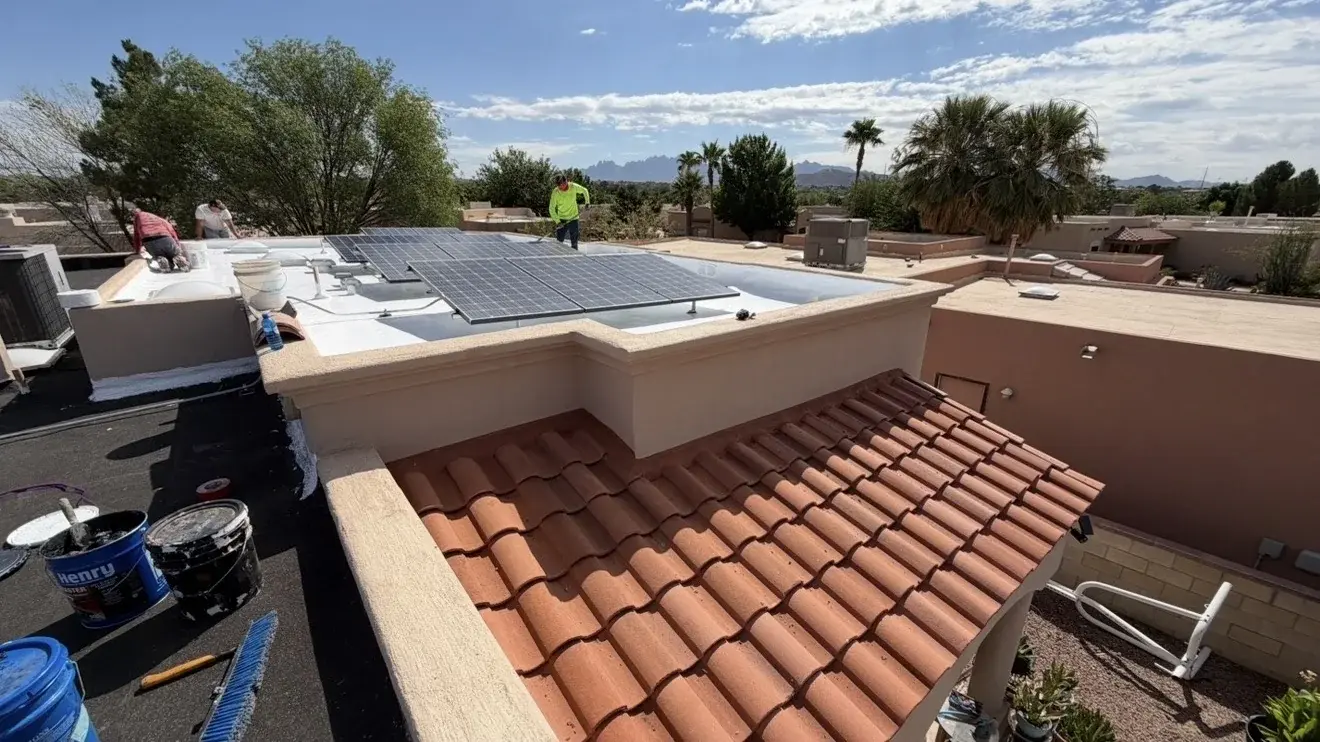
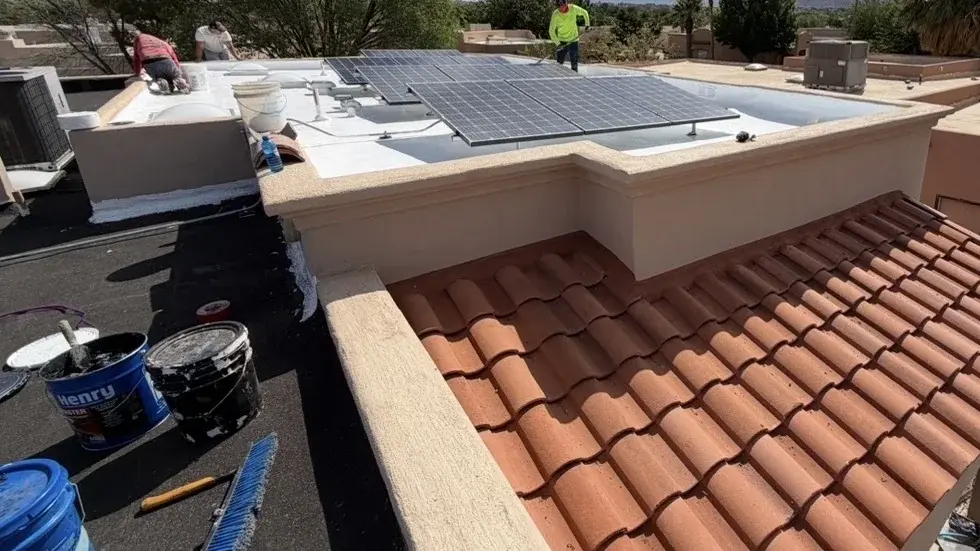
Foot traffic. HVAC service, solar maintenance and general roof access wear coatings down at access points. Walk pads solve most of it.
Punctures and mechanical damage. Dropped tools and dragged equipment break the film. Small punctures let water under the coating, which is exactly what the coating was installed to prevent.
Skipped maintenance. Coatings are low-maintenance, not maintenance-free. Debris, clogged drains and unaddressed damage all shorten service life.
How Substrate Affects Lifespan
The roof underneath changes the answer to how long roof coating lasts.
- Metal and single-ply membranes (including TPO): roughly 15 to 25 years for silicone. These substrates are stable and take coatings well.
- Concrete and built-up roofs: roughly 15 to 20 years.
- Asphalt-based roofs: roughly 10 to 15 years. The substrate itself continues aging under the coating.
This is why two buildings that get coated the same week by the same crew can be on different recoat schedules. Substrate condition and type matter as much as the product.
How Coating Performs in New Mexico Sun
Southern New Mexico is close to ideal territory for roof coatings, with one caveat.
The advantage is reflectivity. A light-colored coating reflects a large share of solar energy instead of absorbing it into the building, which lowers roof surface temperature and cuts the cooling load underneath. On a commercial building running air conditioning from May through October, that's a measurable operating saving on top of the waterproofing.
The caveat is UV intensity. Sun exposure at elevation works on any exposed surface, and over time coatings chalk, thin and lose some reflectivity. That's expected wear, not failure, and it's exactly what recoating addresses.
There's also a practical scheduling note. Coating work needs dry conditions and appropriate temperatures, which makes spring and early fall the natural windows here, before or after monsoon season.
Signs Your Coating Needs Recoating
Coatings give plenty of warning. Watch for:
- Chalking. A powdery residue on the surface means the coating is weathering and losing material.
- Reduced reflectivity. A roof that used to be bright white and now reads gray is losing part of its energy benefit.
- Visible thinning. Areas where the substrate texture is showing through.
- Cracking or flaking, particularly at seams, penetrations and parapet terminations.
- Age thresholds. Roughly 5 to 10 years for acrylics and 10 to 15 or more for silicone is when inspection should get more serious.
- New ponding areas that hold water longer than 48 hours.
A professional roof inspection can measure remaining coating thickness and assess reflectivity, which takes the guesswork out of timing.
Recoating vs Replacing the Roof
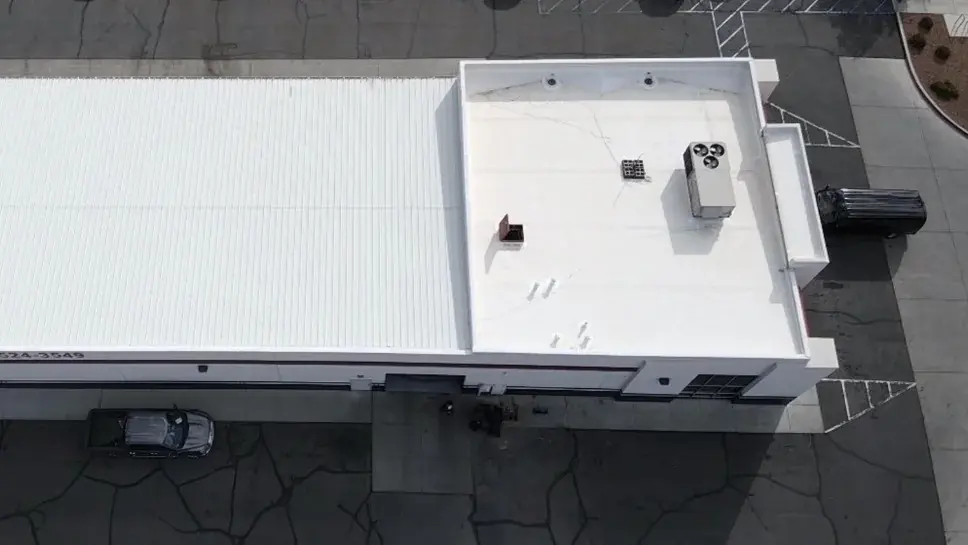
The strongest argument for coatings is what happens at the end of their life. A silicone coating that's reaching the end of its service life doesn't mean a new roof. It usually means a recoat.
Because the existing coating stays in place and a fresh layer goes over it, a recoat is faster, cheaper and less disruptive than the original restoration, and it resets the clock for another decade or more. A flat roof can cycle through recoats for a very long time as long as the deck and structure stay sound. One rule to keep in mind: a recoat should match the original chemistry, so a silicone roof gets silicone.
Replacement becomes the right call when the deck is compromised, when insulation below has taken on significant moisture, or when the membrane has failed too broadly for coating to be a legitimate fix. Short of that, a silicone roof restoration is typically a fraction of the cost of a tear-off and keeps the building in service while the work happens.
The Bottom Line on Roof Coating Lifespan
So, how long does roof coating last? Acrylic gets 5 to 10 years, silicone 10 to 20, polyurethane 10 to 15, and asphalt-based 5 to 7. Three takeaways:
- For flat roofs in New Mexico, silicone is usually the right choice because it handles ponding water and intense UV better than the alternatives.
- Mil thickness and surface preparation determine lifespan more than brand. Ask what thickness you're getting and how the roof will be prepped.
- Coatings are renewable. A well-timed recoat extends the roof another decade or more without a tear-off.
Contact Gilbert & Sons Roofing and Stucco
Gilbert & Sons Roofing and Stucco is a licensed, insured and bonded contractor serving Las Cruces and Doña Ana County since 2010. We provide silicone and elastomeric restoration for commercial and residential flat roofs, along with specialty roofing systems and ongoing roof maintenance. If you want to know whether your flat roof is a candidate for coating or due for a recoat, call 575-649-2316, email gilbertandsons2010@gmail.com, or request an estimate through our contact page and we'll inspect the roof in person and give you an honest recommendation.