
Blog · Storm Damage
What Is Emergency Roof Repair? When to Call and What to Expect
Emergency roof repair is a two-visit process: fast professional stabilization that stops the water today, then a scheduled permanent fix. Here is what counts as an emergency and what the roofer does on site.
Contents
Emergency roof repair is same-day or next-day work by a licensed roofing contractor to stop active water intrusion, stabilize a damaged roof and prevent further damage to the building. It's not the tarp you throw over a hole yourself, and it's not the repair you schedule for next month. It sits in between: a fast professional response that buys time for a permanent fix.
Most people first search "what is emergency roof repair" while standing under a ceiling that's dripping. The ceiling doesn't care about definitions, so here's the practical version: it's what you call when water is coming in now or will be with the next storm, and waiting isn't an option.
This guide covers what emergency roof repair actually involves, what counts as an emergency and what doesn't, what the roofer does when they arrive, how it differs from a DIY fix, why monsoon season drives most of these calls in Las Cruces, what to do while you wait, and how insurance usually treats it.
What Is Emergency Roof Repair?
Emergency roof repair is a two-part process, and understanding that clears up most of the confusion.
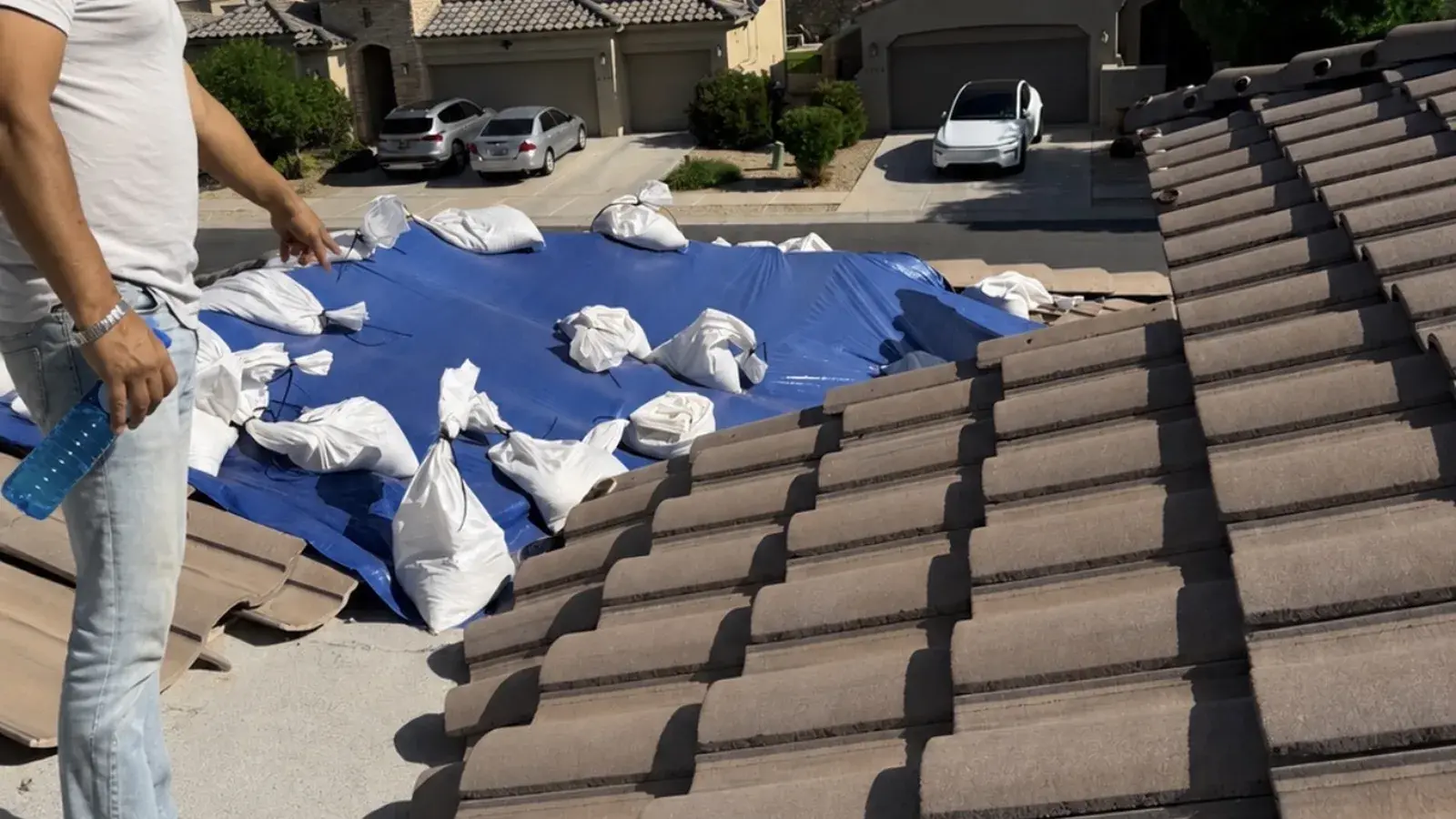
Part one is stabilization. The roofer arrives, finds the source of the water, and makes the roof weather-tight with a temporary measure. That might be a properly anchored heavy-duty tarp, a temporary dry-in with underlayment, a patch over a puncture, or clearing a blocked drain that's ponding water on a flat roof. The goal is to stop damage today.
Part two is the permanent repair. Once the roof is dry and the weather cooperates, the roofer comes back to fix the actual problem: replace the torn membrane, reflash the parapet, reset the tiles, replace the section of decking that got soaked. This is a scheduled roof repair, and it's sometimes a larger job than the emergency visit suggested.
Why two visits? Because permanent repairs need dry conditions, daylight, materials on hand and time to do right. None of those exist at 9 p.m. during a downburst. Emergency roof repair stops the bleeding. The follow-up closes the wound.
What Counts as a Roofing Emergency?
Not every roof problem is an emergency, and knowing the difference saves you money and stress. These situations warrant an emergency call:
- Active leak with more rain in the forecast. Water coming through the ceiling, running down a wall or pooling in the attic.
- A hole or puncture. From a fallen branch, wind-blown debris, or a collapsed section.
- Missing roofing after wind. A section of shingles gone, tiles blown off, a flat roof membrane lifted or torn back.
- Tree or debris impact. Anything heavy sitting on or through the roof.
- Sagging or structural movement. A visibly dipping roofline, especially after heavy rain or on an older flat roof.
- Standing water on a flat roof that isn't draining. Blocked scuppers or canales after a storm can put thousands of pounds of water on the deck.
- Water reaching electrical fixtures. Any leak near lights, outlets or a panel is a safety issue first.
What generally isn't an emergency: a small stain that hasn't grown, a single cracked tile with no leak, a few curled shingles on a dry week, or a slow drip you've been watching for a month. Those need a prompt inspection, not a night call. A good contractor will tell you honestly which category you're in.
What Happens During an Emergency Roof Repair Visit?
Here's what the roofer actually does when they show up, and what you should expect from a professional emergency roofing response.
Assessment and Safety
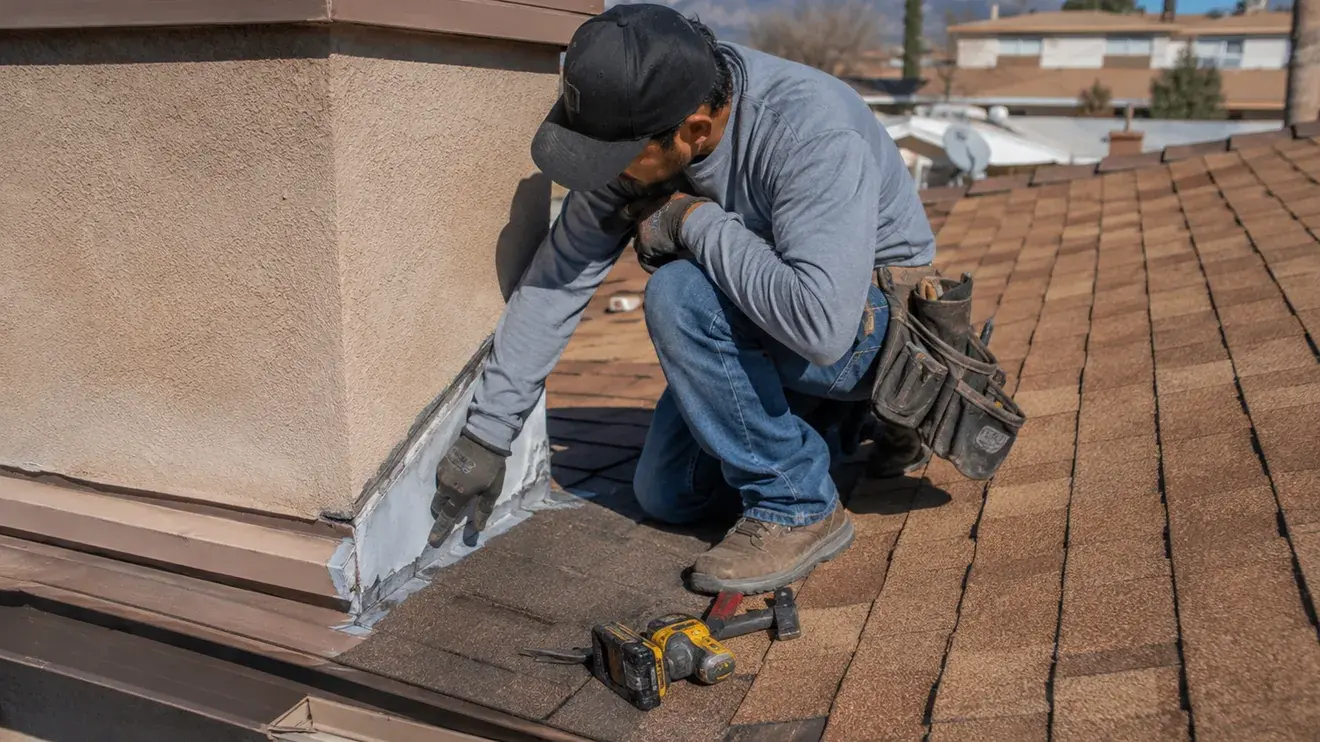
First, they figure out where the water is coming from, which is often not where it's showing up inside. On a stucco home with a flat roof, a ceiling stain in the living room can trace back to a cracked parapet cap fifteen feet away. They also assess whether the roof is safe to walk. In sustained high wind or lightning, a responsible crew waits. No repair is worth someone falling.
Water Diversion Inside
Before going up, they may help redirect what's already coming in: poking a small drain hole in a sagging ceiling bubble so it drips in one controlled spot instead of collapsing, positioning containers, moving belongings.
Temporary Dry-In or Tarp
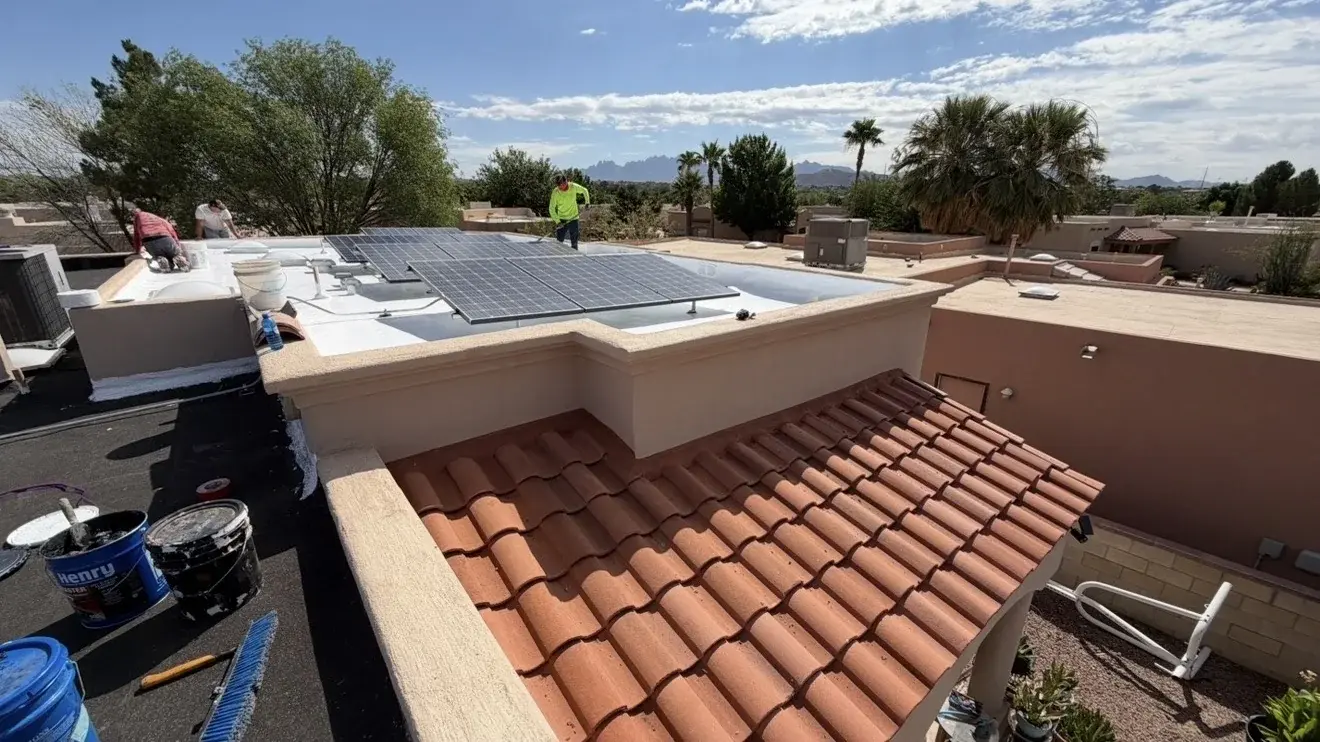
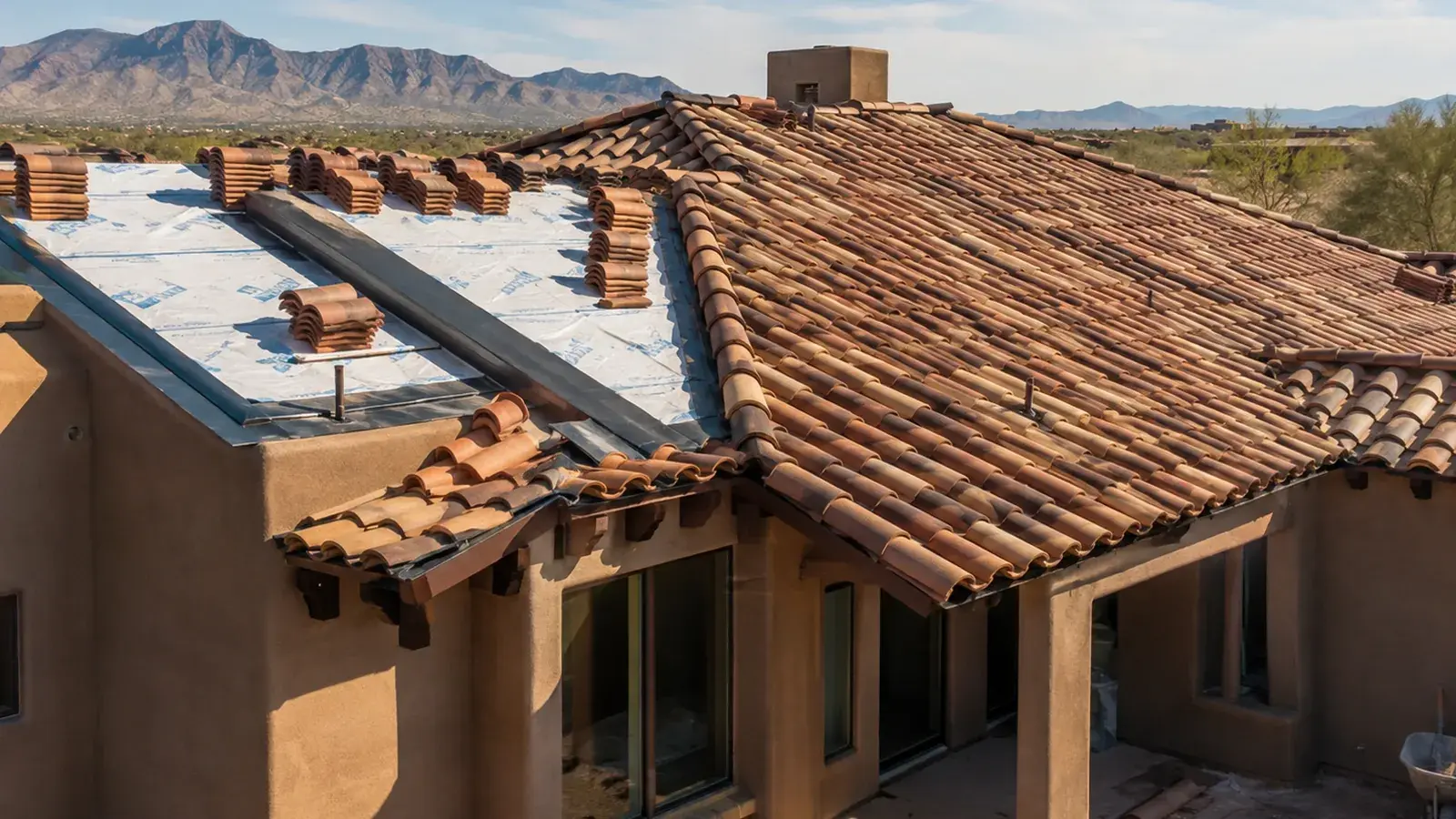
Then the roof gets weather-tight. On a pitched roof, that's usually a heavy-duty reinforced tarp that extends several feet past the damage on all sides, anchored to the structure so wind can't lift it. On a flat roof, it may be a patch of membrane or underlayment sealed over the breach, or clearing drains so water can leave. Done right, this holds for weeks until permanent work is scheduled.
Documentation
A professional crew photographs the damage before and after stabilization. You'll want this for insurance, and it also establishes what the permanent repair needs to address.
Scheduling the Permanent Repair
Before leaving, they set a plan for the follow-up: what needs to be done, roughly what it will cost, and when weather will allow it.
Emergency Roof Repair vs Temporary Fixes: What's the Difference?
A homeowner tarp, a tube of sealant, or a bucket in the attic are temporary fixes. They reduce damage for a short time. Emergency roof repair is a licensed contractor stopping the leak and stabilizing the roof properly, then following through to fix the cause.
The difference shows up in how they fail. A DIY tarp that's too small, unanchored or laid on wet shingles lifts in the next gust and often does more harm than good. Sealant smeared over a membrane seam or a stucco crack hides the problem while water keeps moving behind it. Neither addresses why the roof failed.
There's also the safety side. Roof work in wind, on a wet surface, in fading light, is how people get hurt. If the damage is small, the roof is low and the weather is calm, a homeowner tarp is a reasonable stopgap. If any of those aren't true, the answer to what is emergency roof repair is: the thing you call instead of climbing up there.
Why Monsoon Season Drives Emergency Roof Repair in Las Cruces
From late June through September, the Mesilla Valley gets the storms that generate most emergency roof repair calls of the year.
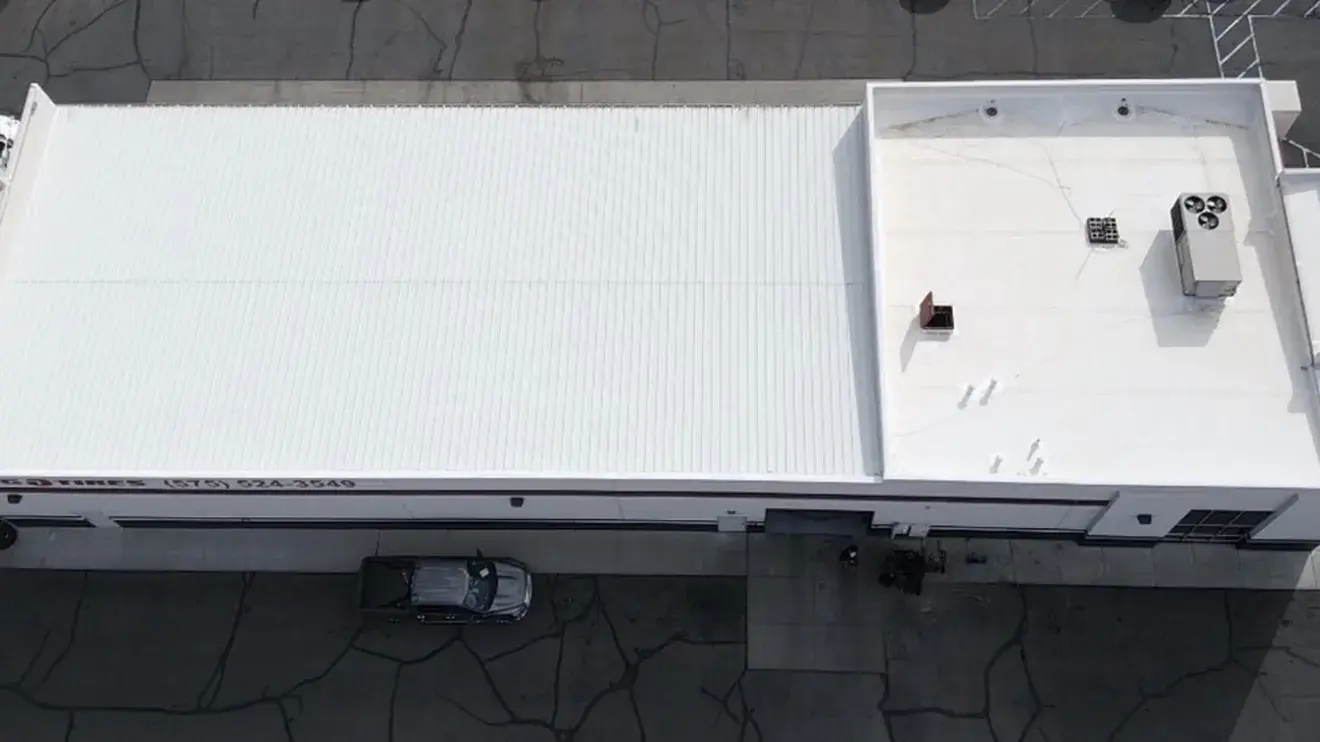
Monsoon downbursts regularly bring 50 to 70 mph winds. That's enough to lift under-fastened tile, strip older 3-tab shingles and peel back the edge of a flat roof membrane. Rain arrives sideways and hard, which tests every parapet cap, roof-to-wall flashing and window head on a stucco building at once. On flat roofs, a summer's worth of dust washes into scuppers and canales in the first big storm and blocks them, and a roof that's holding six inches of water is a structural emergency, not just a leak.
Hail is less frequent but does occur, and a hail event can crack dozens of tiles or bruise shingles across an entire slope in ten minutes.
The pattern every roofer in Las Cruces knows: the first significant monsoon storm of the year produces a wave of emergency calls, most of them on roofs that had a small, fixable problem in May.
What Should You Do While You Wait for the Roofer?
You've made the call. Here's how to spend the next hour or two productively and safely.
- Move belongings out from under the leak. Furniture, electronics, rugs, anything on the floor below.
- Contain the water. Buckets, towels, a tarp on the floor. If a ceiling is bulging, a small puncture with a screwdriver at the lowest point lets it drain in one place rather than collapsing.
- Photograph everything. The leak, the damage inside, the exterior if you can see it from the ground, the date and time. Insurance will ask.
- Cut power to the affected area at the breaker if water is anywhere near lights, outlets or fixtures.
- Stay off the roof. Wet surfaces, wind and darkness are how emergencies get worse.
- Check the attic if it's safe to see whether water is spreading, and note where it's entering.
- Don't start permanent repairs or cleanup before the roofer and, if applicable, the adjuster have seen the damage.
Does Insurance Cover Emergency Roof Repair?
In general terms, and this varies by policy: sudden storm damage from wind, hail or falling debris is typically covered under a standard homeowner policy. Damage from wear, age, deferred maintenance or a roof that was already failing usually isn't. The cost of emergency tarping or stabilization to prevent further damage is often reimbursable as part of a covered claim, because policies generally expect you to mitigate damage.
What helps a claim: photos before and after, a written assessment from the roofer, receipts for the emergency work, and a clear timeline. What hurts it: waiting weeks to report, cleaning up before documenting, or a roof with an obvious history of neglect.
How to Avoid Needing Emergency Roof Repair
Most emergency calls are the end of a story that started as a small, visible problem.
- Get a pre-monsoon inspection. A professional roof inspection in May or early June catches lifted flashing, cracked parapet caps, loose tiles and failing sealant before the first storm tests them.
- Clear drains, scuppers and canales. On a flat roof, this alone prevents a large share of monsoon emergencies.
- Fix small problems immediately. A single slipped tile or a hairline crack at a parapet is a fifteen-minute fix in spring and an emergency in July.
- Get on a maintenance plan. Regular roof maintenance means someone who knows your roof is looking at it twice a year.
- Save the number before you need it. Searching for a roofer at night during a storm, when every roofer in town is getting the same call, is the worst time to be choosing.
The Bottom Line on Emergency Roof Repair
So, what is emergency roof repair? Fast, professional stabilization of a roof that's letting water in, followed by a scheduled permanent fix once conditions allow. Three takeaways:
- It's a two-visit process. The emergency call stops the damage. The follow-up repairs the cause. Both matter.
- Active leaks, holes, missing sections, structural sag and ponding water are emergencies. A small, stable stain on a dry week is an inspection.
- In Las Cruces, most emergency calls come from monsoon storms hitting roofs that had a small, known problem in spring. A pre-season inspection is the cheapest emergency roof repair you'll ever buy.
Contact Gilbert & Sons Roofing and Stucco
If water is coming in right now, call 575-649-2316. Gilbert & Sons Roofing and Stucco is a licensed, insured and bonded contractor serving Las Cruces and Doña Ana County since 2010, and we respond to active leaks, storm damage and flat roof failures on homes and commercial buildings, then handle the permanent repair ourselves rather than handing it off. For anything less urgent, email gilbertandsons2010@gmail.com or request an estimate through our contact page and we'll get the roof inspected before the next storm does it for you.