
Blog · Stucco
What Is Parapet Repair? Fixing the Most Common Flat Roof Leak
Parapet repair fixes the cap, the flashing and the stucco of the short wall above a flat roof, where more roof leaks start than anywhere else on a Pueblo-style or commercial building. Here is why parapets leak and what the repair involves.
Contents
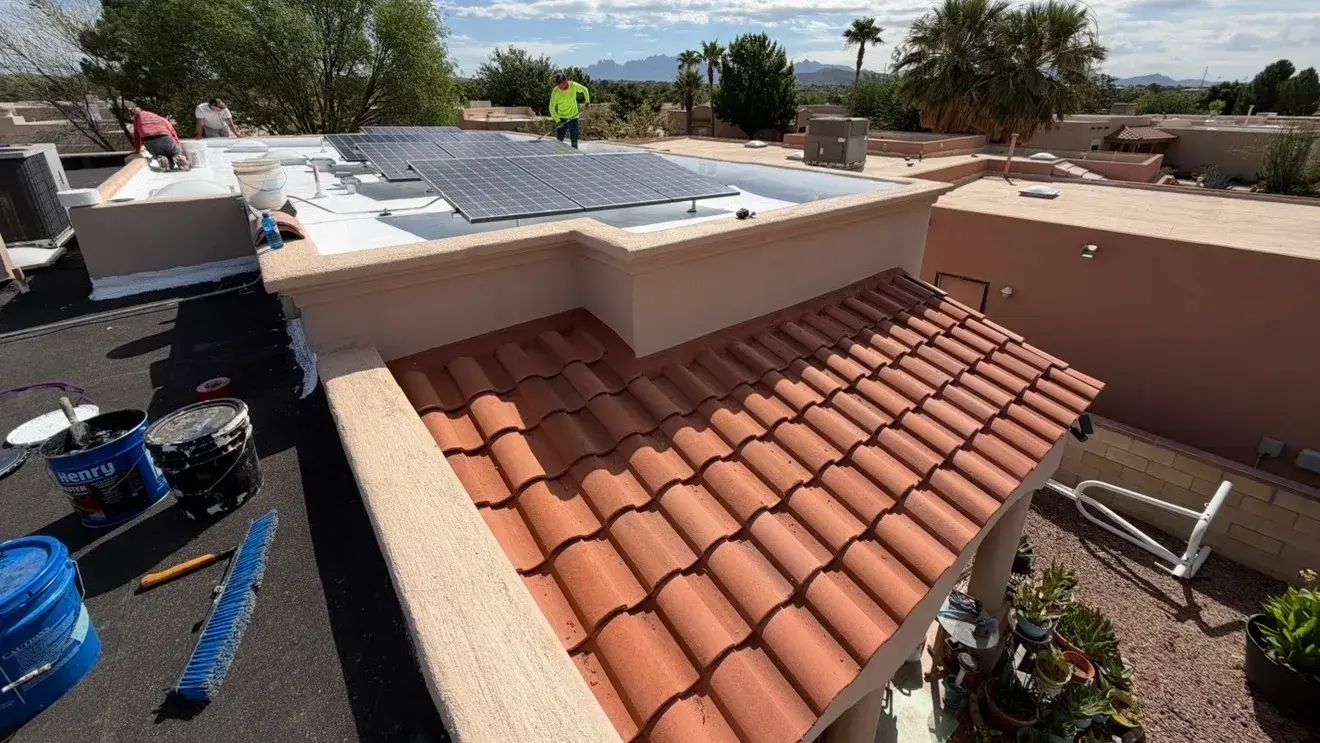
Parapet repair is the work of fixing the short wall that rises above the edge of a flat roof. It covers three things at once: the cap on top of the wall, the flashing where the roof membrane meets the wall, and the stucco on the wall's inner and outer faces. On Pueblo-style homes and commercial buildings across southern New Mexico, this one detail is where more "roof leaks" start than anywhere else on the building.
Homeowners usually find out what parapet repair is the hard way. A stain appears on a ceiling near an exterior wall. A roofer looks at the membrane and says it's fine. A stucco contractor looks at the wall and says it's fine. Meanwhile the stain grows. The problem is at the top of the wall where the two trades meet, and nobody owns it.
This guide explains what a parapet is, why it leaks, exactly what parapet repair involves, the metal-versus-stucco cap decision, the signs you need it, and why it takes a contractor who does both roofing and stucco.
What Is a Parapet Wall?
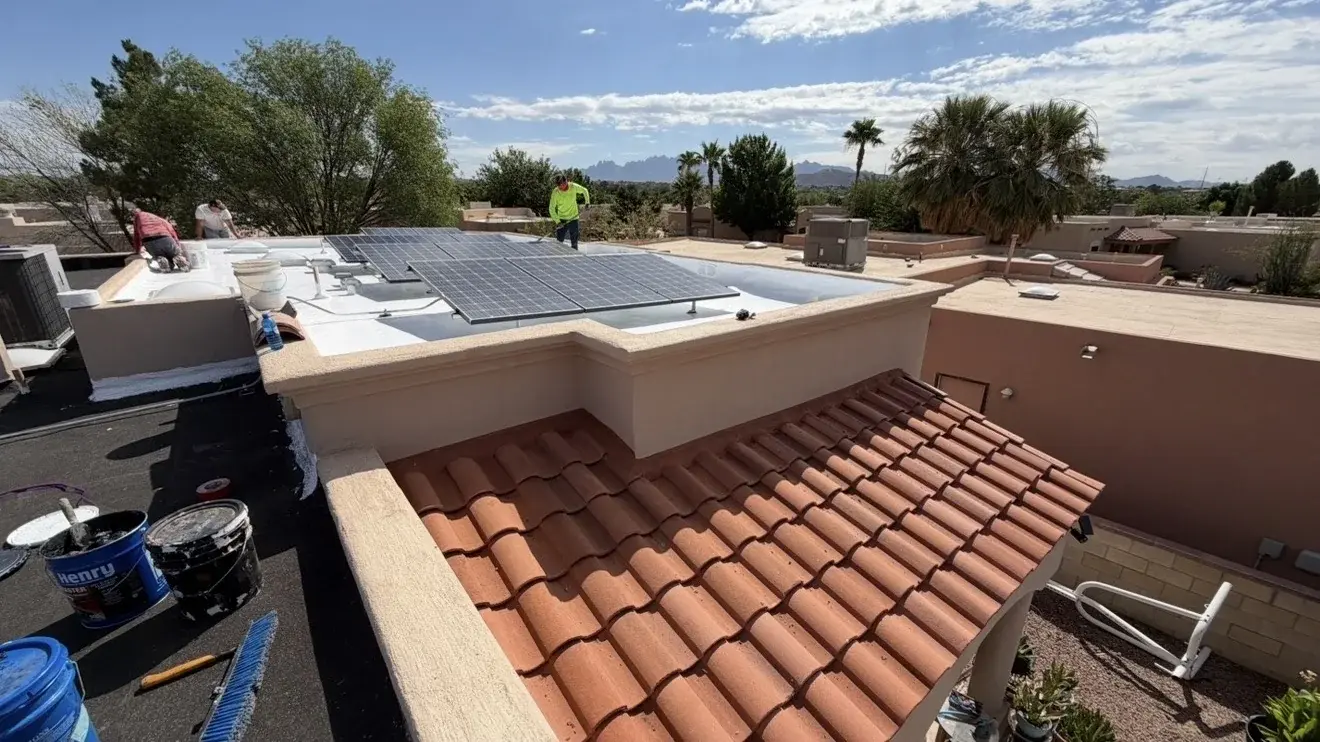
A parapet is the section of exterior wall that extends above the roof surface. Flat-roofed buildings have them for a few reasons: they hide the roof and rooftop equipment from the street, they give the roof membrane a vertical surface to terminate against, they help contain water so it can be directed to drains, and on Pueblo and Territorial-style homes they're a defining part of the look.
A parapet has five parts that matter for repair:
- The cap or coping. The top of the wall. On residential stucco buildings it's often just stucco rounded over the top. On commercial buildings it's usually metal coping or a precast concrete cap.
- The outer face. Stucco, exposed to weather from the street side.
- The inner face. Stucco or membrane, facing the roof.
- The base flashing. Where the roof membrane turns up the inner face and terminates under counterflashing or the cap.
- Scuppers and canales. The drains cut through the parapet. Each one is a hole in the wall that has to be flashed and sealed.
Every one of those parts moves at a different rate in the desert heat. The membrane is flexible. The stucco is rigid. The metal expands more than either. The cap sits on top of all of it. That's why parapets fail.
Why Do Parapet Walls Leak?
Understanding what parapet repair is starts with understanding the failure. Here's how it usually goes.
The cap cracks or fails. A stucco cap is porous cement rounded over the top of a wall, and the top of a wall takes the most direct sun and the hardest rain. Hairline cracks open along the top. Water soaks in. The stucco cap on most residential parapets is the number one entry point.
Water travels down inside the wall. Once water gets into the top of the parapet, it runs down through the wall assembly and behind the roof membrane's termination, then onto the deck. The homeowner sees a ceiling stain and assumes the roof failed. The roof is often intact.
Counterflashing pulls away. The metal covering the top of the membrane termination loosens as the stucco and metal expand and contract against each other. Sealant at that joint dries out in UV within a few seasons.
The membrane termination separates. The roof membrane running up the inner face of the parapet pulls away at the top edge or at a corner, especially at scuppers.
Scuppers and canales crack. The stucco around a drain penetration cracks from thermal movement, and water gets behind the sleeve.
Monsoon makes all of it worse. Rain driven sideways by 50 to 70 mph wind hits the outer face of every parapet in Las Cruces at once and finds every crack.
The compounding problem is that parapet water damage is slow and hidden. By the time a stain shows on a ceiling, water has usually been moving through the wall for a season or more.
What Is Parapet Repair? What the Work Involves
Parapet repair is scoped to where the water is entering, but a full repair addresses all five parts so it doesn't come back.
Cap or Coping Replacement
If the stucco cap is cracked or saturated, the repair either rebuilds it or replaces it with metal coping. A rebuilt stucco cap gets a slight slope toward the roof, a new finish and a sealer. Metal coping gets a continuous cleat on the outside, a drip edge on both sides, and sealed joints between sections.
Reflashing the Membrane Termination
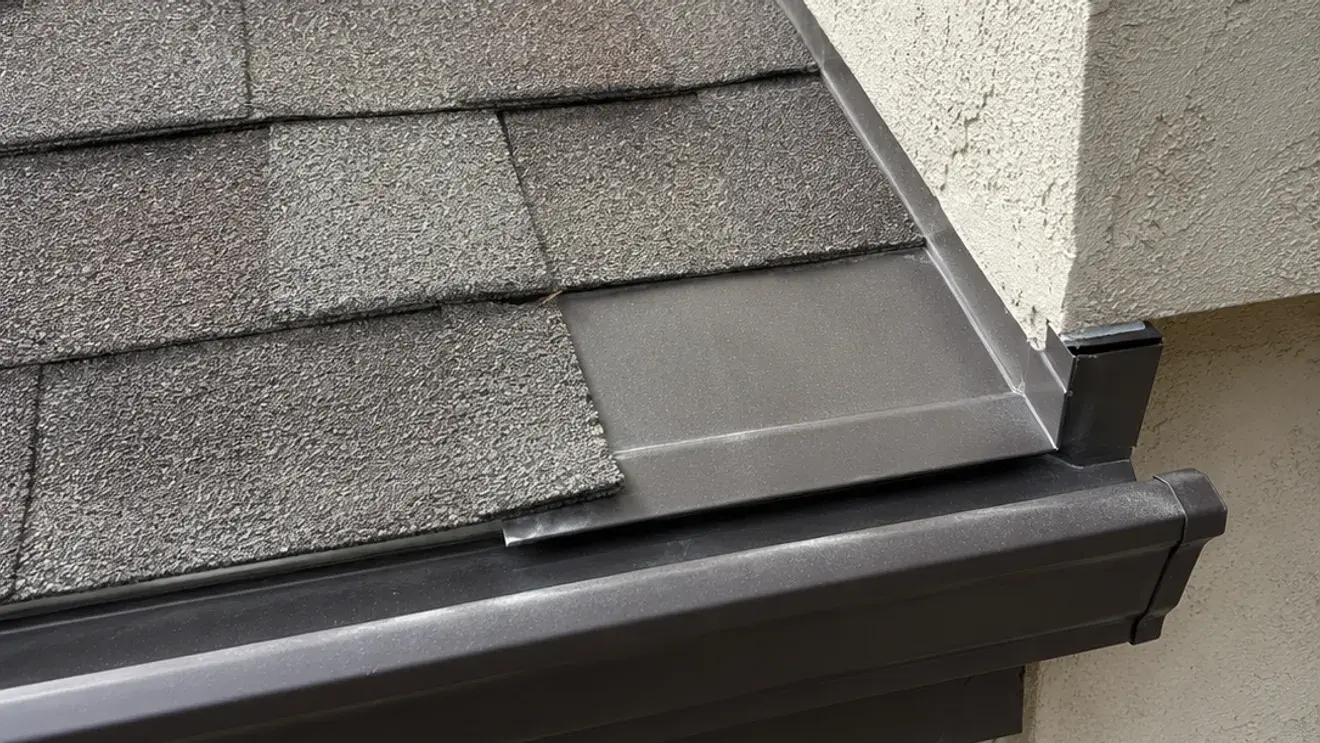
The base flashing and counterflashing at the inner face are stripped, the wall is prepped, and the membrane is re-terminated: run up the wall, mechanically fastened at the top with a termination bar, then covered with new counterflashing set into the wall or under the cap. On a coated roof, this is where the coating is carried up and over the flashing for a seamless seal. Our guide to roof flashing explains how each of these layers works.
Stucco Face Repair
Cracks on the inner and outer faces are opened, hollow or delaminated stucco is removed to the lath or block, new lath is tied in where needed, and the wall is rebuilt in scratch, brown and finish coats with texture matched to the surrounding surface.
Scupper and Canale Resealing
Each drain through the parapet gets its sleeve reflashed, the membrane tied into it, and the stucco around it rebuilt.
Coating the Inside Face
On flat roofs with a silicone or elastomeric coating, the inner face of the parapet is coated along with the roof so the whole surface becomes one waterproof membrane from deck to cap. A silicone roof restoration usually includes parapet faces for exactly this reason.
Metal Coping vs Stucco Cap: Which Is Better?
This comes up on nearly every parapet job.
Stucco cap. Matches the traditional look, costs less, and is what most homes in the region already have. Its weakness is that it's porous, it cracks with movement, and it has no drip edge, so water clings to the wall face rather than falling clear. It needs periodic sealing and crack repair to stay watertight.
Metal coping. More expensive, and it changes the look, which matters on a historic adobe or a Pueblo-style home. But it's non-porous, it's continuous, it has drip edges on both sides, and it doesn't crack. On a commercial building it's the standard fix, and it typically ends the parapet leak problem for good.
The middle path many homeowners choose: a rebuilt stucco cap with a proper slope, a good sealer, and a maintenance schedule. It keeps the look and it works, as long as it gets checked annually.
Signs You Need Parapet Repair
- Stains or dark streaks on the inside face of the parapet, visible from the roof
- Ceiling stains near exterior walls, especially in corners
- Cracks along the top of the wall, running lengthwise or at corners
- Efflorescence (white mineral deposits) on the stucco below the cap
- Hollow sound or soft spots when you tap the stucco near the top of the wall
- Cracked stucco around scuppers or canales
- Membrane visibly pulled away from the wall at the top edge
- Paint peeling or bubbling on the outer face below the cap
Any one of these on a flat-roofed stucco building points at the parapet first. A professional roof inspection that includes the parapets, not just the membrane, will confirm where water is getting in.
Why Parapet Repair Needs a Roofer and a Stucco Crew
This is the honest answer to why so many parapet leaks go unfixed for years.
The membrane termination and counterflashing are roofing work. The cap and the wall faces are stucco work. A roofer who doesn't do stucco will reflash the termination and leave the cracked cap above it, and the water comes right back. A stucco crew that doesn't do roofing will patch the cracks and leave the failed flashing behind them, and the leak just gets hidden.
Effective parapet repair treats the parapet as one assembly. The same crew rebuilds the cap, reflashes the termination, repairs the faces and reseals the scuppers, in the right sequence, so each layer laps correctly over the one below. That's the only version of the repair that holds through the next monsoon season, and it's why Gilbert & Sons handles stucco work and roof repair as one trade.
Parapet Repair Cost Factors
Parapet repair is priced by scope rather than by a flat rate, and four things drive it:
- Linear feet of parapet involved. A single corner is a small job. All four sides of a commercial building is a project.
- Cap type. Resealing a stucco cap costs least. Rebuilding it costs more. Installing metal coping costs most but tends to be the last time you pay for it.
- How far the water traveled. If the deck, insulation or interior drywall took on water, the repair grows.
- Whether the membrane needs work. A termination re-flash is modest. A section of membrane replacement or a coating of the inside faces adds to it.
An inspection settles the scope before anything is quoted. The most expensive parapet repairs are the ones that were put off through two or three monsoon seasons.
The Bottom Line on Parapet Repair
So, what is parapet repair? Fixing the cap, the flashing and the stucco of the wall above a flat roof, as one assembly, so water stops getting in at the top. Three takeaways:
- On a flat-roofed stucco building, the parapet is where most roof leaks actually start. Check it before blaming the membrane.
- The cap is the usual entry point. A cracked stucco cap or failed coping lets water travel down inside the wall and behind the roof.
- It's a two-trade repair. Reflashing without fixing the cap, or patching stucco without fixing the flashing, doesn't hold.
For more on how the roof and the walls work together on these buildings, see our guide to stucco roofing.
Contact Gilbert & Sons Roofing and Stucco
Gilbert & Sons Roofing and Stucco is a licensed, insured and bonded contractor serving Las Cruces and Doña Ana County since 2010. Parapet repair is the job we built the business around: cap rebuilds and metal coping, membrane termination and counterflashing, stucco face repair and scupper resealing, all handled by one crew in the right order. If you've got a stain near an exterior wall or cracks along the top of a parapet, call 575-649-2316, email gilbertandsons2010@gmail.com, or request an estimate through our contact page and we'll inspect the roof and the wall together.