
Blog · Commercial Roofing
What Is Silicone Roof Restoration? The Process From Inspection to Warranty
Silicone roof restoration renews a sound flat roof without a tear-off: inspect, clean, repair, reinforce, then seal under a seamless silicone membrane with a 10 to 20 year warranty. Here is which roofs qualify and how the process works.
Contents
Silicone roof restoration is a system for renewing an existing flat or low-slope roof without tearing it off. The roof is inspected, cleaned, repaired at every seam and detail, then sealed under a seamless layer of silicone that becomes the new waterproof membrane. It typically costs a fraction of a replacement, the building stays occupied during the work, and it comes with a 10 to 20 year warranty depending on the thickness applied.
That's the short version. The reason it's worth a full explanation is that "coating" sounds like painting, and property owners either dismiss it as a cosmetic fix or assume any contractor with a roller can do it. Neither is true. Done right, silicone restoration is a roofing system with a process, a specification and a warranty. Done wrong, it's an expensive layer of white on top of a roof that still leaks.
This guide covers what silicone roof restoration actually is, which roofs qualify, the process step by step, how long it takes, how it compares to replacement, what the warranty means, and why it suits southern New Mexico. If you want lifespan numbers by coating type, that's covered in a separate post on how long roof coating lasts. This one is about the work itself.
What Is Silicone Roof Restoration?
Three terms get mixed up, so here's the distinction.
Replacement removes the old roof to the deck and installs a new system. It's the most expensive and disruptive option, and the right one when the roof underneath is structurally compromised.
Recoating applies a fresh layer of coating over an existing coating that's aging. It's the maintenance step at the end of a restored roof's service life.
Restoration is the first-time application of a full coating system over an existing, uncoated roof. It includes the inspection, moisture testing, cleaning, repairs and reinforcement that make the coating actually work. The silicone is the last step, not the whole job.
What makes it a system rather than a paint job is that the finished surface is seamless and fully adhered. Seams are where flat roofs leak, and a restored roof has none. Silicone in particular is chosen over acrylic for flat roofs because it holds up under ponding water and intense UV, both of which are facts of life on Las Cruces rooftops.
Which Roofs Qualify for Restoration?
Most flat and low-slope commercial and residential roofs are candidates, provided the roof underneath is sound.
Roofs that typically qualify:
- TPO, PVC and EPDM single-ply membranes
- Modified bitumen and built-up (tar and gravel) roofs
- Metal roofs, standing seam and corrugated
- Spray polyurethane foam
- Concrete decks
- Previously coated roofs with an aging acrylic or silicone layer
The rule that decides it: the deck and insulation must be dry. Silicone seals the surface, so any moisture already trapped in the insulation stays trapped and keeps degrading the roof from below. A moisture survey before restoration is not optional.
Roofs that don't qualify:
- Roofs with widespread wet insulation (more than roughly a quarter of the area)
- Roofs with a rotted or structurally compromised deck
- Membranes that have failed so broadly that repairs would cost more than replacement
- Gravel-surfaced roofs where the gravel can't be removed
A professional roof inspection with a moisture survey settles which category a roof falls into before anyone quotes the work.
The Silicone Roof Restoration Process Step by Step
Here's what silicone roof restoration looks like on a real job, in order.
Inspection and Moisture Survey
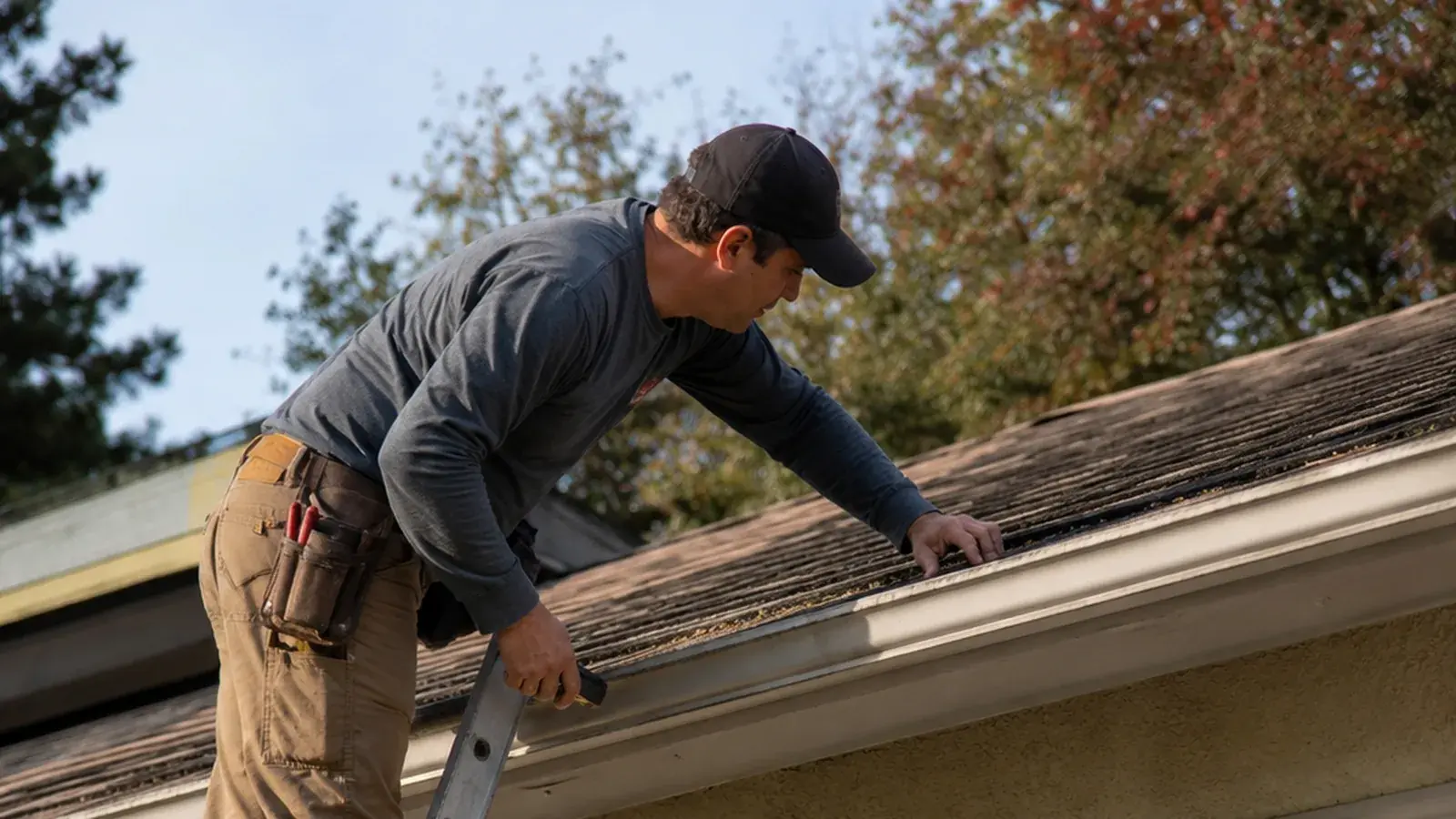
The contractor walks the roof, documents every seam, penetration, drain and parapet, and identifies problem areas. A moisture survey, usually with an infrared scanner or a nuclear moisture meter, maps any wet insulation. Wet areas get cut out and replaced before anything else happens.
Adhesion Test
A small patch of silicone is applied to the existing roof surface and allowed to cure, then pulled to confirm it bonds. Different substrates need different primers or none at all. Skipping this test is how coatings peel a year later.
Cleaning and Surface Prep
The roof is pressure washed to remove dirt, chalk, oxidation and any loose material. On some substrates a cleaning solution or rinse aid is used. The roof has to be clean and completely dry before the next step, which in our climate usually means one day of drying.
Repairs to Seams, Flashing and Penetrations
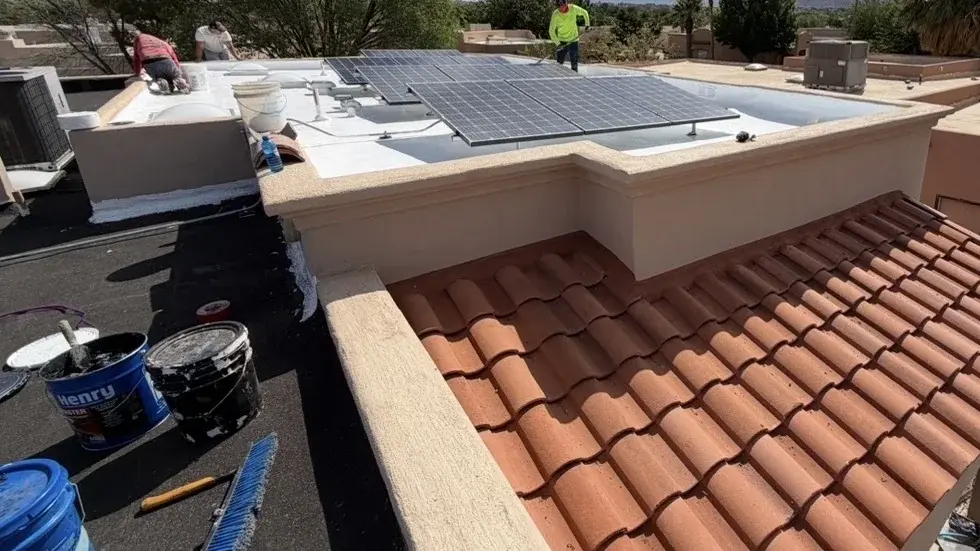
Every open seam is resealed. Failed flashing at parapets, curbs and pipes is repaired or replaced. Ponding areas may get tapered insulation or drain adjustments. Blisters are cut and patched. This is roofing work, and it's the step that separates a real restoration from a coating job. Our guide to parapet repair covers the wall side of that work.
Reinforcing Details With Fabric
Seams, flashing corners, drains, pipe boots and the base of the parapet get a base coat of silicone with polyester reinforcing fabric embedded in it. This turns every stress point into a reinforced, flexible detail rather than a thin film over a crack.
Applying the Silicone to Specified Thickness
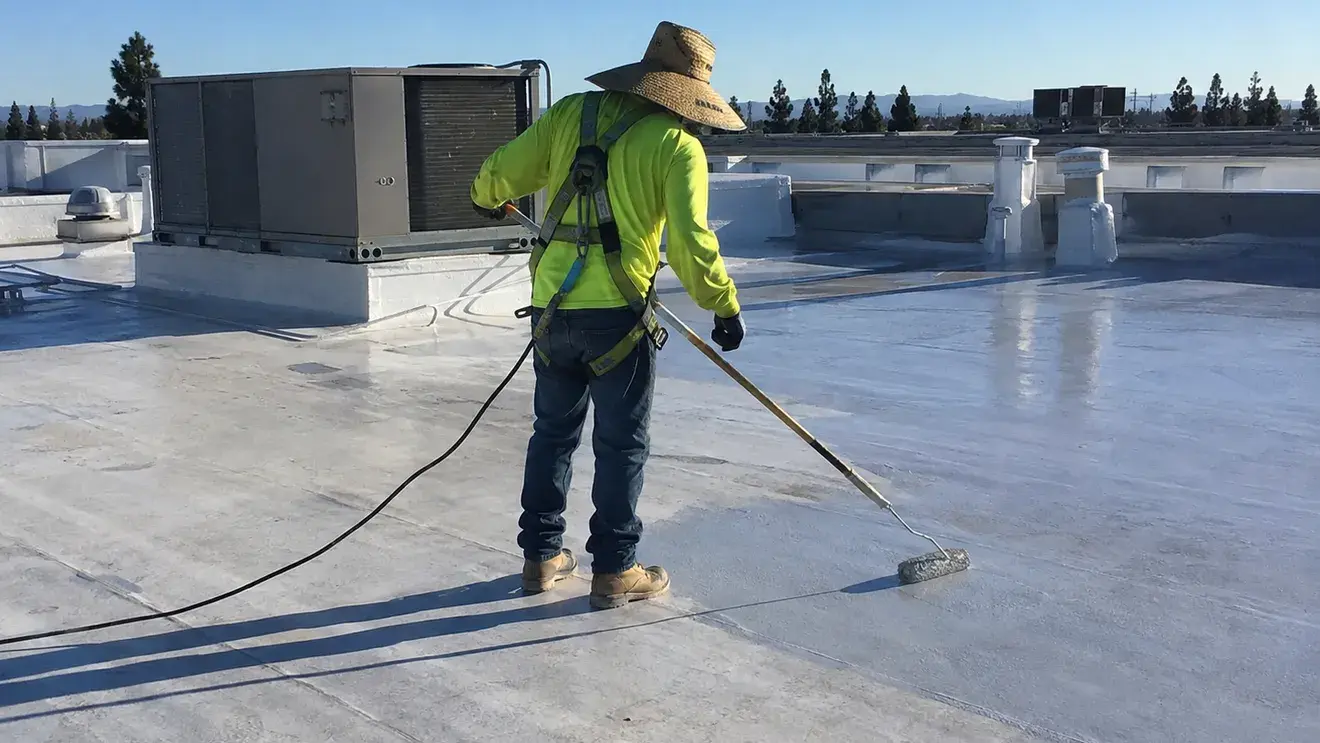
The silicone is applied by roller or spray to the full field of the roof and up the inside face of the parapets, in one or two coats, to a specified thickness. Thickness is measured in mils (thousandths of an inch) and it's what the warranty is built on: roughly 20 mils for a 10 year warranty, 25 for 15, 30 for 20. A wet mil gauge is used during application to verify coverage. Thickness should be written into the quote.
Final Inspection and Warranty
Once cured, the contractor walks the roof again, checks thickness, verifies details, and issues the warranty paperwork. The manufacturer may send an inspector for a manufacturer-backed warranty.
How Long Does the Work Take?
For a typical commercial flat roof, plan on two to five days on site, including drying time between cleaning and coating. A residential flat roof can be done in one to two days. Larger buildings scale with square footage.
Throughout, the building stays open. There's no tear-off noise, no debris chute, and no exposed deck. That's often the deciding factor for a business, a school or a medical office.
Silicone Roof Restoration vs Replacement
| Silicone restoration | Full replacement | |
|---|---|---|
| Cost | Typically 40% to 60% less than tear-off | Highest upfront cost |
| Time on site | 2 to 5 days | 1 to 3 weeks on large buildings |
| Disruption | Building stays occupied | Noise, debris, exposed deck |
| Landfill | None, existing roof stays | Full roof to landfill |
| Warranty | 10 to 20 years by thickness | 20 to 30 years by system |
| Energy | Reflective surface lowers cooling load | Depends on material chosen |
| Renewable | Recoat at end of life | Tear off again |
| Tax treatment | Often expensed as maintenance | Usually capitalized |
The last row is worth a conversation with an accountant. Restoration is frequently treated as a maintenance expense in the year it's done rather than a capital improvement depreciated over decades. For a commercial owner, that can change the math significantly.
Restoration is not the right answer when the roof underneath is structurally failing. In that case a roof replacement is the honest recommendation, and a contractor who does both will tell you which one you need.
What About the Warranty?
Two kinds exist, and they cover different things.
Manufacturer warranty covers the coating material and is tied to the applied thickness. It usually requires the contractor to be certified with that manufacturer and may require a manufacturer inspection after the job. Common tiers are 10, 15 and 20 years.
Contractor workmanship warranty covers the labor: the prep, the repairs, the application. This is the one that actually pays for a leak at a detail that wasn't reinforced properly.
What voids a warranty: coating applied thinner than specified, skipping the adhesion test, coating over wet insulation, and unaddressed ponding. Also, a recoat with the wrong chemistry. Silicone gets recoated with silicone.
Ask to see both warranties in writing before the work starts, and ask what mil thickness the quote is based on. If a contractor can't answer the thickness question, that's a paint job, not a restoration.
Why Restoration Makes Sense in Las Cruces
Southern New Mexico is close to ideal territory for silicone roof restoration.
UV. Sun exposure at our elevation destroys exposed membranes and asphalt. Silicone is among the most UV-stable coatings available.
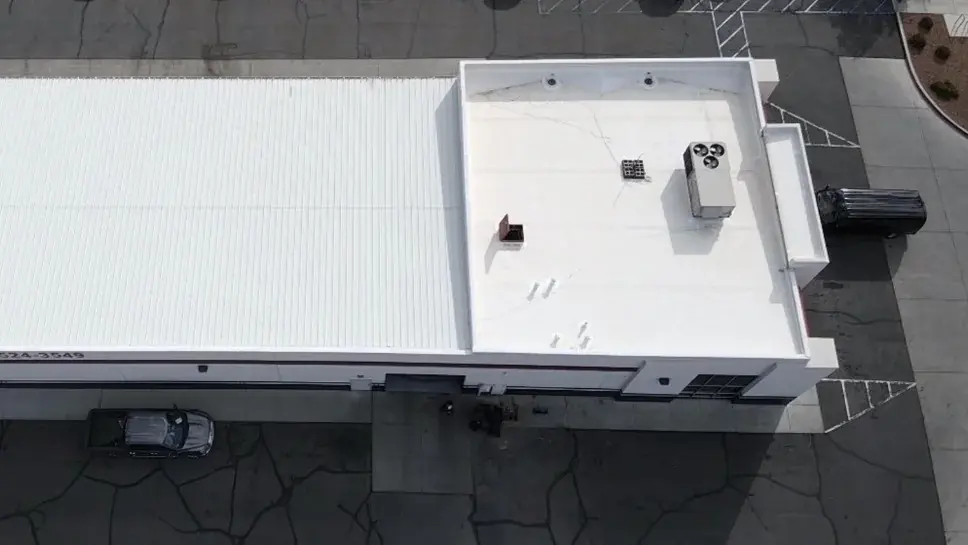
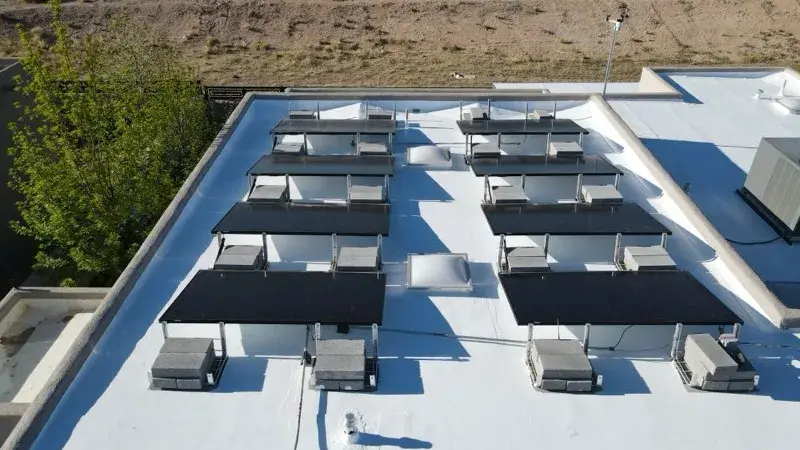
Cooling load. A white silicone surface reflects most solar energy instead of absorbing it. On a commercial building running air conditioning from May through October, that shows up on the utility bill every month.
Ponding. Flat roofs pond, especially older ones with settled drainage. Acrylic degrades under standing water. Silicone doesn't, which is why it's the standard recommendation here.
Timing. Coating work needs dry conditions and moderate temperatures. Fall, right after monsoon season, is the natural window. The roof gets inspected for storm damage, repaired and coated before winter, and it's ready for next summer's sun. That's the season we're in now.
For flat roofs across Las Cruces and Doña Ana County, restoration paired with a roof maintenance plan is usually the lowest lifetime cost path for a structurally sound building.
The Bottom Line on Silicone Roof Restoration
So, what is silicone roof restoration? A full process of inspection, moisture testing, cleaning, repair and reinforcement, finished with a seamless silicone membrane applied to a specified thickness, that renews a sound flat roof at a fraction of replacement cost. Three takeaways:
- It's a system, not a paint job. The prep, repairs and reinforced details are what make the coating work.
- The deck and insulation must be dry. A moisture survey comes first, and a roof that fails it needs replacement instead.
- Thickness in mils is what the warranty is built on. Get it in the quote.
Contact Gilbert & Sons Roofing and Stucco
Gilbert & Sons Roofing and Stucco is a licensed, insured and bonded contractor serving Las Cruces and Doña Ana County since 2010. Our silicone roof restoration service covers commercial and residential flat roofs, including the parapet faces and stucco transitions that most coating contractors leave out. If you want to know whether your flat roof qualifies, call 575-649-2316, email gilbertandsons2010@gmail.com, or request an estimate through our contact page and we'll inspect the roof, run the moisture survey and give you an honest answer on restoration versus replacement.