
Blog · Roof Maintenance
What Is a Roof Maintenance Plan? What's Included and Why It Pays
Scheduled visits, a fixed checklist and a written record, so the roof gets looked at before it leaks rather than after. Here is what is included and what it saves.
Contents
A roof maintenance plan is a scheduled program of inspections, cleaning, minor repairs and documentation, usually twice a year, designed to catch small problems before they become leaks, emergency calls or an early replacement. It's the difference between a roof that gets looked at when something goes wrong and a roof that gets looked at before it does.
Most roofs in Las Cruces get the first kind of attention. A stain appears, a roofer is called, a repair is made, and nobody looks again until the next stain. That cycle costs more than the plan does, and it usually ends with a replacement five to ten years earlier than necessary.
This guide explains what a roof maintenance plan is, what's included, how often visits happen, how residential and commercial plans differ, why warranties often require one, what it costs against what it saves, and whether it's worth it for your particular roof.
What Is a Roof Maintenance Plan?
Three things separate a maintenance plan from a one-off inspection or a repair.
Scheduled visits. The roofer comes on a calendar, not on a phone call. Typically spring and fall, sometimes quarterly on commercial buildings.
A defined checklist. Every visit covers the same items, so nothing is skipped and changes show up from one visit to the next.
A written record. Each visit produces a report with photos and a condition rating. Over a few years, that record documents the roof's history, supports warranty claims, and tells you years in advance when replacement is coming.
An inspection tells you where the roof stands today (here's what a roof inspection includes). A repair fixes one problem. A maintenance plan keeps the roof from needing most repairs at all.
What's Included in a Roof Maintenance Plan
A proper plan covers all of the following on every visit.
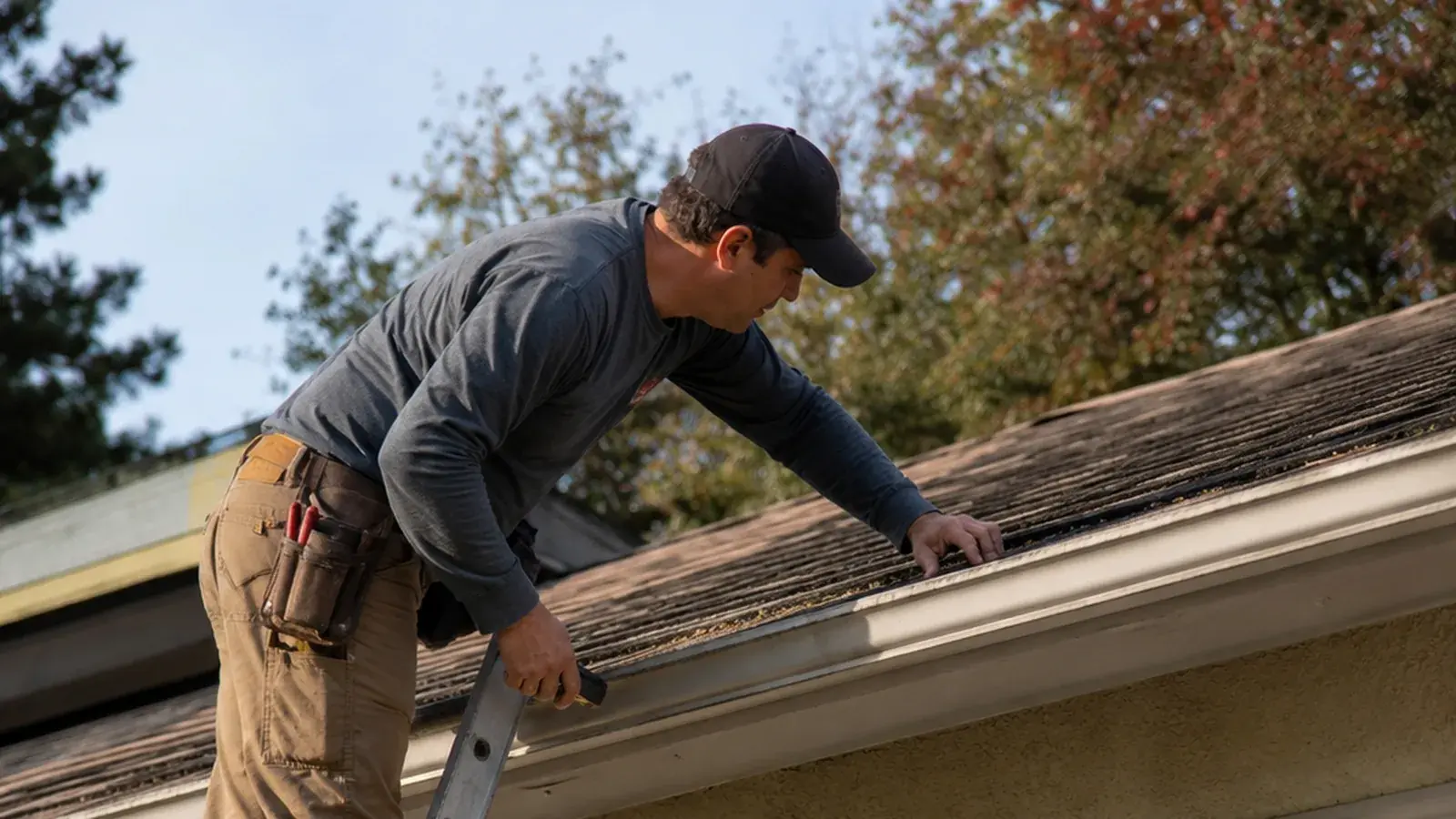
- Full inspection of the roof surface, every flashing detail, penetrations, parapets, drip edge and ridge
- Drain, scupper and canale clearing on flat roofs, and gutter and valley clearing on pitched roofs
- Debris removal from the surface, behind HVAC units and at wall intersections
- Sealant inspection and touch-up at counterflashing, pipe boots, curbs and terminations
- Minor repairs done on the spot: a lifted shingle, a slipped tile, a loose fastener, a small seam separation
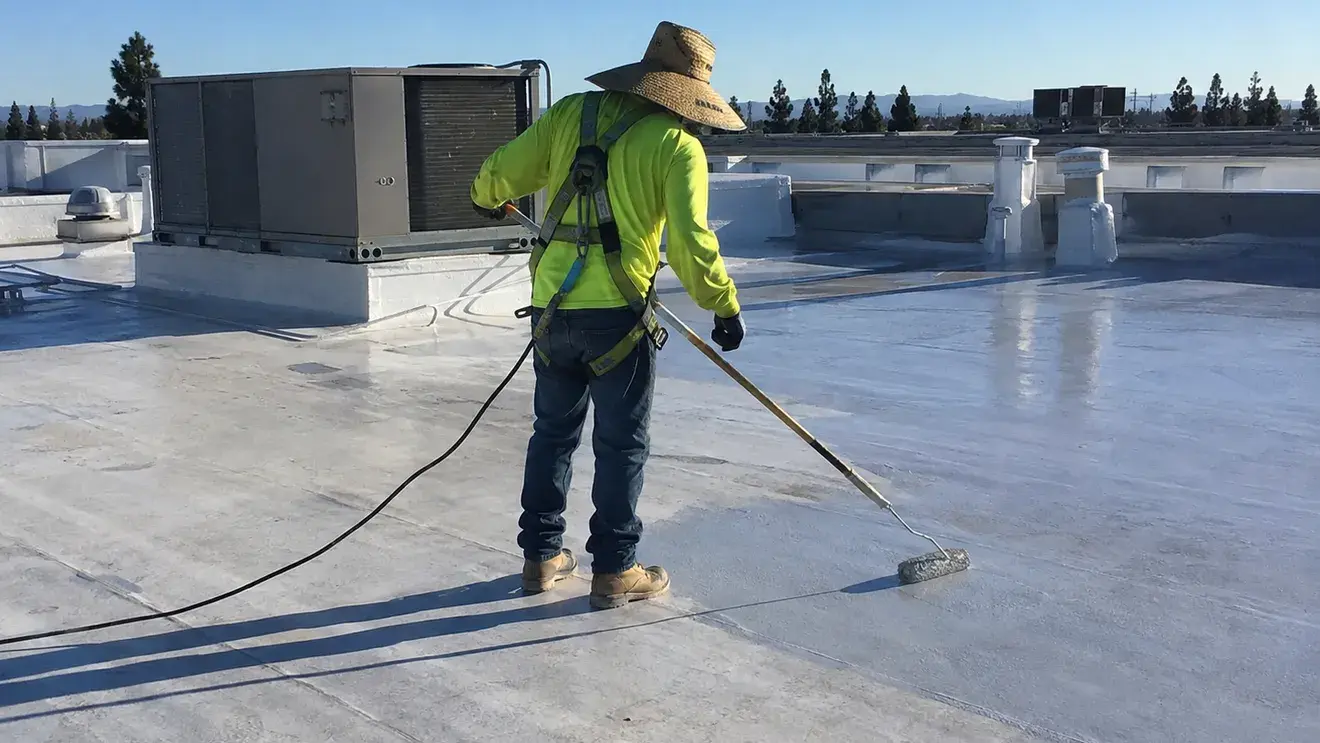
- Coating condition check on restored flat roofs: chalking, thinning, adhesion at details, since how long roof coating lasts depends heavily on catching wear early
- Attic or interior check where accessible, for stains, moisture and ventilation
- Photo report documenting conditions and any work done
- Priority list separating items handled on the visit, items to schedule, and items to watch
Items beyond minor repair, such as a flashing rebuild or a parapet cap, get quoted separately with the photos to back them up.
How Often Should Roof Maintenance Happen?
Twice a year is the standard, and in southern New Mexico the timing writes itself.
Late spring, before monsoon season. May or early June. The goal is to clear drains, reseal details and fix anything loose before the first 60 mph downburst tests the roof.
Fall, after monsoon season. October. The goal is to find storm damage while it's a small repair, and to get the roof tight before winter freeze-thaw cycles widen every crack.
After any significant storm. Hail, or a wind event that moved tiles or shingles anywhere on the street, warrants an extra visit.
Quarterly on some commercial roofs. Buildings with heavy rooftop HVAC traffic, restaurant exhaust, or a history of ponding often justify four visits.
Once a year is better than nothing. Twice a year is what actually keeps a roof ahead of the weather here.
Residential vs Commercial Maintenance Plans
The checklist is similar. The scope, documentation and stakes differ.
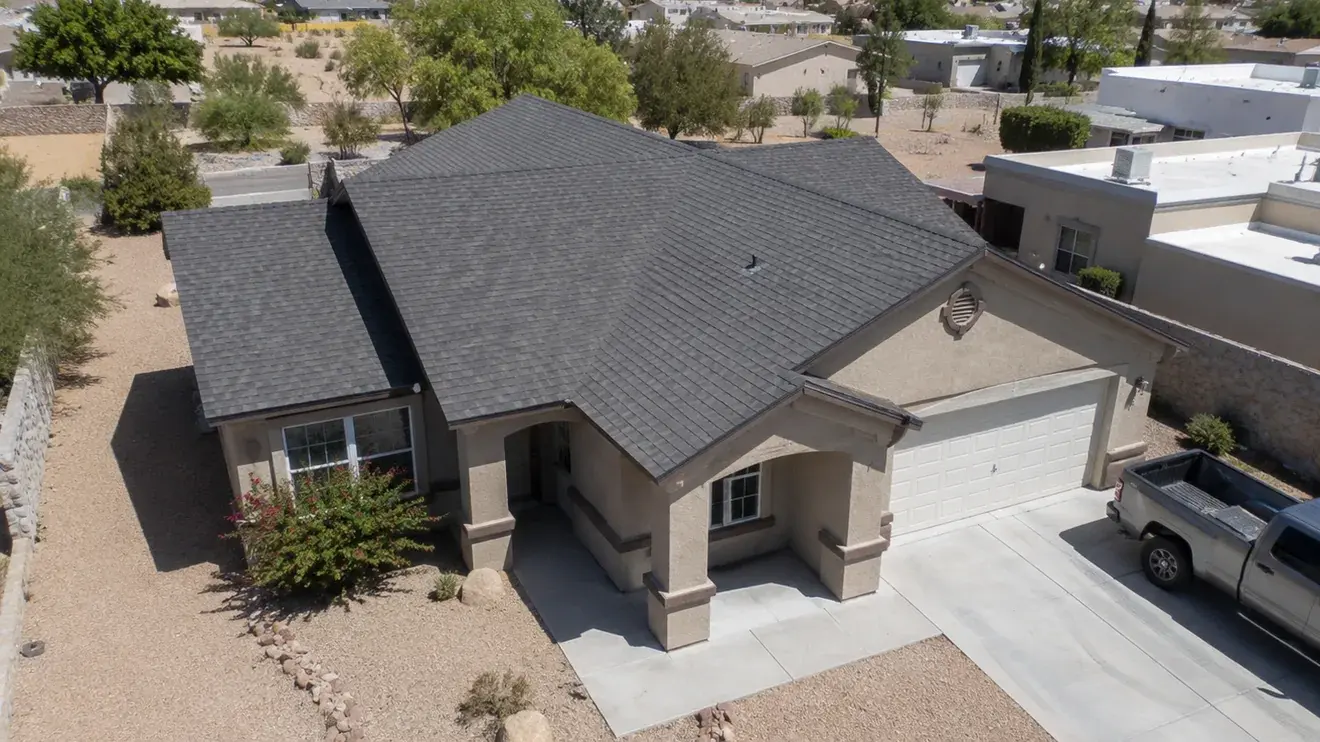
Residential plans cover a single roof, usually shingle, tile or a coated flat roof on a Pueblo-style home. Visits take an hour or two. The report is for the homeowner and, eventually, a buyer.
Commercial plans cover larger flat roofs with more penetrations, more foot traffic and more drains. Visits take longer and often include a moisture check on coated or membrane roofs. Documentation matters more: it supports manufacturer warranties, insurance, lease obligations to tenants, and capital planning. Many property managers also need the record to show due diligence if a leak damages a tenant's inventory.
Both benefit from the same thing: someone who knows the roof looking at it on a schedule.
Does a Maintenance Plan Keep Your Warranty Valid?
Often, yes, and this is the part most owners don't learn until they file a claim.
Most shingle manufacturer warranties require that the roof be maintained and that damage from neglect, clogged drainage or unaddressed minor issues is excluded. Coating manufacturer warranties on silicone and elastomeric systems are stricter: many require documented annual or semi-annual inspections, and some require them to be performed by an approved contractor. Miss the inspections and the 15 or 20 year warranty can be voided on a technicality.
A maintenance plan generates exactly the record those warranties ask for. If you've had a silicone roof restoration or a new shingle roof with a long warranty, the plan is part of protecting that investment, not an extra.
How Much Does a Roof Maintenance Plan Cost?
Pricing depends on roof type, size and the number of visits. As general guidance:
- Residential shingle or tile roof: a few hundred dollars per year for two visits
- Residential coated flat roof: similar, with the coating check included
- Commercial flat roof: priced per square foot or per visit, scaling with size and the number of penetrations and drains
Against that, consider what the plan prevents. One emergency roofing call during a monsoon storm, with interior water damage, typically costs more than several years of maintenance. (If you're not sure what counts as one, see what emergency roof repair is.) A roof that gets maintained reliably reaches the upper end of its lifespan range, which on a shingle roof is five to ten extra years before a replacement that costs tens of thousands. A coated flat roof that gets maintained can be recoated instead of torn off.
What a Maintenance Plan Looks Like in Las Cruces
Our climate shapes the checklist.
May visit. Clear every scupper, canale and drain of the dust and debris that accumulated over the dry season. Reseal pipe boots and counterflashing that baked through the spring. Check parapet caps for cracks. Confirm tiles and shingles are secure before monsoon wind. Walk the attic for ventilation.
October visit. Look for wind damage: lifted tiles, missing shingles, membrane edges peeled back. Check every flashing and parapet detail for water staining from sideways rain. Clear drains again, since the first storms wash a summer of dust into them. Check coating condition and reflectivity. Seal any cracks before freeze-thaw.
Both visits come with the photo report, and anything beyond minor repair is quoted with the pictures.
Is a Roof Maintenance Plan Worth It?
An honest answer by situation.
New roof, under five years old. Worth it mainly for the warranty record and to catch installation defects early. One visit a year is reasonable.
Mid-life roof, 10 to 20 years. This is where the plan earns its keep. The roof is sound but details are aging, and small catches here add years.
Coated flat roof. Yes, without question. The coating warranty likely requires it, drains clog here, and a recoat at the right time is the whole point of the system.
Tile roof past 20 years. Yes, with specific attention to lifting a few tiles and checking the underlayment each visit.
Roof at the end of its life. A plan won't save a roof that needs replacing. An inspection to confirm that, followed by a roof replacement, is the honest recommendation.
The Bottom Line on Roof Maintenance Plans
So, what is a roof maintenance plan? Scheduled visits, a fixed checklist and a written record, so the roof gets looked at before it leaks rather than after. Three takeaways:
- Twice a year, before and after monsoon season, is the right rhythm for this region.
- Many shingle and nearly all coating warranties require documented maintenance. The plan is the documentation.
- It pays for itself with the first emergency call it prevents, and it typically adds years to the roof's life.
Contact Gilbert & Sons Roofing and Stucco
Gilbert & Sons Roofing and Stucco is a licensed, insured and bonded contractor serving Las Cruces and Doña Ana County since 2010. Our roof maintenance plans cover residential and commercial roofs, including parapets, stucco transitions and coated flat roofs, with a photo report after every visit. To set one up before the next storm season, call 575-649-2316, email gilbertandsons2010@gmail.com, or request an estimate through our contact page and we'll start with a full roof inspection to set the baseline.