
Blog · Stucco
What Is Stucco Remediation? When Repair Isn't Enough
Remediation removes stucco where water is trapped behind it, repairs the structure, corrects the flashing that caused it and rebuilds the wall. Repair only fixes the surface.
Contents
Stucco remediation is the process of removing stucco from areas where moisture has gotten behind it, repairing the damaged sheathing and framing underneath, installing a proper drainage system, and then re-stuccoing the wall. It's the fix when water is trapped behind the wall, not when there's just a crack in the surface.
Most homeowners first hear the term in a home inspection report. A buyer's inspector runs a moisture meter along the walls, finds high readings below a window, and recommends "further evaluation for possible stucco remediation." Suddenly a house that looked fine has a line item nobody planned for.
This guide explains what stucco remediation is and how it differs from repair, what causes moisture behind stucco in the first place, the signs to watch for, how moisture testing works, the full remediation process, and what to know if you're buying or selling a stucco home in Las Cruces.
Stucco Remediation vs Stucco Repair
The difference between stucco remediation and repair is depth.
Stucco repair fixes the surface. Hairline cracks get sealed, chips and impact damage get patched, and the finish gets blended to match. The wall behind is assumed to be sound, and it usually is.
Stucco remediation fixes what's behind the surface. It's needed when water has already gotten through the stucco and the weather-resistive barrier, and is damaging the sheathing, framing or insulation. Patching the surface in that situation hides the problem while the wall keeps rotting.
How to tell which one you need:
- Repair: cracks without staining, no soft spots, normal moisture readings, damage limited to the surface
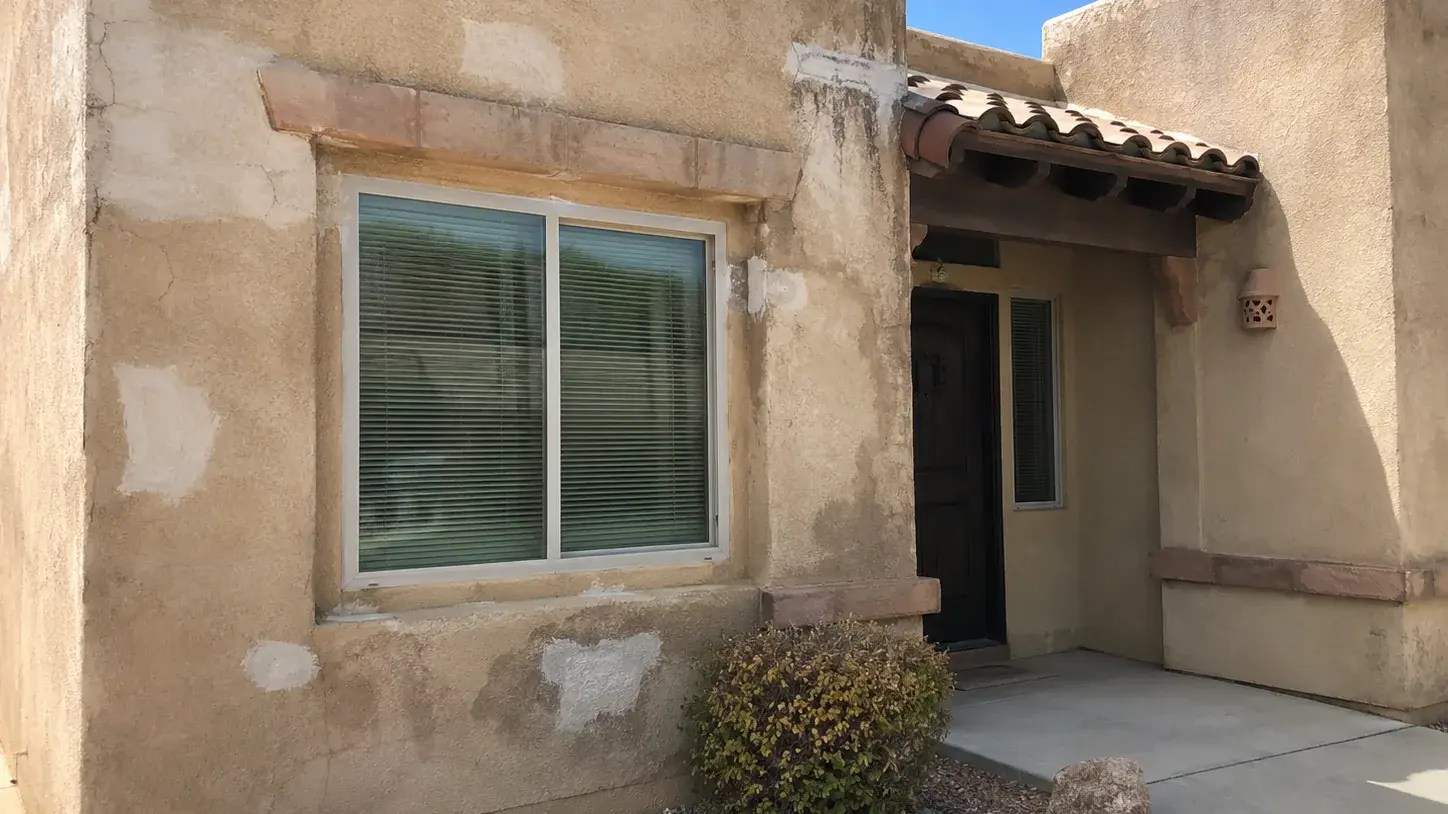
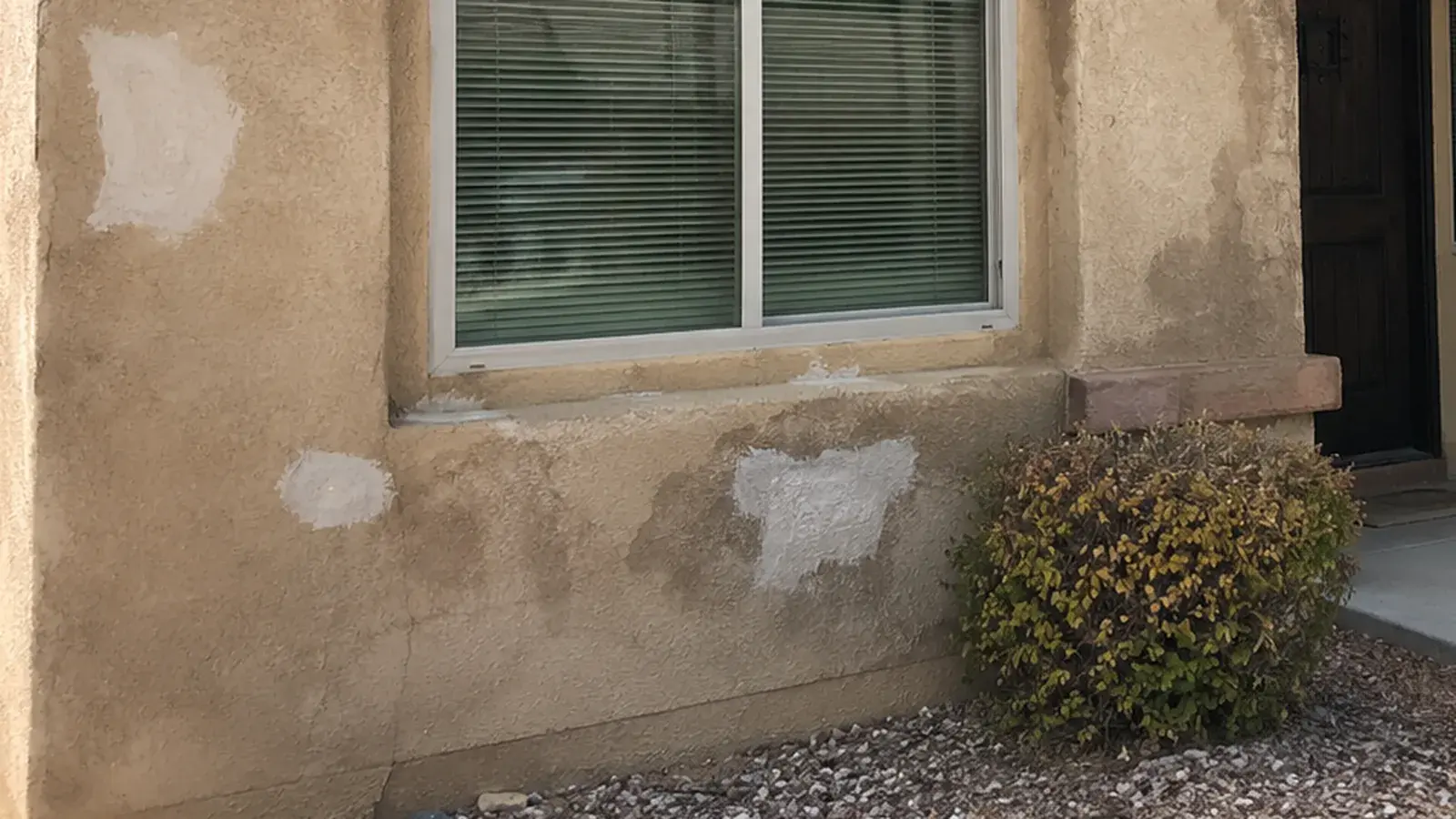
- Remediation: staining, efflorescence, soft or hollow areas, bulging, elevated moisture readings, interior drywall damage, or a musty smell inside near exterior walls
When in doubt, testing settles it. A crack can look the same whether the wall behind it is dry or soaked.
What Causes Moisture Behind Stucco?
Stucco is meant to get wet and dry out. Traditional three-coat stucco is porous by design, and the system relies on a drainage plane behind it to carry away any water that soaks through. Remediation becomes necessary when that system is missing, blocked or bypassed.
The most common causes:
- Missing or buried weep screed. The metal strip at the base of the wall lets water drain out. When it's missing, or buried under soil, pavers or a later stucco coat, water has nowhere to go.
- Failed window and door flashing. Water enters at the corners of openings and runs down inside the wall. This is the single most common source.
- Stucco run over roof flashing. Where a roof meets a stucco wall, plaster applied over the top edge of the flashing wicks water behind the system.
- Missing kickout flashing. At the bottom of a roof-to-wall intersection, water runs down the wall face and behind the stucco.
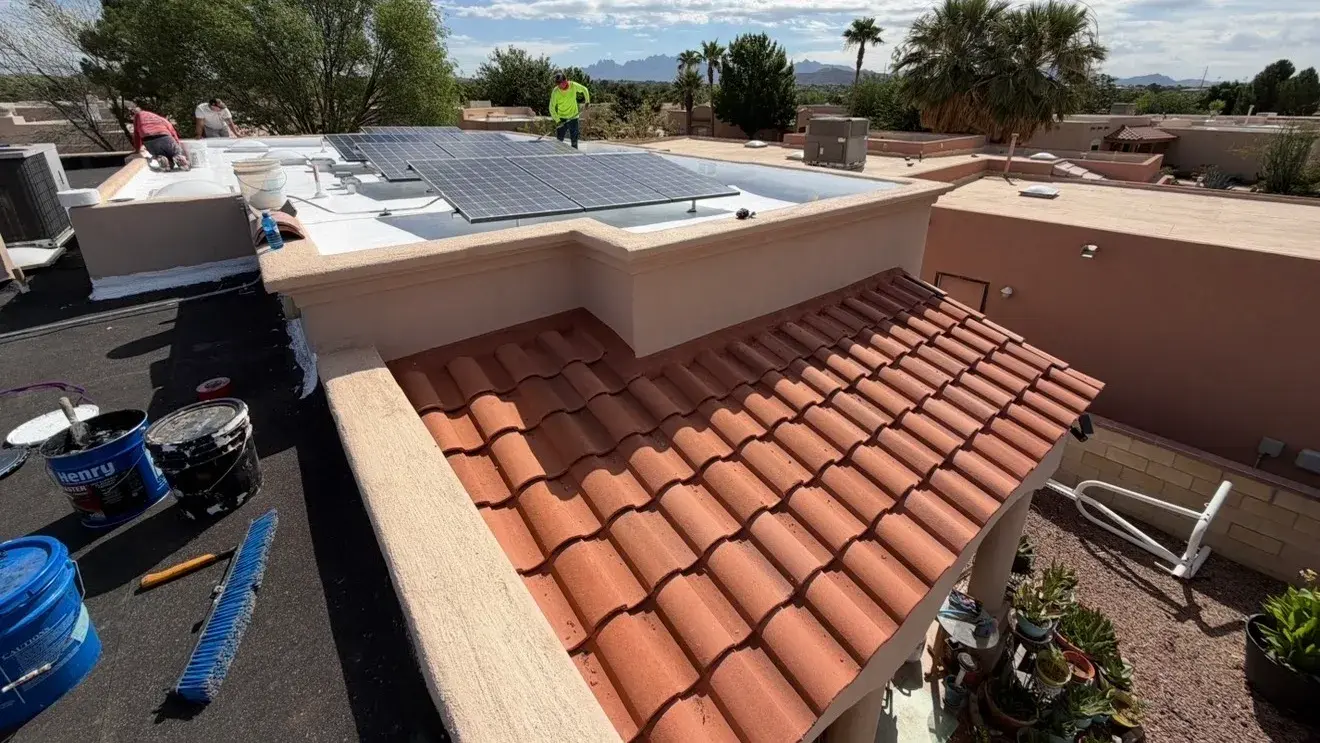
- Parapet cap failure. On flat-roofed homes, a cracked stucco cap lets water into the top of the wall, where it travels down inside.
- Sprinklers aimed at walls. Repeated soaking at the base is a common residential cause.
- Barrier-type EIFS. Older synthetic stucco systems installed without a drainage plane trap any water that gets in.
- Poor original installation. Thin coats, no drainage plane, or skipped expansion joints.
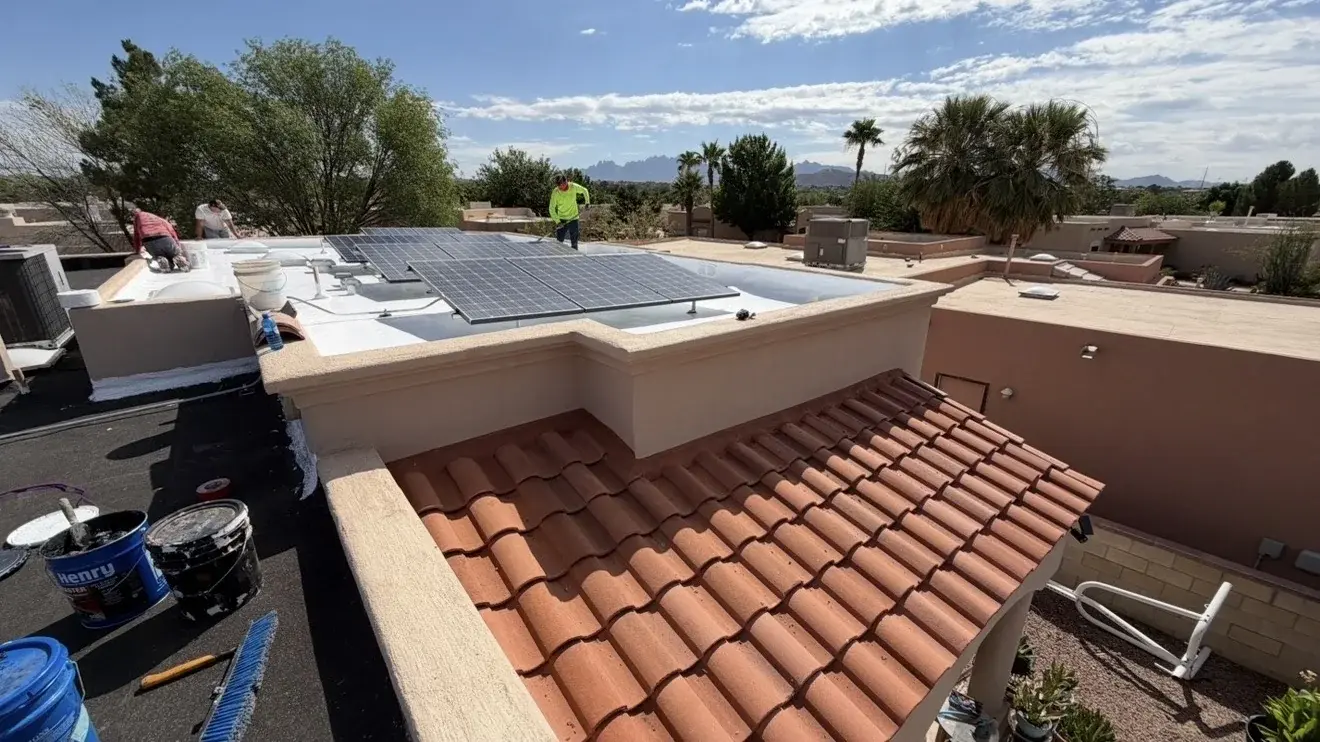
Several of these are roofing details as much as stucco details, which is why parapet repair and flashing correction are often part of a remediation job.
Signs You Might Need Stucco Remediation
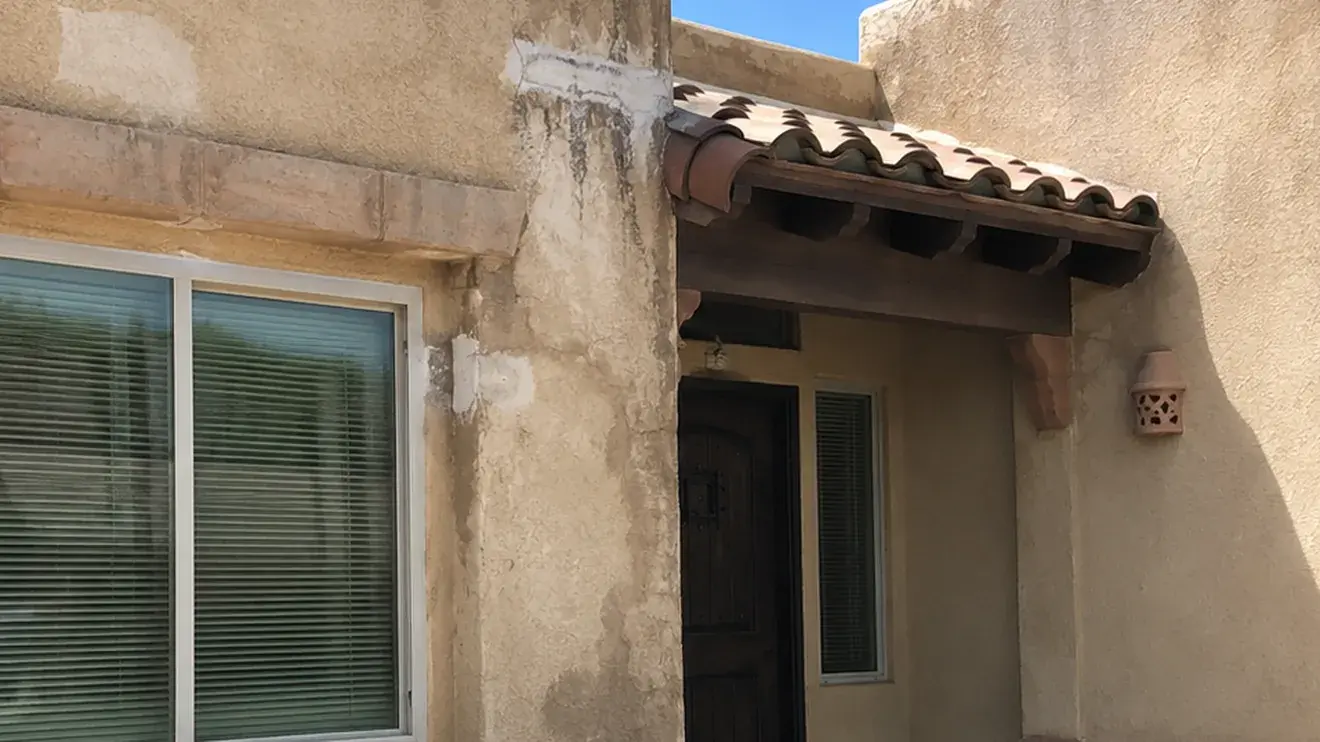
- Staining or dark streaks, especially below windows, at corners of openings and below roof lines
- Efflorescence, white mineral deposits on the surface showing moisture is moving through the wall
- Soft or spongy spots when you press on the stucco
- Hollow sound when you tap the wall
- Bulging or bowing sections
- Cracks with staining around them, rather than clean hairline cracks
- Interior damage: swollen baseboards, bubbling paint or soft drywall on exterior walls
- Musty odors inside near exterior walls
- Peeling or blistering paint on the stucco surface
Clean hairline cracks with no staining are normal and are a repair item. See how long stucco lasts for what normal aging looks like.
How Stucco Moisture Testing Works
You can't see moisture behind stucco, so remediation decisions are based on testing.
Visual inspection. An inspector walks the exterior and notes staining, cracks, efflorescence, missing weep screed, flashing details at windows and roof lines, and grading at the base of the walls. This identifies where to test.
Non-invasive scanning. A surface moisture meter or infrared camera can flag areas worth a closer look, but readings through stucco aren't definitive.
Probe testing. This is the standard. Small holes, about a quarter inch, are drilled through the stucco at targeted locations, typically below window corners, at roof-to-wall intersections, near the base of walls and at known trouble spots. A moisture probe reads the condition of the sheathing behind. The probe also gives a sense of whether the wood is firm or soft. Holes are sealed with a matching sealant afterward.
Reading the results. Readings are compared against dry baseline readings from the same wall. Elevated readings in a cluster, particularly with soft sheathing, map the area that needs remediation. Normal readings across the wall mean surface repair is enough.
The Stucco Remediation Process Step by Step
Here's what stucco remediation involves on a typical job.
- Testing and mapping. Probe testing defines the affected areas and their boundaries.
- Removal. Stucco and lath are cut out and removed from the affected sections, extending past the damage into dry wall area so the repair ties into sound material.
- Sheathing and framing repair. Wet or rotted sheathing is replaced. Framing is inspected, and any damaged studs or plates are repaired or replaced. The wall cavity is allowed to dry, and insulation is replaced where it's wet.
- New weather-resistive barrier and drainage plane. Two layers of building paper or a drainage wrap go on, properly lapped and integrated with the surrounding barrier.
- Flashing correction. Window and door flashing, roof-to-wall step flashing, kickout flashing and parapet terminations are corrected. This is the step that keeps the problem from coming back.
- New lath, weep screed and accessories. Metal lath is installed with proper furring, and weep screed, casing beads and expansion joints are placed where they belong.
- Three-coat stucco and finish matching. Scratch, brown and finish coats are applied with full cure times, and the finish texture and color are matched to the rest of the house. See how stucco is applied for each coat in detail.
The wall comes out of remediation better than it went in, because the details that caused the problem are corrected rather than recreated.
Partial vs Full Remediation
Partial remediation addresses specific areas, such as below a few windows, one roof-to-wall intersection, or one elevation. This is the most common outcome when testing is done early, and it's far less expensive.
Full remediation strips the entire house to the sheathing and starts over. It's needed when moisture damage is widespread, usually because of a system-wide installation flaw such as no drainage plane anywhere, or barrier EIFS on every wall.
The deciding factor is the testing map. Clusters of high readings in a few areas point to partial. High readings everywhere point to full.
Does New Mexico's Climate Make Remediation Less Common?
Yes, but not rare. Our dry air means stucco that gets wet dries faster than it would in humid regions, and we see far less of the widespread rot that drove stucco remediation programs in the East and Southeast.
But the causes are still here. Monsoon rain arrives hard and sideways and finds every flashing gap at once. Sprinklers aimed at walls soak the same spot daily. Parapets on flat-roofed homes channel water straight into the top of the wall. And a lot of stucco in the region was installed decades ago, before current drainage plane requirements.
The result is that remediation in Las Cruces tends to be targeted rather than whole-house: below windows, at parapets, at roof-to-wall transitions and along the base of walls.
Remediation and Buying or Selling a Home
If you're selling, a pre-listing stucco inspection lets you find and fix problems on your own timeline rather than negotiating them under a buyer's deadline. A clean test report is also a selling point.
If you're buying, a standard home inspection notes visible stucco issues but rarely includes probe testing. If the report flags staining, soft spots or elevated readings, ask for a stucco-specific inspection before closing. The cost of testing is small compared with the cost of finding damage after you own the house.
In either case, the inspection report should identify test locations, readings and recommended scope. Vague recommendations like "possible moisture intrusion" need a follow-up test before anyone can price the work.
The Bottom Line on Stucco Remediation
So, what is stucco remediation? Removing stucco where water is trapped behind it, repairing the damaged structure, installing a proper drainage plane, correcting the flashing that caused it, and re-stuccoing. Three takeaways:
- Repair fixes the surface. Remediation fixes what's behind it. Testing tells you which one you need.
- Most moisture behind stucco comes from flashing at windows, roofs and parapets, plus missing weep screed. The fix has to correct those, not just replace the wet wood.
- In Las Cruces, remediation is usually targeted to specific areas, especially when problems are caught early.
Contact Gilbert & Sons Roofing and Stucco
Gilbert & Sons Roofing and Stucco is a licensed, insured and bonded contractor serving Las Cruces and Doña Ana County since 2010. We handle stucco remediation from start to finish, including the roof-to-wall flashing and parapet details that most stucco-only crews can't correct. If an inspection flagged moisture or you're seeing staining or soft spots, call 575-649-2316, email gilbertandsons2010@gmail.com, or request an estimate through our contact page. We'll start with a roof and exterior inspection, and if the source is at the roof line, we'll handle that roof repair as part of the same job.